In the world of industrial automation, consumer electronics, and automotive systems, the need for reliable, non-contact detection is paramount. Proximity sensing magnetic sensors have emerged as a cornerstone technology in this domain, offering robust performance in challenging environments where optical or capacitive sensors might fail. Unlike simple mechanical switches, these sensors detect the presence or absence of a magnetic field, typically generated by a permanent magnet, to determine the position, proximity, or movement of a target object without physical contact.
The fundamental principle behind these sensors is based on the Hall effect or magnetoresistive technologies. Hall effect sensors generate a voltage difference (the Hall voltage) across an electrical conductor when a magnetic field is applied perpendicular to the current flow. This voltage is proportional to the strength of the magnetic field, allowing the sensor to detect its presence and sometimes its magnitude. Magnetoresistive sensors, on the other hand, change their electrical resistance in the presence of a magnetic field. Technologies like Anisotropic Magnetoresistance (AMR) and Tunnel Magnetoresistance (TMR) offer higher sensitivity and precision, enabling detection of subtle changes in magnetic fields.
One of the most significant advantages of magnetic proximity sensors is their immunity to environmental factors. They are not affected by dust, dirt, oil, moisture, or ambient light, making them ideal for harsh industrial settings such as manufacturing floors, agricultural machinery, and outdoor applications. Their sealed packages can withstand extreme temperatures, vibrations, and contaminants that would compromise other sensing modalities. Furthermore, the sensing range and behavior can be finely tuned by selecting different magnet strengths, shapes, and orientations relative to the sensor.
The applications for proximity sensing magnetic sensors are vast and varied. In the automotive industry, they are ubiquitous. They are used for detecting gear position in transmissions, monitoring wheel speed for anti-lock braking systems (ABS), sensing seatbelt buckle status, and providing feedback on pedal and throttle positions. Their reliability is critical for safety and performance. In industrial automation, these sensors are the workhorses for end-of-travel detection on linear actuators, counting revolutions on rotating shafts, verifying the open/closed status of doors and hatches, and providing precise positioning in CNC machines and robotics. The consumer electronics sector utilizes miniaturized versions for detecting flip or slide phone covers, laptop lid closure (enabling sleep mode), and in joysticks or control knobs for gaming consoles.
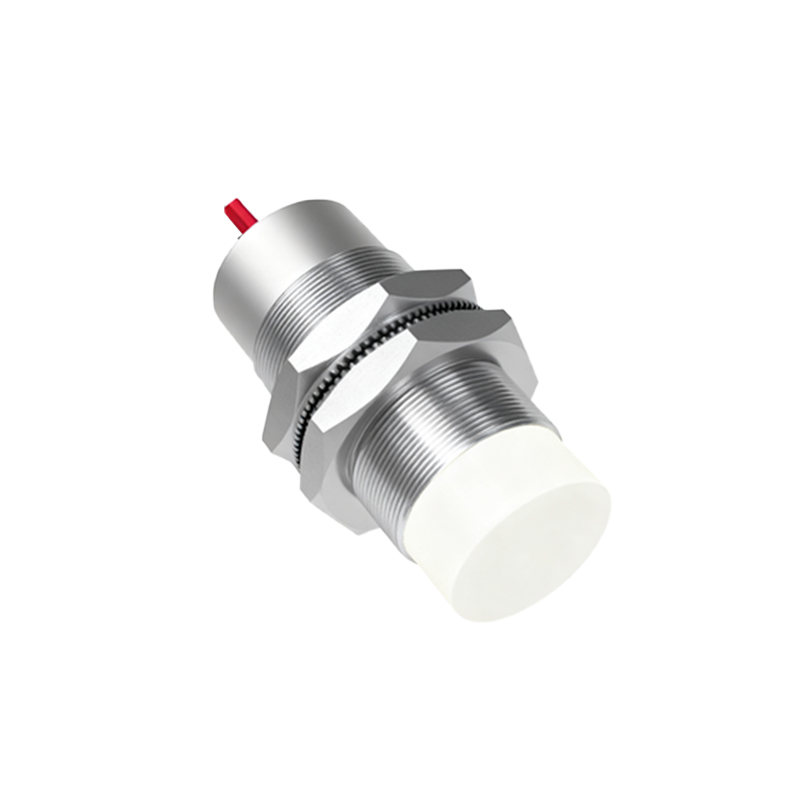
When selecting a proximity sensing magnetic sensor for a specific application, several key parameters must be considered. The first is the sensing distance or range, which defines how far the magnet can be from the sensor while still triggering a reliable signal. This is often specified as the "switch point" or "operate point." The type of output is another crucial factor. Sensors can provide digital outputs (simple on/off switches), analog outputs (a voltage proportional to field strength), or pulse outputs (for speed sensing). The physical package and mounting style (threaded barrel, block, or surface-mount) must suit the mechanical design. Environmental ratings, such as IP (Ingress Protection) codes for dust and water resistance, and operating temperature range are non-negotiable for demanding applications. Finally, the magnetic requirements, including the required magnet material (e.g., neodymium, ferrite), size, and polarization, must be compatible with the chosen sensor.
Installation and alignment are critical for optimal performance. The sensor and magnet must be positioned correctly. Factors like lateral offset, axial alignment, and air gap tolerance can significantly affect the switching behavior. Designers must account for these tolerances to ensure consistent operation over the product's lifetime and across manufacturing variances. Shielding from stray magnetic fields, often from motors or other magnets, is also an important consideration in system design.
Looking ahead, the evolution of proximity sensing magnetic sensors continues. Trends point toward higher integration, with sensors incorporating signal conditioning, temperature compensation, and digital interfaces (like I2C or SPI) into a single chip. This reduces design complexity and board space. There is also a push for lower power consumption, enabling their use in battery-powered Internet of Things (IoT) devices and wearables. Enhanced sensitivity and miniaturization will open new applications in medical devices and precision instrumentation.
In conclusion, proximity sensing magnetic sensors represent a mature yet continuously advancing technology. Their unique combination of durability, reliability, and non-contact operation makes them an indispensable solution for countless detection and positioning tasks across diverse industries. By understanding their operating principles, key characteristics, and application requirements, engineers can effectively leverage these sensors to create more robust, efficient, and intelligent systems.