In industrial automation and precision measurement, digital laser sensors are widely used for tasks such as distance detection, object positioning, and quality inspection. A common question among engineers and technicians is whether these sensors can be connected in parallel to enhance system performance or simplify wiring. This article explores the technical feasibility, advantages, challenges, and practical considerations of parallel connections for digital laser sensors.
Digital laser sensors typically output signals in digital formats, such as PWM (Pulse Width Modulation), serial communication (e.g., RS-485, Ethernet), or discrete signals (e.g., NPN/PNP). The possibility of parallel connection depends largely on the sensor's output type and the intended application. For sensors with discrete outputs, parallel wiring is often straightforward. For example, multiple sensors with NPN open-collector outputs can be connected in parallel to a single input on a PLC (Programmable Logic Controller). This setup allows the system to trigger an action if any sensor detects an object, useful in safety or monitoring scenarios. However, care must be taken to ensure the total current does not exceed the PLC input's rating, as parallel connections can sum currents.
For sensors with serial communication outputs, parallel connections are more complex. These sensors often require individual addressing to avoid data collisions on the communication bus. In such cases, a network topology like RS-485 daisy-chaining or Ethernet switching is used, where sensors are connected in a series or star configuration rather than a true electrical parallel. This enables multiple sensors to share a single communication line while maintaining data integrity through protocols like Modbus or PROFINET. It's not a parallel connection in the traditional sense but achieves similar goals of reducing wiring and centralizing data acquisition.
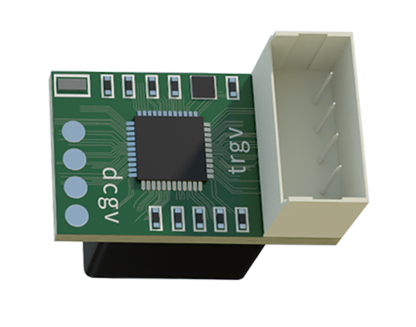
Advantages of connecting digital laser sensors in parallel or networked configurations include reduced installation costs, simplified cable management, and scalability. In large-scale systems, running individual cables for each sensor can be impractical. Parallel wiring or bus-based networks minimize clutter and allow for easier expansion. Additionally, it can enhance reliability in redundancy setups; if one sensor fails, others can continue operating, though this depends on the system design.
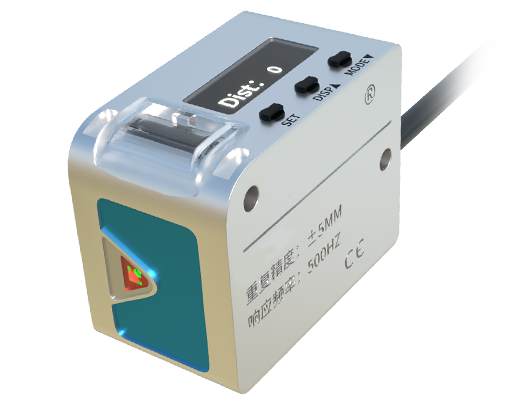
However, challenges exist. Signal interference is a key concern, especially when sensors are placed close together. Laser sensors emit light beams that may cross-talk or reflect off nearby surfaces, causing false readings. Proper spacing and shielding are essential. Electrical issues like voltage drops or noise can also affect parallel connections, particularly over long distances. Using quality cables, terminators, and surge protectors mitigates these risks. Moreover, programming and configuration become more intricate. For parallel discrete outputs, logic in the controller must account for combined signals. For networked sensors, setting unique addresses and managing data packets requires careful planning.
Practical applications demonstrate both success and caution. In conveyor belt systems, multiple laser sensors are often wired in parallel to detect jams or count objects, improving efficiency. In robotic arms, networked sensors provide coordinated positioning data via a single interface. Yet, in high-precision tasks like semiconductor manufacturing, individual sensor wiring is preferred to avoid any risk of signal degradation.
To implement parallel connections effectively, follow these steps: First, review the sensor datasheet for output specifications and compatibility. Second, design the wiring diagram, considering current loads, cable lengths, and grounding. Third, test the setup in a controlled environment before full deployment. Use oscilloscopes or multimeters to check signal integrity. Finally, program the control system to interpret the combined inputs correctly, incorporating error-handling routines.
In summary, digital laser sensors can be connected in parallel or networked, but the approach varies by output type. Discrete outputs allow simple parallel wiring for basic logic functions, while serial outputs require bus-based networks with proper addressing. Benefits include cost savings and scalability, but attention to interference, electrical stability, and programming is crucial. By understanding these factors, engineers can optimize sensor deployments for robust and efficient automation systems.