In the world of automation and smart technology, sensors are the fundamental building blocks that enable devices to perceive and interact with their environment. Among the most commonly used, yet often confused, types are proximity sensors and presence sensors. While the terms are sometimes used interchangeably in casual conversation, they represent distinct technologies with different operational principles and application scologies. Grasping these differences is crucial for engineers, designers, and enthusiasts looking to implement the right sensing solution.
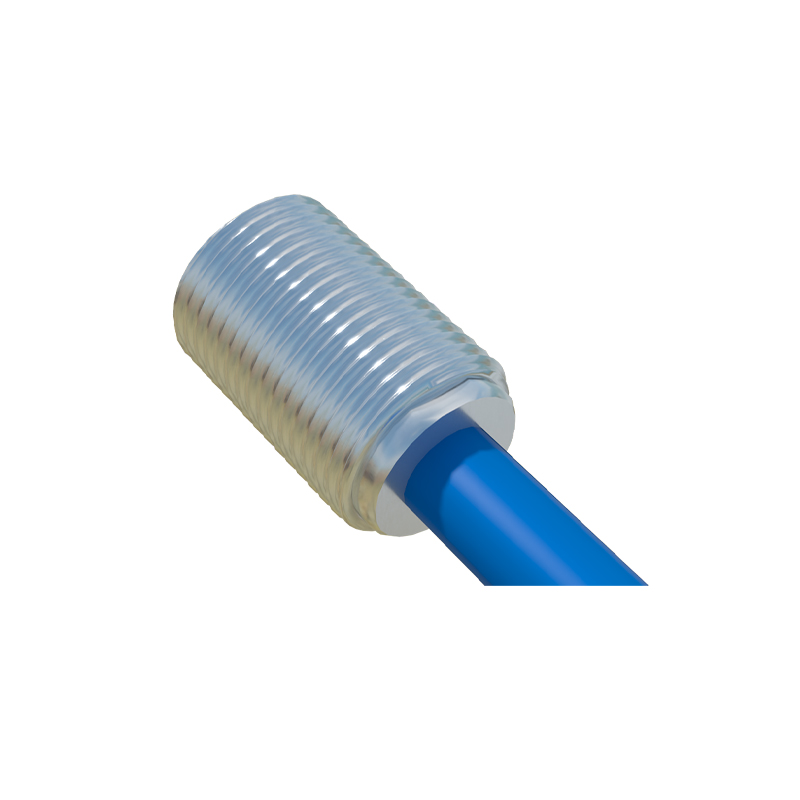
At its core, a proximity sensor is a device designed to detect the physical presence of an object within a specified range without any physical contact. The key function here is detection within a defined distance or "proximity." These sensors typically have a limited, well-defined sensing range—whether it's a few millimeters for inductive sensors detecting metal or several centimeters for capacitive sensors. Their primary output is a simple binary signal: object detected or not detected within that set range. Common technologies include inductive sensors (for metals), capacitive sensors (for both metals and non-metals, and liquids), and ultrasonic sensors (using sound waves). You'll find proximity sensors performing critical, repetitive tasks in industrial settings. For instance, on an assembly line, an inductive proximity sensor verifies a metal component is in the correct position before a robotic arm welds it. They are the workhorses of detection in constrained, predictable environments.
A presence sensor, on the other hand, is a broader category. Its primary function is to determine whether an object or person is present within a general area or space, often without a strict, pre-defined proximity limit. While some presence sensors use technologies similar to proximity sensors, their application context and output interpretation are different. They are often tasked with answering "Is someone or something in the room or zone?" rather than "Is an object within 10mm of this point?" Technologies here expand to include Passive Infrared (PIR) sensors, which detect heat and movement from living beings; microwave sensors; and advanced vision systems or time-of-flight cameras. The output can be more nuanced, sometimes including basic data about occupancy duration or motion patterns. The classic example is the PIR sensor in office lighting systems or security alarms. It doesn't measure how close a person is to the sensor; it simply detects that a heat-emitting, moving entity has entered the monitored space, triggering lights to turn on. Similarly, a seat occupancy sensor in a car is a presence sensor—it detects the weight or capacitance of a person to alert about an unbuckled seatbelt, not their precise distance from the dashboard.
The line between the two can blur with advanced sensors. A sophisticated LiDAR or time-of-flight sensor in a smartphone can function as both: it can act as a proximity sensor to turn off the screen when held to your ear (detecting an object very close), and also map the presence of objects in a room for augmented reality applications. However, the intended use case defines its primary classification. Proximity sensing is about precise, short-range detection for control and safety. Presence sensing is about area monitoring for energy efficiency, security, and occupancy analytics.
Choosing the right sensor hinges on the application's specific requirements. For machine automation, object counting, or precise position verification where the environment is controlled and the target is consistent, a dedicated proximity sensor is usually the optimal choice. Its reliability, speed, and simplicity are unmatched for these tasks. For applications like smart building management, security systems, automatic doors, or interactive displays where the goal is to sense general occupancy or the approach of a person in a wider area, a presence sensor is the appropriate tool. Its ability to cover a larger, sometimes irregular zone is its key advantage.
Understanding the distinction between proximity and presence sensors moves beyond semantics. It directly impacts system efficiency, cost, and functionality. Implementing a high-precision proximity sensor for a room occupancy task would be over-engineered and costly, while using a basic PIR presence sensor for a precision robotic alignment task would lead to failure. As the Internet of Things (IoT) and smart environments continue to evolve, the fusion of these sensing technologies will grow, but their fundamental roles—precise near-field detection versus general area awareness—will remain pillars of effective system design. By selecting the sensor that aligns with the core question—"How close?" versus "Is anyone there?"—developers can build more responsive, efficient, and intelligent systems.