In the realm of industrial automation and precision measurement, laser sensors have emerged as indispensable tools. Their ability to deliver non-contact, high-speed, and exceptionally accurate measurements makes them a cornerstone technology across diverse sectors, from manufacturing and robotics to aerospace and consumer electronics. This article delves into the fundamental principles, key types, and critical application considerations for these sophisticated devices.
At its core, a laser sensor operates by emitting a focused beam of coherent light—a laser—towards a target object. The sensor then detects the interaction of this light with the target. The specific method of detection defines the primary operating principles and applications. The most prevalent types include triangulation sensors, time-of-flight (ToF) sensors, and confocal displacement sensors.
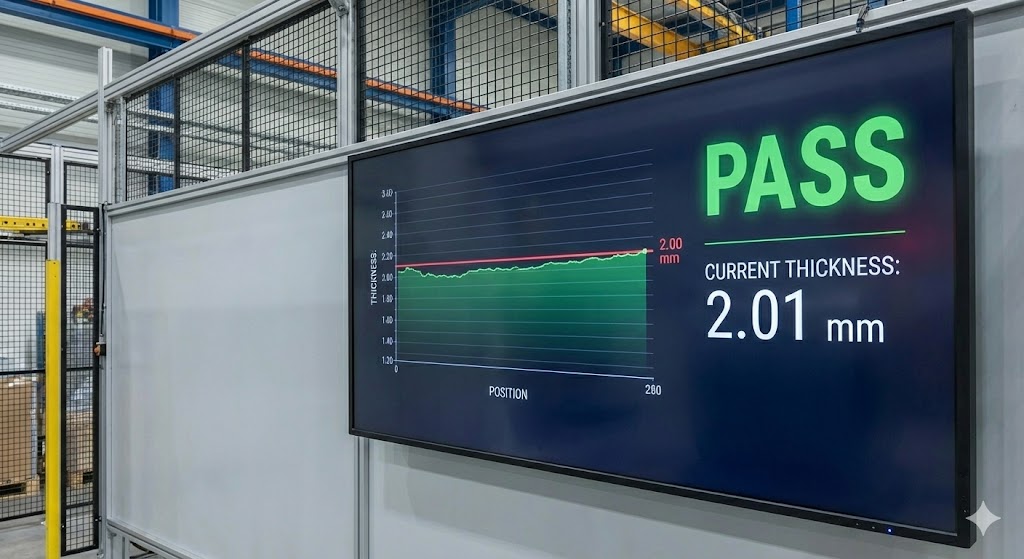
Triangulation laser sensors are renowned for their high resolution at short to medium ranges. In this method, a laser diode projects a spot onto the target surface. The reflected light is focused onto a position-sensitive detector (PSD) or a CMOS/CCD array. As the target's distance changes, the position of the reflected spot shifts on the detector. Using trigonometric calculations, the sensor's internal processor precisely determines the distance or displacement. This principle is ideal for applications requiring micron-level accuracy, such as measuring component thickness, detecting surface profiles, or verifying part presence on an assembly line.
Time-of-Flight (ToF) laser sensors, in contrast, measure distance by calculating the time it takes for a laser pulse to travel to the target and back. By knowing the speed of light, the sensor computes the distance. Modern ToF sensors often use phase-shift measurement for continuous-wave lasers, offering a good balance of speed and accuracy over longer ranges compared to triangulation. They are widely used in applications like bulk level sensing in silos, vehicle detection, and mobile robot navigation, where ranges can extend to several hundred meters.
Confocal chromatic sensors represent the high-end of displacement measurement. They use a multi-lens optical system to focus polychromatic (white) light. Different wavelengths focus at different distances along the measurement axis. Only the wavelength that is perfectly focused on the target surface is reflected back into the sensor's spectrometer for precise analysis. This technology is exceptionally robust against varying surface colors, materials, and angles, making it perfect for measuring transparent materials (like glass or plastic films), highly reflective surfaces, or complex biological samples.
Selecting the right laser sensor requires a careful analysis of the application's parameters. Key specifications to evaluate include:
* Measuring Range: The minimum and maximum distance over which the sensor can operate reliably.
* Resolution: The smallest detectable change in distance, critical for precision tasks.
* Accuracy: The deviation between the measured value and the true value.
* Spot Size: A smaller spot allows for more precise measurement of edges or small features.
* Response Time/Sampling Rate: How quickly the sensor can take and output measurements, vital for high-speed production lines.
* Environmental Robustness: Resistance to ambient light, dust, moisture, and temperature fluctuations, often indicated by an IP (Ingress Protection) rating.
The applications are virtually limitless. In automotive manufacturing, laser sensors ensure precise gap and flush measurements between body panels. In electronics, they verify the coplanarity of Ball Grid Array (BGA) solder balls. In logistics, they guide automated guided vehicles (AGVs) and measure parcel dimensions. In pharmaceutical packaging, they verify fill levels in vials without any physical contact, maintaining sterility.
Furthermore, the integration of laser sensors with Industrial Internet of Things (IIoT) platforms is a growing trend. Sensors with integrated IO-Link or Ethernet connectivity can transmit not just measurement values but also diagnostic data—such as internal temperature, signal strength, or contamination warnings—enabling predictive maintenance and smarter, more adaptive automation systems.
In conclusion, laser sensors are a transformative technology enabling higher quality, efficiency, and intelligence in modern industrial processes. Understanding their operating principles—triangulation for high precision at close range, ToF for longer distances, and confocal for challenging surfaces—is the first step. A methodical evaluation of technical specifications against the specific application demands is crucial for successful implementation. As technology advances, these sensors will continue to evolve, offering even greater capabilities for the factories and systems of the future.