Square proximity sensors are widely used in industrial automation for non-contact detection of metallic objects. These sensors operate based on electromagnetic principles, offering high reliability and durability in harsh environments. This article provides a detailed explanation of the working principle of square proximity sensors, accompanied by diagrams to enhance understanding.
A square proximity sensor typically consists of four main components: an oscillator circuit, a detection coil, a trigger circuit, and an output circuit. The oscillator generates a high-frequency electromagnetic field around the detection coil, which is housed within the sensor's square-shaped housing. When a metallic object enters this electromagnetic field, eddy currents are induced on the surface of the object. These eddy currents draw energy from the oscillator, causing a reduction in the oscillation amplitude. The trigger circuit monitors this change and activates the output circuit when the amplitude drops below a predefined threshold. The output circuit then switches the sensor's state, sending a signal to the control system to indicate the presence of the object.
The square design of these sensors allows for easy installation in tight spaces and provides a consistent detection range along all sides. Unlike cylindrical sensors, square proximity sensors often feature multiple sensing faces, making them versatile for various mounting configurations. The detection range depends on factors such as the sensor's size, the type of metal being detected, and the operating frequency. For instance, ferrous metals like iron and steel are detected at longer ranges compared to non-ferrous metals like aluminum or copper due to their higher magnetic permeability.
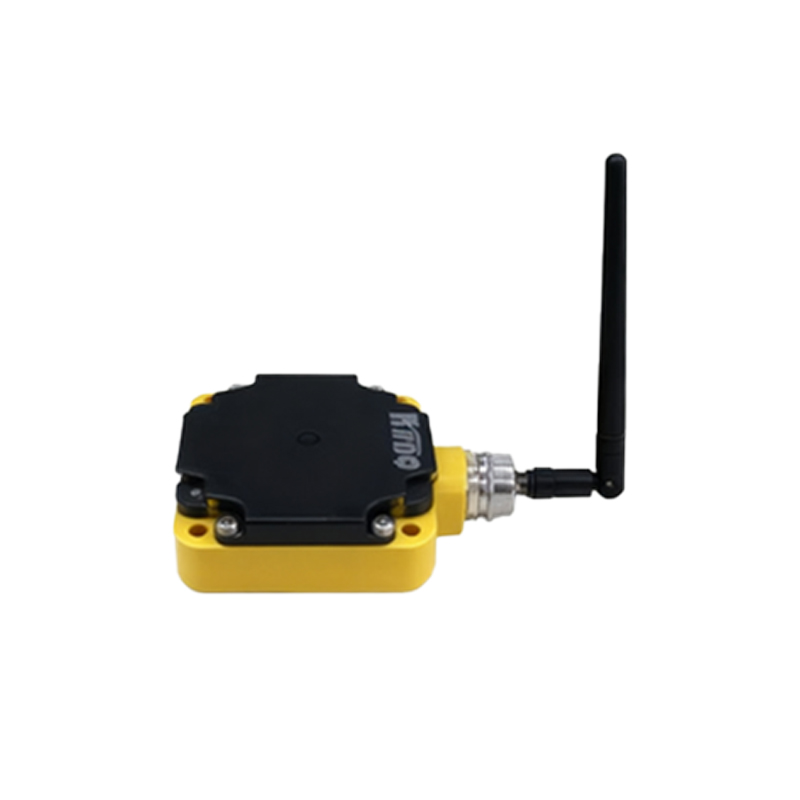
One key advantage of square proximity sensors is their immunity to environmental conditions such as dust, oil, and moisture. Since they do not require physical contact with the target object, there is no wear and tear, ensuring a long operational life. Additionally, these sensors offer fast response times, typically in the millisecond range, making them suitable for high-speed automation applications.
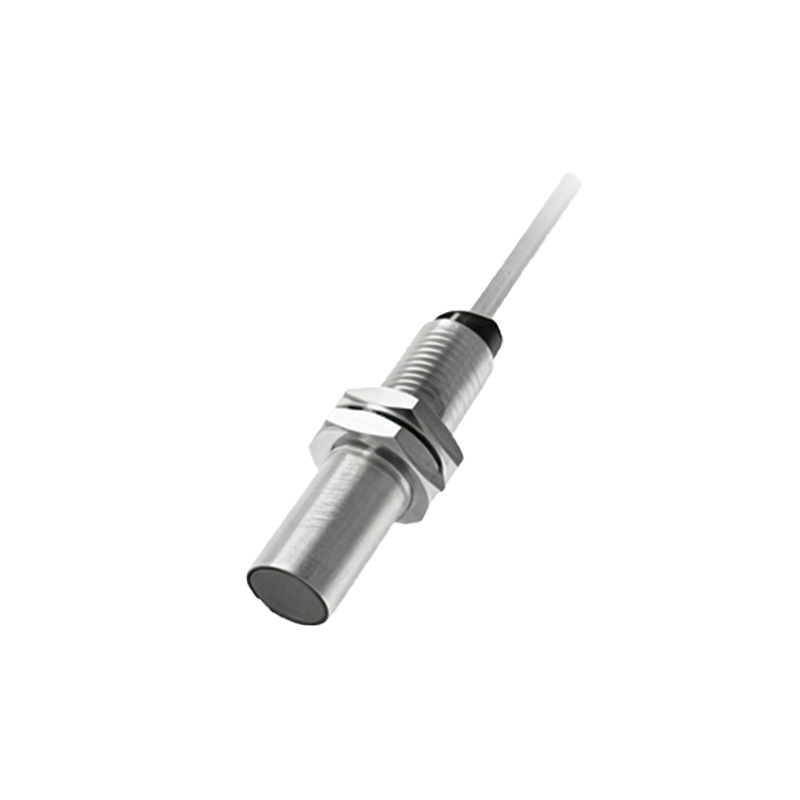
To illustrate the working principle, consider a diagram showing the internal layout. The oscillator circuit is connected to the detection coil, which emits an electromagnetic field represented by concentric circles extending from the sensor face. When a metal object approaches, the field lines are disturbed, and eddy currents flow on the object's surface. This interaction is depicted with arrows indicating current flow. The trigger circuit, often based on a Schmitt trigger design, detects the amplitude change and sends a signal to the output transistor, which switches from an off to an on state. The output can be either NPN (sinking) or PNP (sourcing), depending on the sensor model and application requirements.
In practical applications, square proximity sensors are used for position sensing, object counting, and limit switching in machinery. They are commonly found in conveyor systems, robotic arms, and packaging equipment. When selecting a sensor, engineers must consider parameters such as sensing distance, output type, voltage rating, and environmental protection ratings (e.g., IP67 for dust and water resistance). Proper installation is crucial to avoid interference from adjacent metal surfaces or other sensors, which can affect performance.
In summary, square proximity sensors rely on electromagnetic induction to detect metallic objects without physical contact. Their robust design and reliable operation make them essential components in modern industrial automation. By understanding the working principle and key features, engineers can effectively integrate these sensors into their systems for improved efficiency and safety.