In the realm of industrial automation and control systems, proximity sensors stand as fundamental components, enabling non-contact detection of objects with remarkable precision and reliability. Their distinctive features are not merely technical specifications but are the very reasons for their widespread adoption across manufacturing, automotive, packaging, and material handling sectors. Understanding these core characteristics is essential for engineers and system integrators to optimize machine performance and ensure operational safety.
One of the most defining features of proximity sensors is their non-contact operation. Unlike mechanical limit switches that require physical touch, proximity sensors detect the presence or absence of an object without making direct contact. This fundamental characteristic eliminates mechanical wear and tear, significantly extending the sensor's operational lifespan and reducing maintenance costs. The absence of physical contact also allows for high-speed detection, as there is no mechanical delay or bounce, making them ideal for counting, positioning, and speed monitoring applications on fast-moving production lines.
Another critical feature is the diversity of sensing technologies, each tailored to specific application needs. Inductive proximity sensors are the workhorses for detecting metallic objects, utilizing an electromagnetic field to sense ferrous and non-ferrous metals. Their robustness in harsh industrial environments—resistant to dust, oil, and coolant—makes them indispensable in machine tools and heavy machinery. Capacitive proximity sensors, on the other hand, can detect a much wider range of materials, including liquids, plastics, wood, and granular substances, by sensing changes in capacitance. This versatility is crucial in industries like food and beverage or chemical processing. Ultrasonic sensors use sound waves to detect objects over longer distances and are excellent for level sensing or detecting transparent materials that optical sensors might miss. Finally, photoelectric sensors, a subset often grouped with proximity devices, use light beams for long-range detection and are perfect for clear object detection or color differentiation.
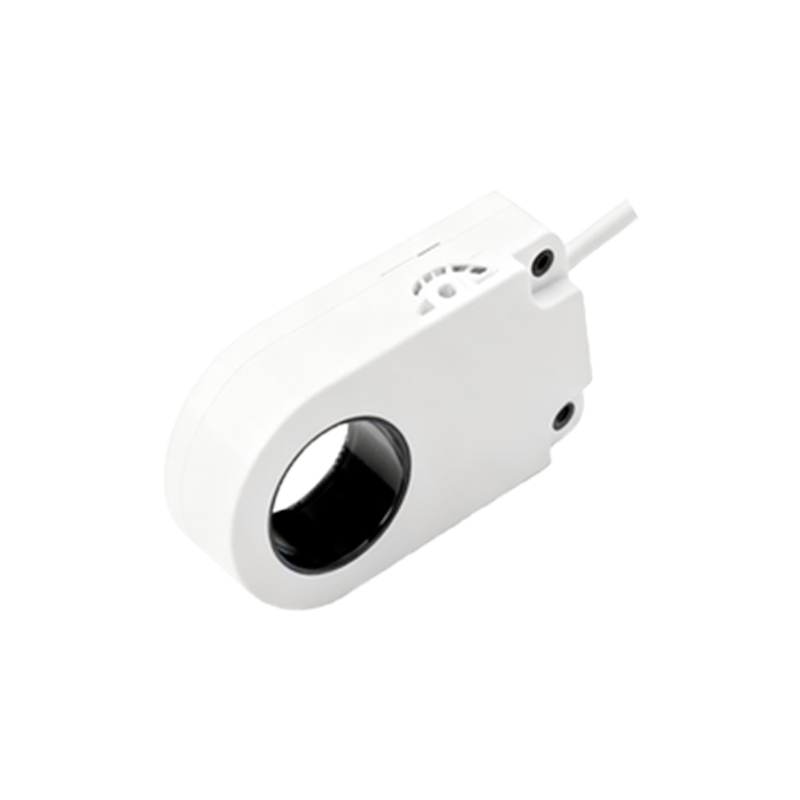
Environmental ruggedness constitutes a paramount feature. Industrial settings are fraught with challenges: vibration, extreme temperatures, moisture, and exposure to corrosive chemicals. High-quality proximity sensors are engineered with robust housings, typically from nickel-plated brass, stainless steel, or PBT plastic, offering high ingress protection (IP) ratings such as IP67 or IP69K. This ensures reliable performance in washdown environments, outdoor applications, or areas with heavy particulate matter. Their solid-state design, with no moving parts, further enhances their resistance to shock and vibration, a common cause of failure for mechanical switches.
Output configuration and programmability offer significant operational flexibility. Proximity sensors are available with various output types, including DC NPN/PNN (sourcing/sinking), analog (4-20 mA, 0-10V), and IO-Link digital communication. The advent of IO-Link smart sensors has been a game-changer, enabling not just simple on/off signals but also the transmission of detailed parametric data (e.g., switching distance, temperature, signal strength) to the controller. This allows for predictive maintenance, remote configuration, and easier troubleshooting, aligning with Industry 4.0 principles. Features like teach-in functionality, where the sensing range can be programmed via a button or remote signal, simplify installation and adaptation to different tasks.
Precision and repeatability are non-negotiable features for automation. The sensing distance, whether nominal (Sn) or effective (Sr), is precisely defined. A key specification is the repeat accuracy, which refers to the sensor's ability to consistently detect an object at the exact same point under unchanged conditions. High-quality sensors offer exceptional repeat accuracy, often within micrometers, which is vital for precision assembly, robotic guidance, and quality control processes where minute variations are unacceptable.
Furthermore, features like short-circuit protection, reverse polarity protection, and overload protection are integrated into the sensor electronics, safeguarding both the sensor and the connected control system from wiring errors or electrical faults. LED status indicators provide immediate visual feedback on power and output state, drastically reducing diagnostic time during commissioning or maintenance.
In conclusion, the distinctive features of proximity sensors—non-contact sensing, technology-specific detection, environmental robustness, flexible smart outputs, and unwavering precision—coalesce to create components that are far more than simple switches. They are intelligent enablers of efficiency, safety, and data-driven decision-making in modern industrial ecosystems. Their continued evolution, particularly with digital communication capabilities, ensures they will remain at the forefront of automation technology, adapting to increasingly complex and connected manufacturing environments.