Infrared proximity sensors are integral components in modern automation, robotics, and consumer electronics, offering non-contact detection of objects within a specified range. A critical parameter defining their performance is the sensing angle, which determines the sensor's field of view and directly impacts application suitability. This article delves into the technical aspects of sensing angles, their influence on system design, and best practices for selection and optimization.
The sensing angle, often referred to as the beam angle or detection angle, is the angular span within which an infrared proximity sensor can reliably detect an object. It is typically measured in degrees and defines a conical or fan-shaped detection zone emanating from the sensor's emitter. This angle is not arbitrary; it is a function of the infrared LED's emission characteristics, the phototransistor or photodiode receiver's sensitivity pattern, and the optical design of the lens or aperture covering these elements. A narrow sensing angle, such as 10° to 20°, results in a focused, long-range detection beam suitable for precise positioning or counting applications where environmental interference must be minimized. Conversely, a wide sensing angle, ranging from 60° to 120° or more, creates a broad detection field ideal for area monitoring, obstacle avoidance in robotics, or touchless activation in sanitary fixtures.
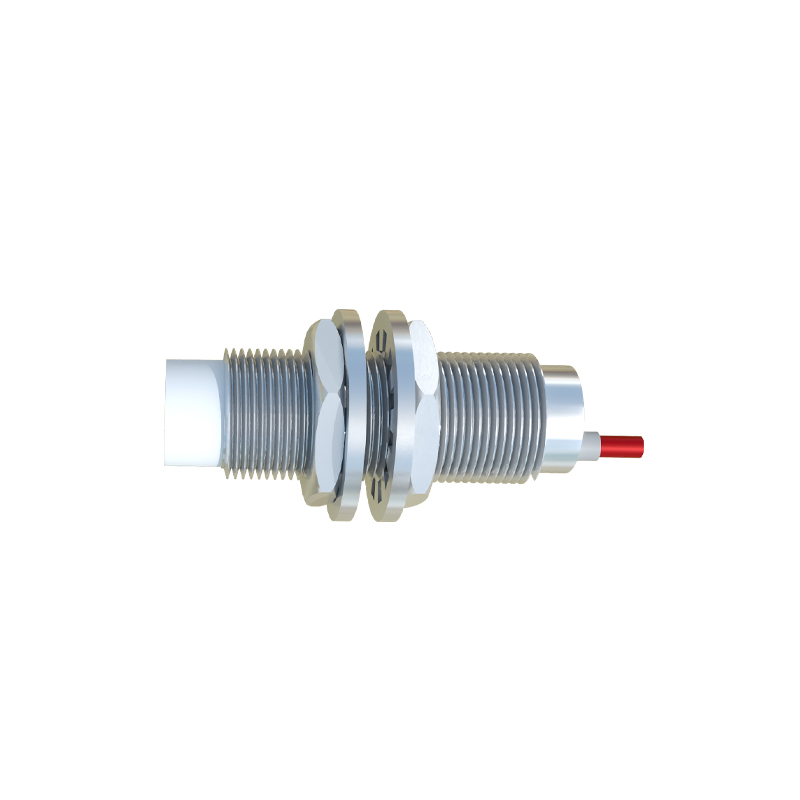
From an engineering perspective, the relationship between sensing angle, detection distance, and object reflectivity is nonlinear and interdependent. Datasheets usually specify a nominal sensing distance for a standard reflective surface (often 90% reflectivity white paper) at a given angle. However, in practical deployments, objects with lower reflectivity or non-optimal orientation may require closer proximity or a more favorable angle to trigger detection. Furthermore, ambient infrared noise from sunlight or artificial lighting can saturate the receiver, effectively reducing the usable sensing range and angle. Therefore, selecting a sensor with a modulated infrared signal (typically at 38 kHz or similar) is a standard countermeasure, as it allows the receiver to filter out constant IR noise and respond only to the modulated frequency, thereby maintaining angle and distance integrity.
The optical assembly plays a pivotal role in shaping the sensing angle. A simple infrared LED without a lens emits light in a wide pattern, often exceeding 60°. By adding a collimating lens, engineers can narrow this emission to a tight beam, reducing the sensing angle for long-range tasks. Similarly, the receiver side may employ a lens or a narrow aperture to restrict its field of view, aligning it with the emitter's pattern to minimize crosstalk from outside the intended zone. This careful optical alignment ensures that the sensor responds primarily to objects within the overlapping area of the emitter's beam and the receiver's field of view, which defines the effective sensing angle. Misalignment can lead to blind spots or reduced sensitivity at the edges of the nominal angle.
In application design, the choice of sensing angle dictates mounting and integration strategies. For instance, in an automated conveyor system detecting package presence, a narrow-angle sensor mounted perpendicular to the conveyor belt provides precise detection of each item without interference from adjacent lanes. In a mobile robot, wide-angle sensors mounted at low heights offer a bumper-like detection field for obstacles, enhancing navigation safety. It is also common to use multiple sensors with different angles to create a layered detection system; a wide-angle sensor might act as an initial alert for general proximity, while a narrow-angle sensor provides precise data for final positioning.
Calibration and testing under real-world conditions are non-negotiable for reliable operation. Engineers must verify the sensor's performance across the entire stated sensing angle with representative target objects and under expected environmental IR conditions. Adjustments in threshold sensitivity, often via a potentiometer or digital interface, can fine-tune the effective angle by determining how weak or strong a reflected signal must be to register as a detection. This allows some adaptability post-installation.
Looking forward, advancements in sensor fusion and smart algorithms are enhancing the utility of fixed sensing-angle devices. By combining data from multiple IR sensors or integrating them with ultrasonic or time-of-flight sensors, systems can dynamically interpret proximity information, effectively creating virtual sensing zones that are more complex than a simple conical angle. Nevertheless, a firm grasp of the fundamental infrared sensing angle remains essential for any engineer specifying, integrating, or troubleshooting these ubiquitous and versatile components.