In the realm of industrial automation and control systems, proximity sensors are indispensable components for non-contact detection of objects. Among the various configurations available, the 2-wire normally open (NO) proximity sensor stands out for its simplicity and widespread use. This article delves into the operational principles, wiring methodologies, key characteristics, and typical applications of these sensors, providing a comprehensive guide for engineers and technicians.
A 2-wire normally open proximity sensor is fundamentally a solid-state electronic device designed to detect the presence or absence of a target object without physical contact. The "2-wire" designation refers to its basic connection scheme: it requires only two wires for both power supply and signal output, integrating seamlessly into standard DC control circuits. The "normally open" characteristic describes its switching state when no target is within its sensing range—the circuit between its two wires is open (high impedance), allowing only a small leakage current to flow. When a valid target enters the sensor's detection field, the internal electronic switch closes, completing the circuit and allowing the load current to flow.
The core technology behind these sensors often involves an oscillator circuit that generates a high-frequency electromagnetic field at the sensing face. For inductive types, when a metallic target enters this field, eddy currents are induced, causing a change in the oscillator's amplitude. This change is detected by a threshold circuit, which triggers the solid-state switch (typically a transistor) to change state. Capacitive versions operate on a similar principle but react to changes in capacitance caused by both conductive and non-conductive materials. The entire process is rapid, reliable, and wear-free, offering significant advantages over mechanical limit switches.
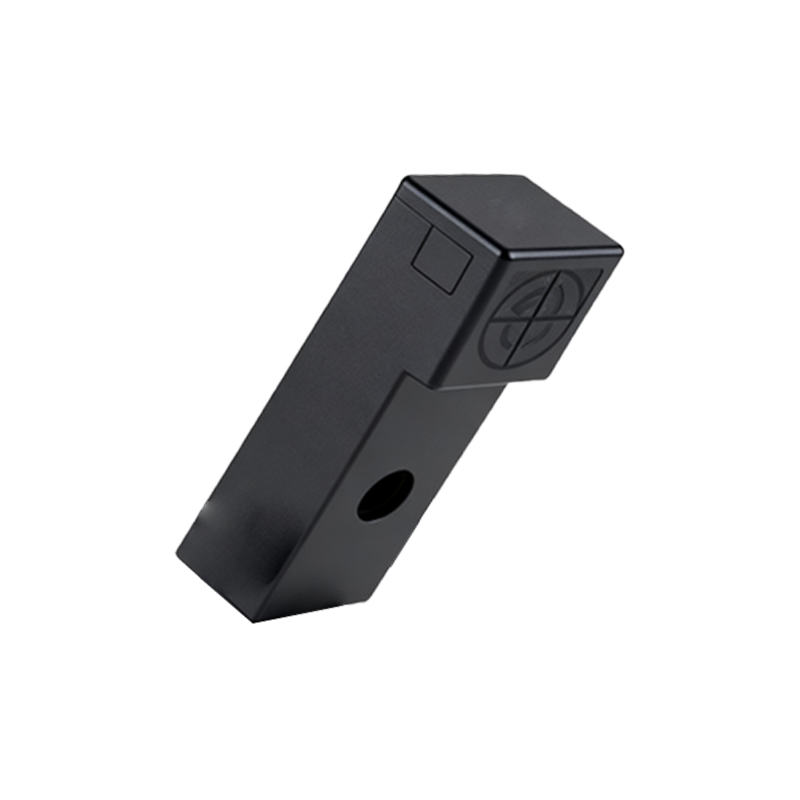
Wiring a 2-wire NO sensor is notably straightforward, which contributes greatly to its popularity. The two wires are connected in series with the load (such as a PLC input module, relay coil, or indicator lamp) and the power supply. One crucial consideration is the voltage drop across the sensor when it is in the "ON" state. Unlike a mechanical contact or a 3-wire sensor, the 2-wire sensor exhibits a residual voltage drop (typically between 1.5V and 3.5V for DC models) when conducting. This voltage is lost to the load, meaning the supply voltage must be chosen to ensure the load receives sufficient voltage to operate reliably after this drop. For instance, with a 24V DC supply and a sensor with a 2V drop, the load receives approximately 22V. Engineers must verify that the load's minimum operating voltage is below this value. Furthermore, the sensor has a small leakage current (usually under 1.5 mA) when in the "OFF" state. This current must be lower than the holding current of any relay in the circuit to prevent unintended activation.
Key specifications to evaluate when selecting a 2-wire NO proximity sensor include sensing distance, supply voltage range, switching current capacity, output type (sourcing or sinking for DC models), housing material, and environmental ratings like IP (Ingress Protection) for dust and water resistance. The switching frequency, which defines how quickly the sensor can detect successive targets, is vital for high-speed applications. Additionally, factors such as temperature stability, short-circuit and reverse polarity protection, and immunity to electrical noise are critical for robust operation in harsh industrial environments.

The applications for 2-wire normally open proximity sensors are vast and varied. They are commonly employed for simple presence detection tasks: confirming a part is in place on an assembly line, detecting the end position of a cylinder, or counting objects on a conveyor. Their simple wiring makes them ideal for replacing mechanical limit switches in control panels, reducing maintenance and increasing longevity. They are also extensively used in machine safety interlocks, liquid level control, and material handling systems. The 2-wire design reduces installation time, minimizes wiring errors, and lowers overall system cost by eliminating the need for a separate signal wire.
In summary, the 2-wire normally open proximity sensor is a cornerstone of modern industrial sensing. Its elegant combination of simplicity, reliability, and cost-effectiveness ensures its continued relevance. A thorough understanding of its operating principle—particularly the implications of voltage drop and leakage current—along with careful attention to its specifications relative to the application's demands, enables engineers to deploy these sensors effectively, building robust and efficient automation systems. As technology advances, these sensors continue to evolve with enhanced sensing ranges, smarter diagnostics, and improved connectivity, solidifying their role in the interconnected landscape of Industry 4.0.