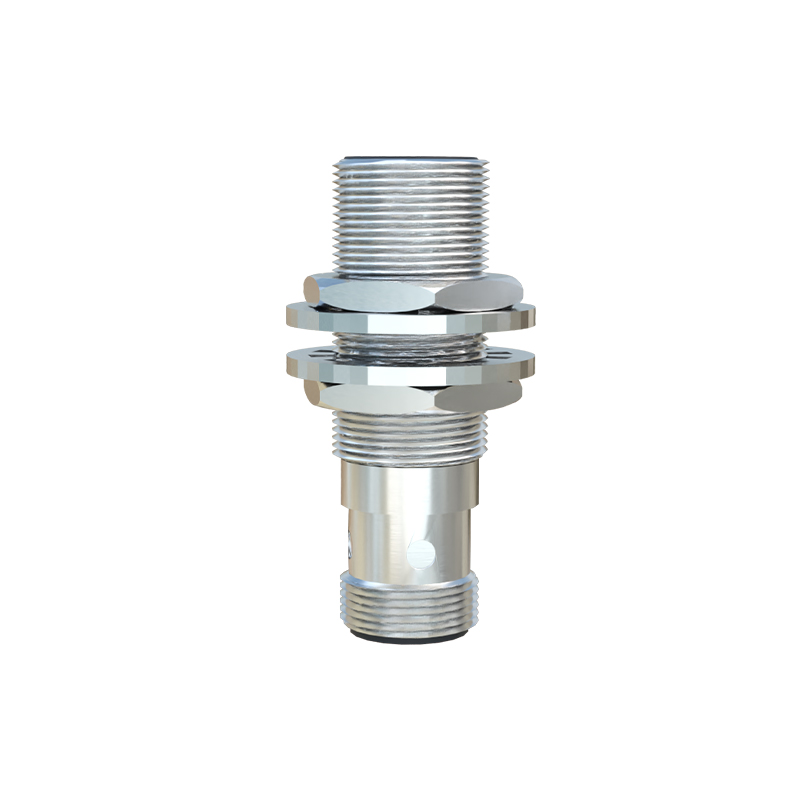
In the realm of industrial automation, the reliable detection of metallic objects is a cornerstone of countless processes, from assembly line sequencing to robotic guidance. Among the various sensor technologies employed, inductive proximity sensors stand out for their robustness and non-contact operation. While their fundamental principle of generating an electromagnetic field to detect ferrous and non-ferrous metals is well-understood, the practical aspect of sensor mounting, particularly on vertical surfaces, presents unique challenges and considerations that directly impact performance and system longevity. This article delves into the critical engineering factors for the successful vertical installation of metal proximity sensors.
The primary advantage of a vertical mounting orientation, where the sensing face is parallel to the ground, often relates to spatial constraints within machinery or the specific trajectory of the target object. For instance, detecting the side of a metal pallet on a conveyor or the flank of a robotic arm component frequently necessitates this configuration. However, this orientation introduces the persistent force of gravity acting perpendicular to the sensing axis, which can lead to the accumulation of contaminants on the active sensing face. Dust, metallic swarf, coolant fluids, or other process debris can settle on the sensor, potentially attenuating the electromagnetic field and reducing the effective sensing distance. This is less of a concern in horizontal, downward-facing mounts where gravity aids in clearing the face. Therefore, in environments with significant particulate or liquid contamination, specifying a sensor with a higher IP (Ingress Protection) rating, such as IP67 or IP69K, becomes paramount for vertical installations. The design of the sensing face itself is also a factor; a flush-mounted or flat sensor design is more susceptible to buildup compared to a non-flush design, though the latter has a shorter nominal sensing range.
Mechanical stability and vibration represent another crucial cluster of considerations. A sensor mounted on a vertical plane, especially with a bracket or arm extension, can be subject to increased moment forces and harmonic vibrations from the machinery. Over time, this can loosen mounting hardware, potentially misaligning the sensor relative to its target. Engineers must ensure that the sensor's housing and the chosen mounting hardware—typically metric bolts—are specified to withstand the vibrational profile of the application. Using thread-locking compounds, lock washers, or properly torqued nuts is a standard best practice. Furthermore, the sensor's internal construction should be evaluated; models with potted electronics or robust internal damping offer superior resistance to vibration-induced failure.
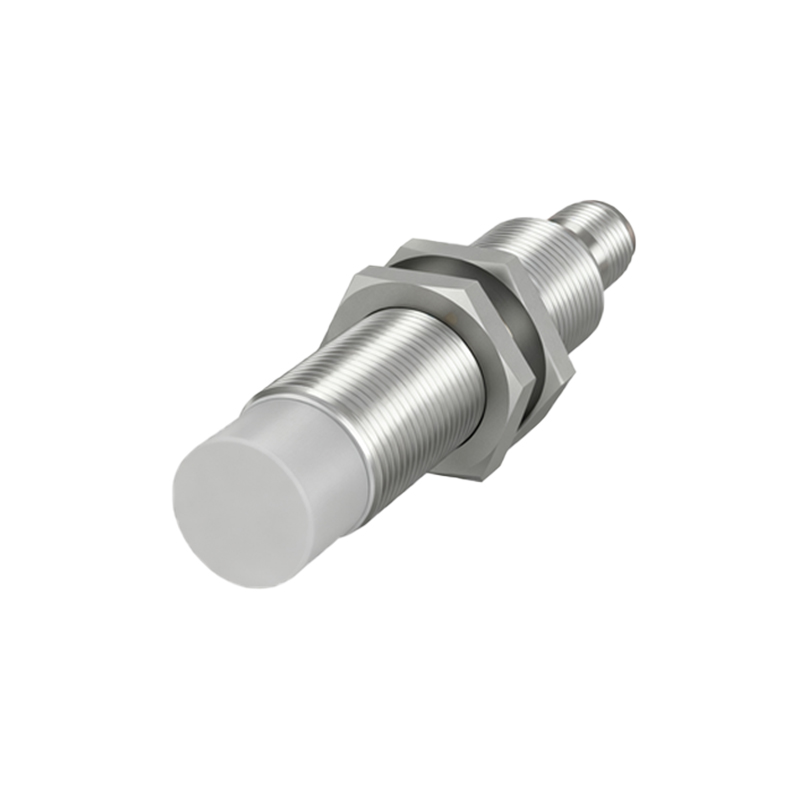
The electrical and functional characteristics of the sensor must also be aligned with the vertical mounting scenario. The declared sensing distance (Sn) is calibrated under ideal laboratory conditions. In a vertical mount, the effective operating distance may be marginally reduced due to the aforementioned contamination risk or alignment shifts. It is a standard engineering practice to apply a derating factor, often 0.8 to 0.9 of the nominal Sn, when designing the system's mechanical tolerances. This safety margin ensures reliable detection even as conditions deviate from the ideal. Additionally, the choice between a shielded (flush-mountable) and unshielded (non-flush) sensor type is critical. Shielded sensors have a more focused electromagnetic field, making them less susceptible to interference from adjacent metal in the mounting surface, which is a common concern when installing on a metal machine frame or bracket. An unshielded sensor, while offering a longer range, could potentially be triggered by the background metal structure if not properly recessed or spaced.
Finally, installation and maintenance procedures require specific attention. During installation, precise alignment is key. The sensing face must be parallel to the expected plane of the target's approach to ensure the full rated switching distance is utilized. A simple alignment tool or jig can be invaluable. For maintenance, accessibility is a key design factor. Sensors mounted high on vertical structures should be placed with consideration for easy inspection and cleaning without requiring extensive disassembly. The connector or cable outlet orientation should be chosen to prevent stress on the cable and to avoid creating a drip loop that directs fluids toward the connector seal.
In conclusion, the vertical mounting of metal proximity sensors is a routine but detail-sensitive task in industrial design. Success hinges on a holistic view encompassing environmental sealing, mechanical rigidity, electrical derating, and thoughtful installation. By systematically addressing the challenges posed by gravity, contamination, vibration, and electromagnetic fields, engineers can ensure that these versatile devices deliver their promised reliability, forming a stable and precise sensory foundation for automated systems. Specifying the right sensor model, adhering to mounting guidelines from the datasheet, and incorporating robust maintenance protocols are the hallmarks of a professional implementation.