In the realm of industrial process control and environmental monitoring, accurate and reliable water level measurement is paramount. Traditional methods, such as float gauges, pressure transducers, and ultrasonic sensors, have served well for decades. However, the advent of laser distance sensors has introduced a new paradigm in non-contact level measurement, offering unparalleled precision and versatility for water level applications. This article delves into the operational principles, key advantages, diverse applications, and critical selection criteria for water level laser distance sensors.
At its core, a water level laser distance sensor operates on the Time-of-Flight (ToF) principle. The sensor emits a focused, coherent pulse of laser light towards the water surface. This light is then reflected back to the sensor's detector. An internal high-speed clock precisely measures the time interval between the emission and the reception of the reflected pulse. Since the speed of light is a known constant, the sensor's onboard processor can calculate the distance to the water surface with extreme accuracy using the formula: Distance = (Speed of Light × Time of Flight) / 2. Modern sensors achieve sub-millimeter resolution, making them ideal for applications requiring fine granularity in level monitoring.
The advantages of using laser technology for water level measurement are significant. First and foremost is precision. Laser sensors provide the highest accuracy among non-contact methods, often with a tolerance of ±1 mm or better. This is crucial in applications like reservoir management, where small volume changes represent large quantities of water. Second is the narrow, focused beam. Unlike ultrasonic waves that diverge, a laser beam remains tightly collimated. This allows for precise targeting, even in confined spaces, tanks with internal obstructions (like ladders or agitators), or through small openings. It minimizes interference from tank walls or other structures.
Third is the lack of dependence on environmental factors that plague other sensors. Ultrasonic sensors can be affected by temperature gradients, humidity, and air turbulence, which alter the speed of sound. Laser sensors, relying on the speed of light, are virtually immune to these atmospheric variables. They also perform consistently regardless of changes in water composition, density, or conductivity, which can affect capacitive or conductive probes. Fourth is the fast response time. Laser pulses travel at the speed of light, enabling extremely rapid sampling rates, often in the kilohertz range. This allows for real-time monitoring of dynamic processes, such as rapidly filling or draining tanks, or measuring wave action in coastal studies.
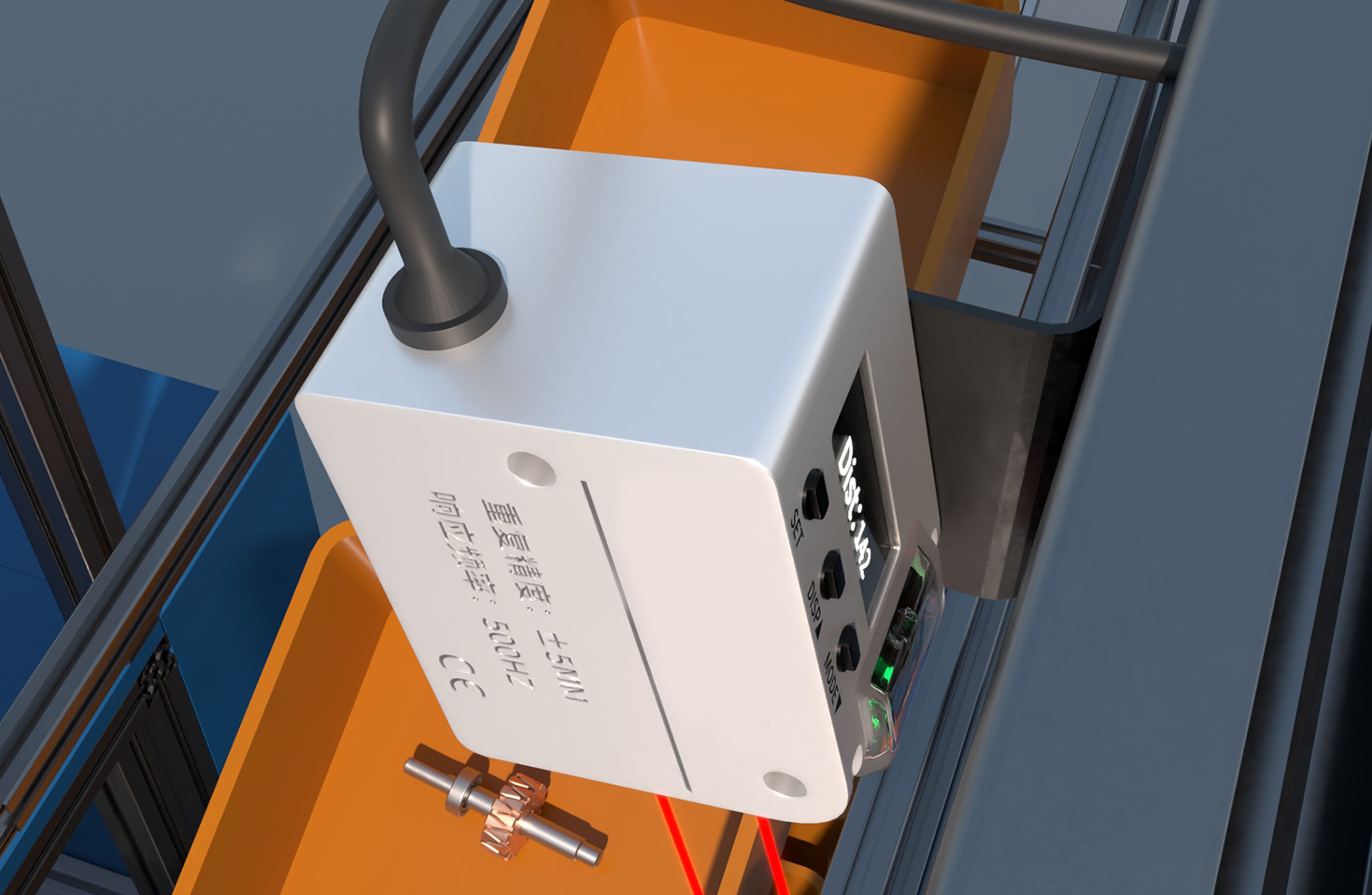
The applications for water level laser sensors span numerous industries. In water and wastewater treatment, they are used to monitor levels in clarifiers, filter beds, chemical storage tanks, and effluent channels with high precision. In the power generation sector, they ensure optimal water levels in cooling towers, feedwater tanks, and condensate collectors. Environmental monitoring agencies deploy them for river and stream gauging, lake level monitoring, and tidal measurement, where their non-contact nature prevents disturbance to the ecosystem. In the chemical and pharmaceutical industries, they provide safe, contactless measurement of corrosive or sterile liquids. Furthermore, they are invaluable in hydraulic laboratories for wave tank experiments and flow measurement in open channels.

Selecting the right water level laser sensor requires careful consideration of several parameters. The primary specification is the measuring range. Sensors are available from short-range (0.05m to 10m) for small tanks to long-range (up to 300m or more) for large reservoirs or open water bodies. The required accuracy and resolution will dictate the sensor's class and price point. The laser safety class is critical; most industrial sensors are Class 2 or Class 2M, which are safe for incidental viewing but require labeling. The housing's Ingress Protection (IP) rating is essential for durability. For outdoor or harsh washdown environments, a rating of IP67 or IP68 is typically necessary to protect against dust and water immersion.
The output interface must be compatible with the existing control system. Common options include analog (4-20 mA, 0-10 V), digital (RS-485, Modbus, Profinet, Ethernet/IP), and switching outputs. The mounting configuration and the presence of a visible alignment laser for setup are practical considerations. For applications involving turbulent or foaming water surfaces, some sensors offer advanced signal processing algorithms to filter out noise and provide a stable reading. Finally, the sensor must be rated for the ambient temperature range of the installation site.
In conclusion, water level laser distance sensors represent a sophisticated and highly effective solution for modern level measurement challenges. Their exceptional accuracy, reliability, and flexibility make them superior to many traditional technologies in a wide array of demanding applications. By understanding their operating principles and carefully evaluating application-specific requirements, engineers and technicians can leverage laser sensors to enhance process efficiency, ensure safety, and gather precise data for critical water resource management. As technology advances, these sensors continue to become more robust, intelligent, and accessible, solidifying their role as a cornerstone of industrial instrumentation.