In the world of industrial automation and control systems, proximity sensors are ubiquitous components, silently performing critical tasks like object detection, position sensing, and counting. A common question that arises among engineers, technicians, and procurement specialists is: "Is there a chip inside a proximity sensor?" The answer is not a simple yes or no, as it depends significantly on the sensor's technology, complexity, and intended application. This article delves into the internal architecture of modern proximity sensors to clarify the role of integrated circuits (ICs) or "chips.
Fundamentally, a proximity sensor detects the presence or absence of an object within its sensing range without physical contact. The core sensing technologies include Inductive, Capacitive, Ultrasonic, Photoelectric, and Magnetic (Reed switch or Hall effect). The presence and sophistication of an internal chip vary across these types.
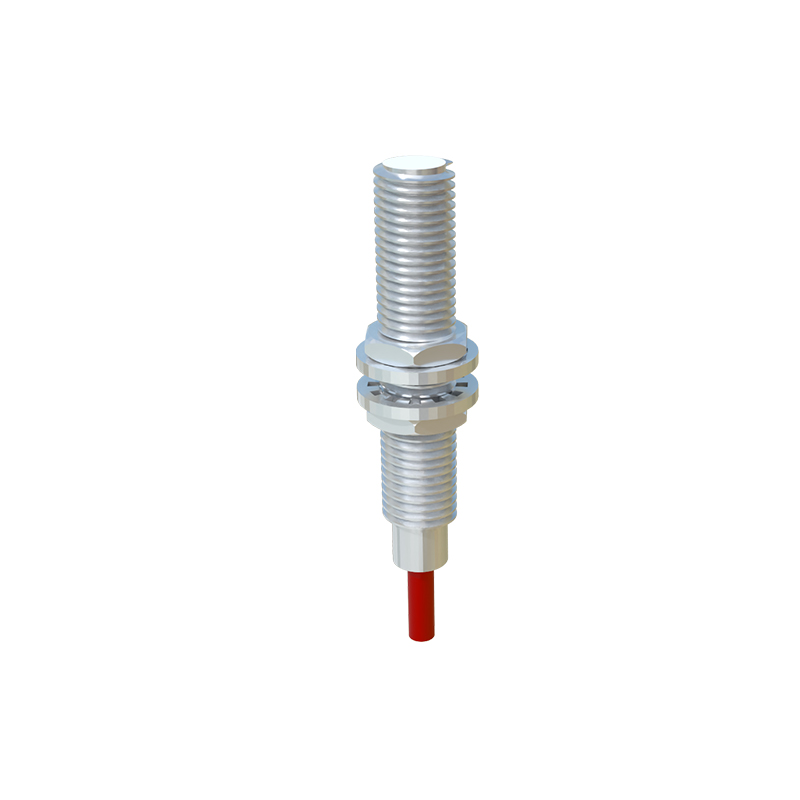
Let's start with the simplest form: the basic inductive proximity sensor. Traditional, low-cost inductive sensors designed to detect metals often utilize a discrete oscillator circuit. This circuit, built from individual components like transistors, resistors, capacitors, and a coil, generates a high-frequency electromagnetic field. When a metal object enters this field, eddy currents are induced, causing a change in the oscillation amplitude. This change is then detected, often by a simple trigger circuit, which switches the output state. In such designs, a dedicated microprocessor or complex IC might be absent. However, they still contain fundamental semiconductor components, which are, in a broad sense, chips. Modern inductive sensors, especially those with advanced features, almost invariably contain an Application-Specific Integrated Circuit (ASIC) or a microcontroller. These chips handle tasks like noise immunity, temperature compensation, sensing distance adjustment, output configuration (PNP/NPN, analog, IO-Link), and short-circuit protection. The chip intelligently processes the signal from the oscillator, leading to higher accuracy, stability, and programmability.
Capacitive proximity sensors, used for detecting both metallic and non-metallic materials, follow a similar evolution. Basic models might use comparator ICs (like the ubiquitous LM393) to detect changes in capacitance relative to a threshold. More advanced capacitive sensors integrate a dedicated IC that manages the sensitive capacitance-to-digital conversion, handles environmental interference, and provides adjustable sensitivity, often via a potentiometer or digital communication.
Photoelectric sensors represent a category where internal chips are essentially mandatory. These sensors involve a light emitter (usually an LED or laser diode) and a receiver. The receiver side requires a photodiode or phototransistor. The signal from the receiver is extremely weak and requires significant amplification and processing. This is accomplished by a dedicated amplifier IC or a microcontroller. Furthermore, chips are needed to modulate the emitted light (e.g., pulsed LED operation to suppress ambient light interference) and to demodulate the received signal. Smart photoelectric sensors with background suppression, precise distance measurement (using time-of-flight principles), or advanced communication protocols (IO-Link, Ethernet/IP) rely heavily on powerful microcontrollers or system-on-chip (SoC) solutions.
Ultrasonic sensors, which measure distance based on sound wave time-of-flight, are fundamentally electronic. They require a chip to generate the high-frequency electrical pulses that drive the ultrasonic transducer, and another chip (often a high-precision timer or a microcontroller) to measure the infinitesimally small time delay of the returning echo. Signal processing algorithms to filter out noise are also run on an internal processor.
Finally, magnetic proximity sensors based on the Hall effect are intrinsically semiconductor-based. The Hall effect sensor element itself is a chip—a small piece of semiconductor material. When exposed to a magnetic field, it produces a voltage. This output is typically conditioned by an accompanying IC that provides amplification, Schmitt-trigger functionality for a clean digital switch, or even linear analog output.
In summary, while a very basic, cost-optimized proximity sensor might operate with minimal integrated circuitry, the vast majority of proximity sensors in today's market, particularly those used in industrial settings, do contain one or more chips. These integrated circuits are the brains behind enhanced functionality, reliability, and intelligence. They enable features such as:
Diagnostics: Reporting overload conditions, contamination levels, or internal temperature.
Communication: Supporting industrial networks like IO-Link, which allows parameter setting and data readout.
Analog Output: Providing a continuous signal proportional to distance.
Enhanced Precision: Compensating for supply voltage variations and temperature drift.
Therefore, when specifying or selecting a proximity sensor, understanding its internal electronics is crucial. The presence of a sophisticated chip often correlates with higher performance, smarter features, and a slightly higher price point, but it delivers invaluable reliability and data integration capabilities in modern automated systems. The "chip" is no longer an exception; it is the central component that transforms a simple detector into an intelligent sensing