In the realm of industrial automation and precision metrology, the demand for non-contact, high-speed, and reliable distance measurement solutions is ever-growing. Among the array of technologies available, Time-of-Flight (ToF) laser displacement sensors have emerged as a powerful and versatile tool. This article delves into the operational principles, key advantages, diverse applications, and critical selection criteria for ToF laser sensors, providing a comprehensive guide for engineers and system integrators.
Fundamental Principle of ToF Technology
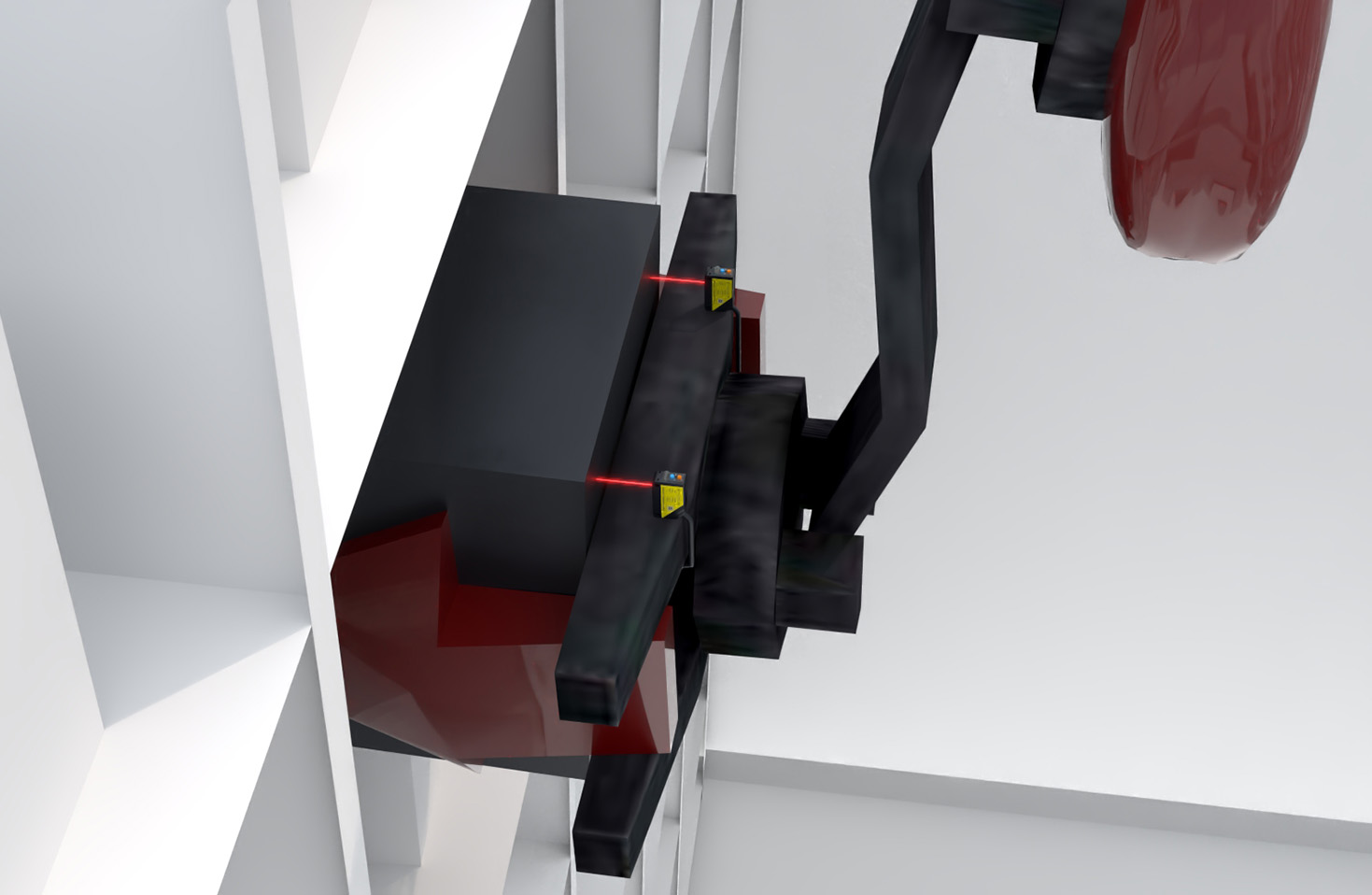
At its core, a ToF laser displacement sensor measures distance by calculating the time it takes for a laser pulse to travel from the emitter to a target object and back to the detector. The sensor emits a short, focused pulse of infrared laser light. A high-speed timer is initiated at the moment of emission. The light reflects off the target's surface and is captured by a sensitive photodetector within the sensor, which stops the timer. Given the constant speed of light (c ≈ 3×10^8 m/s), the distance (d) to the target is computed using the simple formula: d = (c × Δt) / 2, where Δt is the measured time-of-flight. Advanced signal processing algorithms are employed to filter noise and ensure accurate time measurement, even under challenging conditions.
Key Advantages Over Other Sensing Technologies

ToF laser sensors offer a distinct set of benefits that make them suitable for a wide range of industrial scenarios:
* Large Measuring Range: Capable of measuring distances from a few centimeters up to several meters without moving parts, offering great flexibility.
* High Speed: Measurement rates can reach into the tens or even hundreds of kilohertz, enabling real-time inspection on fast-moving production lines.
* Insensitivity to Target Properties: Performance is largely unaffected by surface color, texture, or material, unlike contrast-based or some triangulation sensors. However, extremely dark or absorbent materials may reduce signal strength.
* Compact and Robust Design: The coaxial optical path (emitter and detector aligned) allows for a compact sensor head, often with high IP ratings for durability in harsh environments (dust, moisture).
* Simplified Installation: With no triangulation angle to consider, alignment is generally more straightforward, and shadowing effects are minimized.
Primary Industrial Applications
The unique capabilities of ToF sensors have led to their adoption across numerous sectors:
1. Material Handling & Logistics: Level monitoring in silos and bins, palletizing/depalletizing guidance for robots, and package dimensioning (volume scanning) in warehouses.
2. Automotive Manufacturing: Gap and flush measurement between body panels (doors, hoods), chassis alignment checks, and presence detection on assembly lines.
3. Electronics & Semiconductor: Wafer mapping, PCB warpage detection, and component placement verification.
4. Mobile Machinery & Robotics: Obstacle detection and collision avoidance for AGVs (Automated Guided Vehicles) and autonomous mobile robots (AMRs), providing a long-range safety field.
5. General Industrial Automation: Conveyor belt monitoring, roll diameter measurement, and robotic bin-picking applications where the exact position of objects within a container must be identified.
Critical Factors for Sensor Selection
Choosing the right ToF laser sensor requires careful consideration of several parameters:
* Measuring Range: Define the minimum and maximum distances required. Ensure the sensor's specified range has a sufficient margin for process variations.
* Accuracy and Resolution: Distinguish between these terms. Accuracy is the closeness to the true value, while resolution is the smallest detectable change. High-speed applications may trade off some resolution.
* Measurement Rate (Frequency): Must be high enough to capture target movement without aliasing. For a fast-moving object, a higher rate provides more data points.
* Laser Class and Safety: Most industrial ToF sensors are Class 1 or Class 2 laser products, meaning they are eye-safe under normal operating conditions. Always verify the classification for the work environment.
* Environmental Robustness: Consider the required Ingress Protection (IP) rating for dust and water resistance, operating temperature range, and resistance to vibrations.
* Output Interface: Common interfaces include analog (4-20 mA, 0-10 V), digital (RS-485, Ethernet), and industrial fieldbus protocols (PROFINET, EtherNet/IP). Choose based on PLC or controller compatibility.
* Target Surface: While generally robust, performance on specular (shiny) or extremely low-reflectivity (black foam, velvet) surfaces should be validated. Some sensors offer adjustable laser power or receive sensitivity for such cases.
Future Trends and Conclusion
The evolution of ToF technology continues, driven by advancements in laser diodes, SPAD (Single-Photon Avalanche Diode) detectors, and computational power. We are seeing trends towards multi-pixel ToF cameras for 3D profiling, enhanced ambient light suppression, and smarter sensors with embedded edge-processing capabilities. These developments will further expand the application boundaries of ToF sensing.
In summary, Time-of-Flight laser displacement sensors provide a robust, fast, and versatile solution for non-contact distance measurement across a vast landscape of industrial challenges. By understanding their operating principle, recognizing their strengths, and meticulously evaluating application requirements against sensor specifications, engineers can effectively harness this technology to enhance automation, improve quality control, and drive operational efficiency. As with any precision instrument, consultation with sensor specialists and practical testing with actual target samples under real conditions is highly recommended for optimal system integration.