In the realm of industrial automation and control systems, proximity switches stand as fundamental components for non-contact object detection. Among the various configurations available, the DC 3-wire sensor has emerged as a prevalent and highly reliable standard. This article delves into the operational principles, wiring configurations, key advantages, and critical application considerations for DC 3-wire proximity sensors, providing a thorough technical overview for engineers and system integrators.
At its core, a proximity switch is a sensor that detects the presence or absence of an object without physical contact. DC 3-wire sensors are specifically powered by a direct current supply, typically ranging from 10 to 30 VDC. The "3-wire" designation refers to the distinct wiring terminals: one for the positive supply voltage (brown wire), one for the negative/common ground (blue wire), and one for the output signal (black wire). This configuration separates the power and output circuits, offering significant flexibility compared to 2-wire designs.
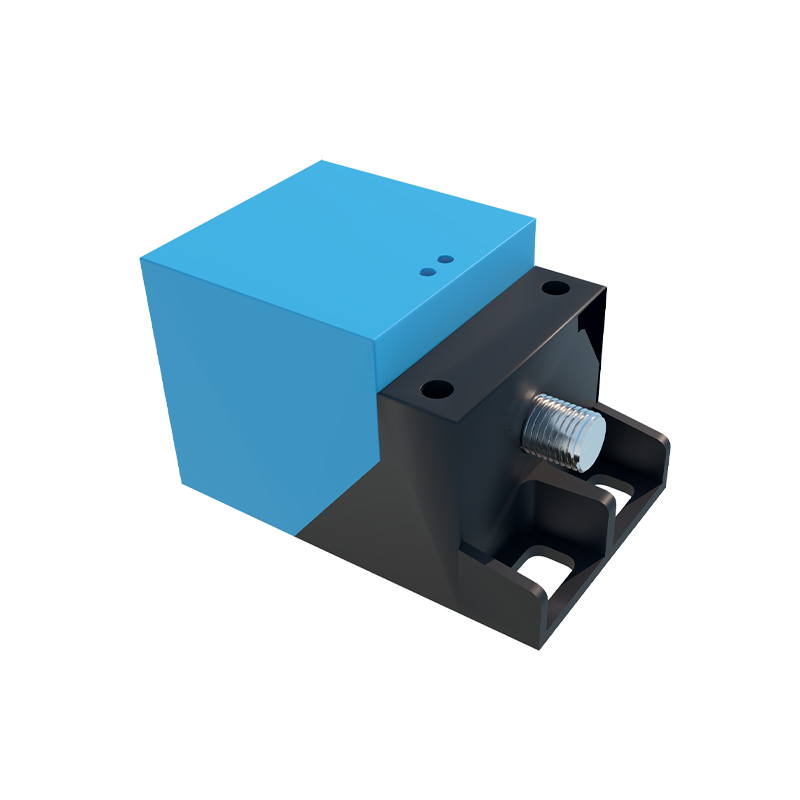
The operating principle is based on an oscillator circuit that generates a high-frequency electromagnetic field at the active face of the sensor. When a metallic target (ferrous or non-ferrous, depending on the sensor type) enters this field, it induces eddy currents that dampen the oscillation. This damping is detected by the sensor's evaluation circuit, which subsequently triggers a change in the output state. The output can be either normally open (NO) or normally closed (NC), and it comes in two primary transistor types: NPN (sinking) and PNP (sourcing). The choice between NPN and PNP is crucial and depends on the input configuration of the connected programmable logic controller (PLC) or control device.
Wiring a DC 3-wire sensor is straightforward but requires attention to detail. The brown wire connects to the positive DC supply voltage. The blue wire connects to the negative side of the power supply (0V). The black wire is the switched output, which must be connected to the load (e.g., a PLC input). For an NPN sensor, the black wire sinks current to ground when active, meaning the load must be connected between the positive supply and the output. Conversely, for a PNP sensor, the black wire sources current from the positive supply when active, requiring the load to be connected between the output and ground. A common error is mismatching the sensor output type with the controller input, leading to non-operation.
The advantages of the 3-wire DC design are substantial. Firstly, they exhibit very low leakage current (often negligible) when in the "off" state, preventing false triggering in sensitive control circuits. Secondly, they offer a higher switching speed and frequency response compared to 2-wire AC/DC sensors, making them suitable for high-speed counting and positioning applications. Thirdly, the separate power and output lines allow for a wider range of output configurations and easier integration with solid-state electronics. They also generally have a longer operational life due to the absence of mechanical contacts and lower power dissipation.
When selecting and applying a DC 3-wire proximity sensor, several factors must be considered. The sensing distance, or nominal range, is specified by the manufacturer and should be derated for non-ferrous targets. The housing material (e.g., brass, stainless steel, PBT plastic) must be chosen based on the environmental conditions, including exposure to chemicals, washdowns, or physical impact. Shielded (flush-mountable) or unshielded (non-flush) models are available; shielded sensors can be mounted flush in metal without affecting their sensing field, while unshielded types offer a longer sensing range but require a non-metallic surrounding. Electrical protection against short-circuits, reverse polarity, and voltage spikes is a standard feature in quality sensors but should be verified. Finally, ensuring the load current does not exceed the sensor's maximum rating is essential for reliable operation.
In conclusion, the DC 3-wire proximity sensor is a versatile and robust solution for modern industrial sensing tasks. Its clear separation of power and signal, combined with fast response times and excellent reliability, makes it a cornerstone of automated systems in packaging, material handling, machine tooling, and robotics. Understanding its wiring, output types, and application nuances is key to designing efficient and fault-resistant control systems. As technology advances, these sensors continue to evolve with enhanced diagnostics, IO-Link communication capabilities, and increased resistance to harsh environments, solidifying their role in the future of industrial automation.