In the rapidly evolving landscape of industrial automation and the Internet of Things (IoT), sensors are the fundamental components that enable data acquisition and system control. The manufacturing of these critical devices demands unparalleled precision, reliability, and permanent identification. This is where advanced laser marking technology has become indispensable. Unlike traditional marking methods such as inkjet printing or mechanical engraving, laser marking offers a non-contact, programmable, and highly precise solution for applying permanent marks on sensor housings, connectors, and internal components.
The core principle involves using a focused laser beam to alter the surface properties of the material. For sensors, which are often made from metals like stainless steel or aluminum, and engineering plastics such as PEEK or polycarbonate, different laser types are employed. Fiber lasers are exceptionally effective for metals, creating high-contrast marks through annealing, engraving, or ablation. For plastics and ceramics, UV lasers operate with a shorter wavelength, causing minimal thermal damage and producing crisp, clean marks without compromising the material's structural integrity. This precision is crucial, as even micron-level inaccuracies can affect sensor calibration or performance.
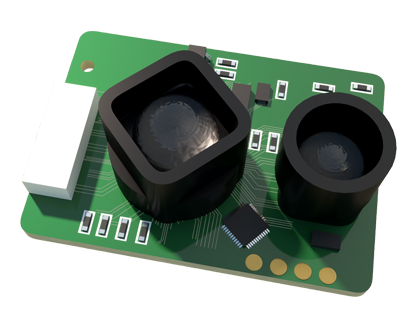
The applications within sensor manufacturing are extensive and critical. Primarily, laser marking is used for applying unique serial numbers, 2D Data Matrix codes, barcodes, and part numbers. This facilitates complete traceability throughout the product's lifecycle—from production and quality control to installation in the field and eventual maintenance. In an industry governed by strict standards like ISO 9001 and automotive IATF 16949, such traceability is not a luxury but a mandatory requirement. Furthermore, laser systems can mark calibration data, manufacturer logos, and safety symbols directly onto the miniature surface of a sensor, ensuring the information remains legible under harsh conditions.
The advantages of integrating a laser marking system into a sensor production line are multifaceted. First and foremost is permanence. Laser marks are resistant to abrasion, chemicals, heat, and UV exposure, guaranteeing that identification lasts as long as the sensor itself. This is vital for sensors deployed in demanding environments like oil & gas, aerospace, or automotive engine compartments. Secondly, the process is highly automated and flexible. Modern laser markers integrate seamlessly with robotic handlers and vision systems, allowing for high-speed, in-line marking without slowing down production. The marking parameters can be changed instantly via software for different product batches, enabling mass customization.
Moreover, laser marking is an eco-friendly and cost-effective solution. It eliminates the need for consumables like inks, solvents, or tool bits, reducing operational costs and environmental waste. The non-contact nature also means there is no tool wear or mechanical stress on the delicate sensor components, leading to higher yield rates and reduced scrap.
When selecting a laser marking system for sensor production, engineers must consider several key parameters. The choice of laser source (fiber, UV, green), its power, and pulse frequency must match the target materials. The marking field size and beam delivery system (galvanometer scanners) determine the speed and area of operation. Integration capabilities with existing Manufacturing Execution Systems (MES) and Enterprise Resource Planning (ERP) software are essential for automated data flow and control. Finally, the system must be housed in an appropriate safety enclosure with fume extraction to protect operators and comply with laser safety regulations (e.g., IEC 60825).
In conclusion, as sensors become more sophisticated and their applications more critical, the need for robust, permanent, and high-resolution marking grows concurrently. Laser marking technology is no longer just an ancillary step in manufacturing; it is a core enabler of quality, traceability, and efficiency. By providing a permanent "digital birth certificate" on every sensor, laser systems ensure reliability, support stringent industry compliance, and ultimately, build trust in the data-driven systems that modern industry relies upon. The future will likely see further integration with AI-driven vision inspection, ensuring every mark is not only present but perfectly readable, closing the loop on quality assurance in smart sensor manufacturing.