In the realm of industrial automation, precise and reliable object detection is paramount. Among the diverse array of sensing technologies, capacitive proximity sensors stand out for their unique ability to detect a wide range of materials, including non-metallic objects, through non-contact means. Unlike their inductive counterparts, which are limited to metals, capacitive sensors operate on the principle of capacitance change, making them exceptionally versatile tools for modern manufacturing, packaging, and process control.
The fundamental operating principle hinges on the concept of an open capacitor. The sensor's active surface, along with a grounded guard ring, forms one electrode, while the target object acts as the second electrode. The space between them is the dielectric. When an object enters the sensor's electrostatic field, it alters the dielectric constant and thus the capacitance of the system. The sensor's internal oscillator circuit is tuned to a specific threshold. This change in capacitance causes a shift in the oscillator's amplitude or frequency. Once this shift surpasses the predefined threshold, the sensor's output state switches, signaling the presence of the object. This mechanism allows for the detection of solids, liquids, granules, and even powders, provided they have a dielectric constant different from air.
Key performance characteristics define their application suitability. Sensing range, typically from a few millimeters to about 25 mm for standard models, is a critical specification. It's important to note that the effective sensing distance (Sn) can be influenced by the target material's properties; for instance, water has a high dielectric constant and can be detected from a greater distance than plastic. The response frequency indicates how quickly the sensor can detect objects in rapid succession, crucial for high-speed production lines. Factors like temperature stability, housing material (often PBT or stainless steel), and protection ratings (e.g., IP67 for dust and water immersion) are vital for harsh industrial environments. Furthermore, output configurations, including NPN/PNN transistors, analog outputs (4-20 mA, 0-10V), or IO-Link for digital communication, provide flexibility for integration into various control systems.
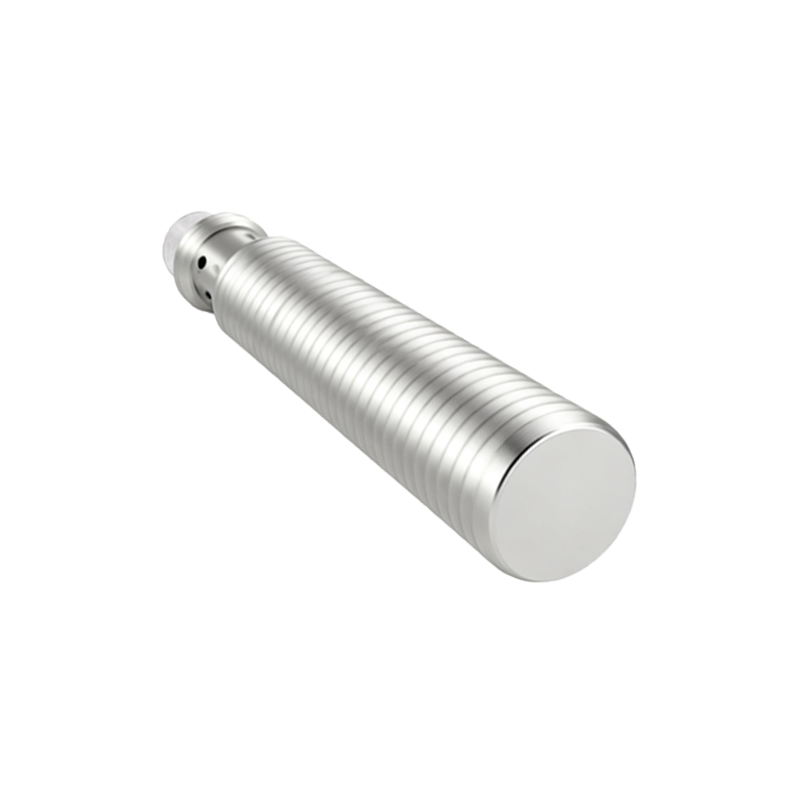
The applications for capacitive sensors are vast and varied. In packaging, they reliably detect the presence of plastic or glass bottles, cardboard boxes, and foil wrappers on conveyor belts. In the food and beverage industry, they are indispensable for monitoring liquid levels in non-metallic tanks or detecting the fill level of powders in silos through container walls. Wood processing, plastics manufacturing, and pharmaceutical production all leverage their ability to sense materials where inductive sensors fail. They are also used for presence detection of labels, monitoring of paper stacks, and as non-contact switches.
Selecting the right capacitive sensor requires careful consideration. First, identify the target material and its dielectric constant. For challenging applications like detecting very thin materials or through thick container walls, sensors with adjustable sensitivity (potentiometer or teach-in function) are essential. The installation environment dictates the required housing style (cylindrical, rectangular, flat) and ingress protection rating. Electrical requirements, such as supply voltage (10-30V DC or 20-250V AC) and output type, must match the control system. For applications requiring precise distance measurement or material composition analysis, analog-output sensors are the preferred choice.
Installation and commissioning also demand attention. Mounting the sensor correctly is crucial; metallic surroundings or other sensors in close proximity can cause mutual interference and false triggering. Most sensors feature a shielded design to focus the field forward, but unshielded types offer a larger lateral sensing field for specific needs. During setup, the sensitivity should be adjusted with the target object in place to achieve reliable operation without nuisance trips from background objects. Regular maintenance involves cleaning the sensing face from dust, moisture, or product buildup, which can otherwise affect performance.
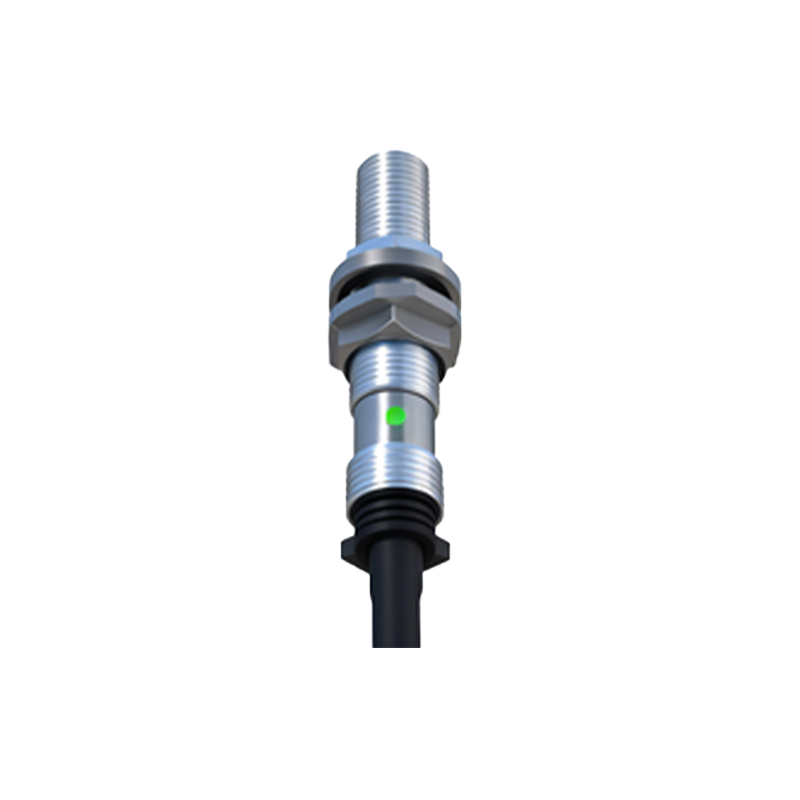
In conclusion, capacitive proximity sensors are a cornerstone of flexible industrial automation. Their material-agnostic detection capability fills a critical gap left by other sensor types. By understanding their operating principles, key specifications, and application nuances, engineers and technicians can effectively deploy these robust sensors to enhance process reliability, improve quality control, and enable more complex automation tasks. As industries continue to diversify their materials and processes, the role of the capacitive sensor will only grow in importance, solidifying its status as an indispensable component in the smart factory.