In the rapidly evolving landscape of industrial automation, proximity sensors stand as fundamental components for enabling non-contact detection, object positioning, and process control. Their classification, however, has grown increasingly complex with technological advancement. Moving beyond simple inductive or capacitive labels, a modern, systematic classification standard is essential for engineers to specify, integrate, and maintain these critical devices effectively. This framework is built upon four primary axes: detection principle, output configuration, form factor, and performance characteristics.
The cornerstone of classification remains the Detection Principle. Inductive sensors, generating an electromagnetic field to detect metallic objects, are the workhorses of metal detection. Capacitive sensors, which sense changes in capacitance, excel at detecting a wider range of materials, including liquids, powders, and non-metals. Ultrasonic sensors utilize sound waves to measure distance and detect objects, effective even in dusty or misty environments. Photoelectric sensors, employing light beams (visible, infrared, or laser), offer long-range detection and high precision for diverse surfaces. Finally, magnetic sensors (e.g., reed switches, Hall effect) are specialized for detecting permanent magnets, commonly used in cylinder position sensing.
The Output Configuration defines the electrical interface and logic. The binary choice between NPN (sinking) and PNP (sourcing) transistor outputs remains critical for compatibility with PLC input modules. Digital (discrete) outputs are standard for simple on/off detection, while analog outputs (4-20 mA, 0-10 V) provide continuous signal proportional to distance, enabling precision measurement. Increasingly, IO-Link, a point-to-point serial communication protocol, is becoming a de facto standard for smart sensors, offering digital bidirectional data exchange for configuration, diagnostics, and process value transmission, blurring the line between a simple switch and a measuring device.
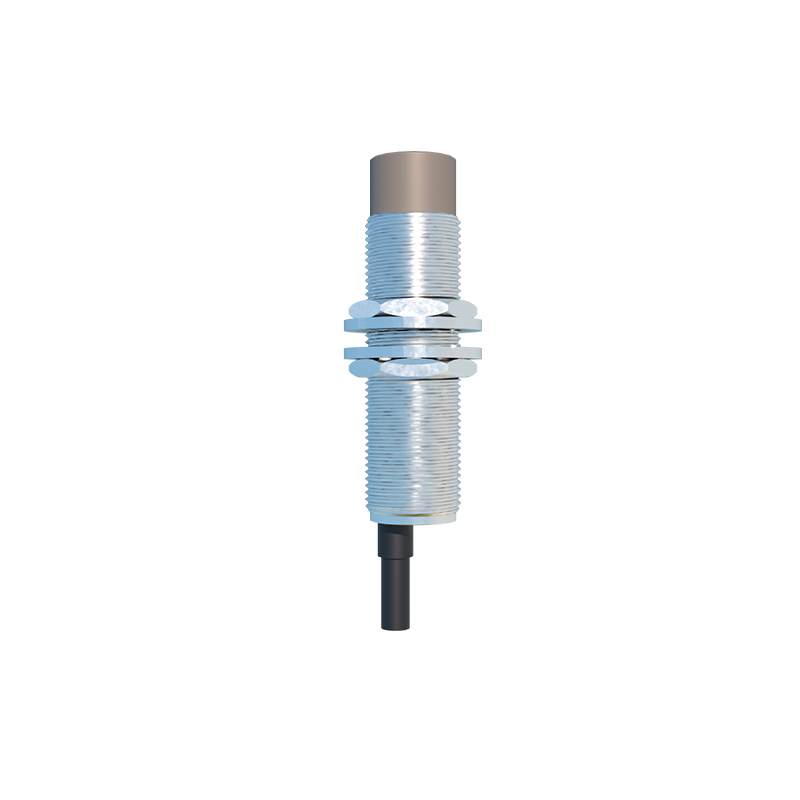
Form Factor and Housing classification addresses mechanical and environmental integration. Cylindrical (threaded barrel) sensors are ubiquitous for easy mounting. Rectangular or block-style housings offer multi-directional sensing faces. Slot-style sensors are designed for specific applications like label detection. Crucially, the Ingress Protection (IP) rating (e.g., IP67, IP69K) and National Electrical Manufacturers Association (NEMA) ratings classify the sensor's resilience against dust and water, determining suitability for harsh washdown or outdoor environments. Materials like stainless steel (V4A/AISI 316L) or PTFE-coated housings further define chemical resistance.
Performance and Functional Characteristics form the final, detailed layer of specification. Sensing range, typically defined as the nominal operating distance (Sn), is a primary differentiator. Repeatability, the consistency of the switching point, is often more critical than absolute accuracy for control tasks. Response frequency indicates how quickly the sensor can detect objects passing in sequence. Additional features like temperature compensation, weld-field immunity (for inductive sensors), and built-in diagnostics (via LED indicators or IO-Link) are now key classification markers for high-reliability applications.
The convergence of these classification axes is most evident in the rise of "Smart Sensors." An inductive proximity sensor with IO-Link, a stainless-steel IP69K housing, and analog output capability represents a hybrid category that transcends traditional labels. Furthermore, application-specific classifications are emerging, such as Factor 1 (standard) vs. Factor 2 (reduced) sensing distances for inductive sensors in metal-laden environments, or background suppression technology for photoelectric sensors.
For system designers, a modern selection process is no longer about choosing just an "inductive sensor." It is a structured evaluation: First, determine the target material (Principle). Second, define the required interface and data need (Output). Third, assess the physical and environmental constraints (Form Factor). Finally, specify the necessary precision, speed, and smart features (Performance). Adopting this multi-dimensional classification standard ensures optimal sensor selection, reduces integration errors, and future-proofs automation systems by aligning with the industry's shift towards digitalization and Industry 4.0 data-centric architectures. The clear trend is towards sensors that are not merely detectors but intelligent nodes providing rich parametric data for predictive maintenance and process optimization.