In the realm of industrial automation and machine safety, proximity sensors stand as silent sentinels, enabling precise, non-contact detection of objects. Among the myriad of options available, the F5538 proximity sensor has carved out a significant reputation for reliability and performance in demanding environments. This article delves into the technical specifications, operational principles, and key application areas of the F5538, providing a detailed overview for engineers and system integrators.
The F5538 is typically an inductive proximity sensor. This technology operates on the principle of electromagnetic induction. The sensor generates a high-frequency oscillating electromagnetic field from its active face. When a metallic object enters this detection field, eddy currents are induced on the surface of the target. These eddy currents draw energy from the oscillator circuit within the sensor, causing a measurable change in its amplitude. This change is detected by the sensor's circuitry, which subsequently triggers a solid-state output switch (typically PNP or NPN configuration). The key advantage of this inductive principle is its ability to detect ferrous and non-ferrous metals without any physical contact, thereby eliminating mechanical wear and enabling high-speed operation.
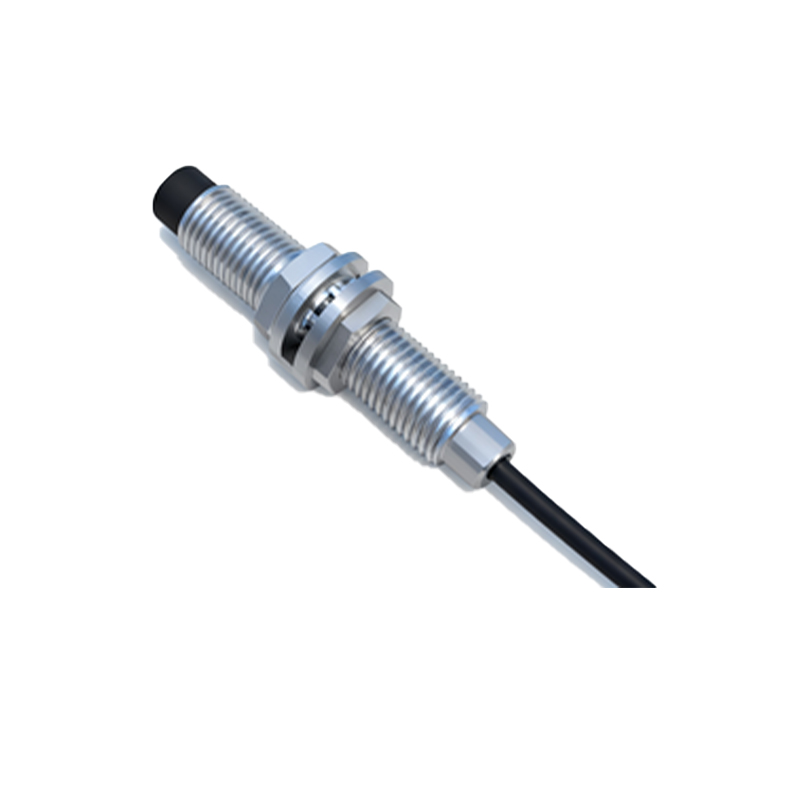
A critical examination of the F5538's datasheet reveals features tailored for industrial robustness. Its housing is commonly constructed from nickel-plated brass or stainless steel, offering excellent resistance to corrosion, oils, and coolants. Many models boast an IP67 or higher ingress protection rating, making them suitable for washdown environments common in food processing or pharmaceutical applications. The sensing distance, or "sn," is a standardized parameter. For a standard F5538, this nominal sensing distance is precisely defined (e.g., 8mm), and it is crucial to note that the effective operating distance can be influenced by the target material's type, size, and shape. For instance, steel targets are detected at the full nominal distance, while aluminum or copper may reduce the effective range. The sensor typically features a built-in LED status indicator, providing immediate visual feedback on power and output state, which is invaluable for troubleshooting.
Electrical characteristics are paramount for integration. The F5538 operates on a wide range of DC voltages, commonly from 10-30V DC. Its output is often a 3-wire configuration, with options for normally open (NO) or normally closed (NC) switching logic. The load current capacity, often around 200mA, is sufficient to drive PLC inputs, relays, or small solenoids directly. A key feature in many versions is short-circuit and reverse polarity protection, safeguarding the sensor from common wiring errors. Response frequency, measured in Hertz, indicates how quickly the sensor can detect objects passing by, a vital factor for high-speed counting or sorting applications.
The application landscape for the F5538 proximity sensor is vast. In automated assembly lines, it is used for part presence verification, ensuring a component is in place before a robotic arm performs an operation. Within material handling systems, these sensors count products on conveyors or detect the position of pallets. In machine tools, they serve as limit switches to define the travel boundaries of moving parts, contributing to operational safety and precision. Packaging machinery relies on them for label detection, cap placement checks, and fill level control. Their rugged design also makes them ideal for harsh outdoor or heavy-industry settings like metal stamping or automotive manufacturing, where they monitor cylinder piston position or detect metal fragments.
Installation and maintenance best practices are straightforward but essential. Engineers must ensure an adequate mounting clearance around the sensor's sensing face to prevent false triggers from surrounding metal structures, a concept known as "flush-mountable" or "non-flush" installation. Proper shielding of the cable run, especially in environments with strong electromagnetic interference from motors or welders, is recommended. While inductive sensors like the F5538 are largely maintenance-free, periodic checks should include cleaning the sensing face of debris and verifying the stability of the mounting hardware. Diagnosing issues often starts with the LED indicator; a constantly lit LED might indicate a wiring fault or a target permanently within range, while a non-illuminated LED points to a power supply issue.
In conclusion, the F5538 proximity sensor exemplifies the fusion of robust physical design with reliable electronic sensing. Its inductive technology provides a contactless, long-life solution for object detection in countless industrial scenarios. For engineers, understanding its specifications—from sensing distance and housing material to output type and protection ratings—is key to selecting the right model for a given application. By adhering to proper installation guidelines and recognizing its operational limits, the F5538 becomes a dependable component that enhances both the efficiency and safety of modern automated systems, proving that even the smallest sensors can play an outsized role in industrial productivity.