Phase proximity sensors, also known as inductive proximity sensors, are widely used in industrial automation for detecting the presence or absence of metallic objects without physical contact. Their operation relies on electromagnetic principles, specifically the change in oscillation frequency within a resonant circuit when a conductive target enters the sensor's active field.
At the core of a phase proximity sensor is an oscillator circuit that generates a high-frequency electromagnetic field via a coil wound around a ferrite core. When no target is present, the oscillator operates at its base frequency. As a metallic object approaches the sensor, eddy currents are induced on the surface of the target due to the alternating magnetic field. These eddy currents draw energy from the oscillator, causing a shift in the oscillation frequency or amplitude. This change is detected by a threshold circuit, which then triggers an output signal—typically a solid-state switch—to indicate the object's presence.
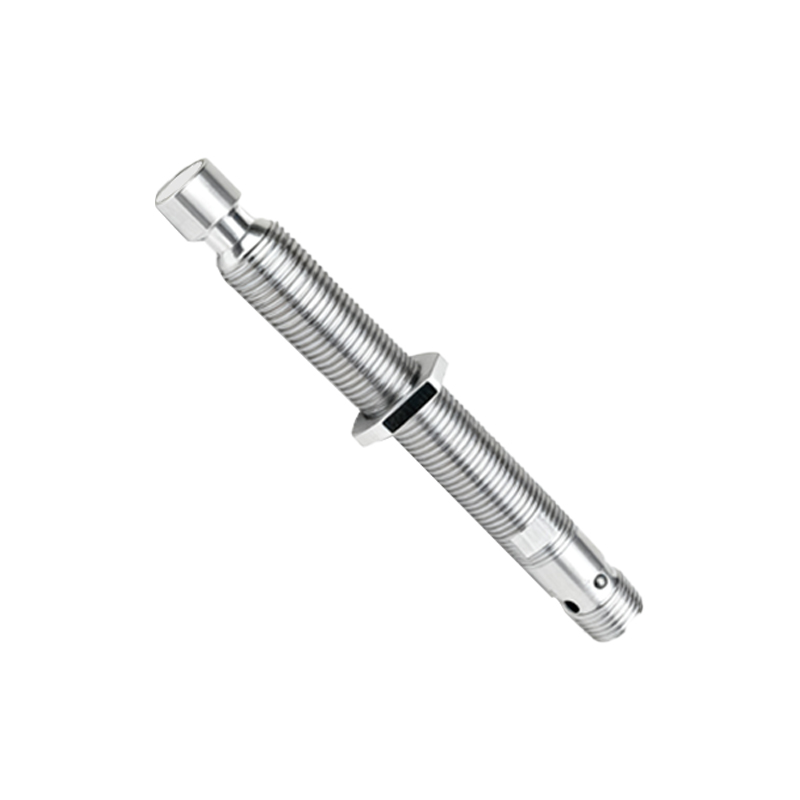
The sensitivity and detection range of phase proximity sensors depend on factors such as the target material, size, and shape. Ferrous metals like iron and steel generally yield the longest detection distances due to their high magnetic permeability, while non-ferrous metals like aluminum or copper may require closer proximity. Modern sensors often incorporate temperature compensation and shielding to minimize interference from external electromagnetic noise, ensuring reliable operation in harsh industrial environments.
One key advantage of phase proximity sensors is their ability to function in dirty or wet conditions where mechanical switches might fail. They are commonly employed in applications such as position sensing, counting, speed monitoring, and end-of-travel detection in machinery. For instance, in conveyor systems, these sensors can detect passing metal parts to control sorting or packaging processes. In automotive assembly lines, they verify the presence of components like engine blocks or brake discs.
Advanced versions include analog output sensors that provide continuous distance measurement rather than simple on/off signals, enabling precise positioning tasks. Additionally, some models feature built-in diagnostics or IO-Link communication for integration into Industry 4.0 networks, allowing real-time monitoring and adjustment.
When selecting a phase proximity sensor, engineers must consider parameters like sensing distance, response time, and environmental ratings. Proper installation is crucial—sensors should be mounted away from other metal surfaces to avoid false triggering, and cabling must follow manufacturer guidelines to prevent signal degradation.
In summary, phase proximity sensors offer a robust, non-contact solution for metal detection in automation. Their reliance on electromagnetic phase shifts ensures high repeatability and longevity, making them indispensable in modern manufacturing and process control.