Laser backscatter sensors are pivotal components in modern industrial automation, offering non-contact measurement and detection capabilities across diverse environments. These sensors operate on the principle of emitting a focused laser beam toward a target and analyzing the backscattered light—the portion of light reflected back to the sensor. The intensity, phase, or frequency shift of this returned signal provides critical data about the target's properties, such as distance, surface texture, concentration of particles, or presence of contaminants. In industrial settings, this technology enables precise monitoring without physical contact, reducing wear and maintenance while enhancing accuracy in harsh conditions like high temperatures, dust-laden atmospheres, or corrosive environments.
A key advantage of laser backscatter sensors lies in their versatility. For instance, in manufacturing lines, they are deployed for quality control by detecting minute defects on surfaces or measuring thickness variations in materials like metals, plastics, or coatings. The sensors can identify inconsistencies as small as micrometers, ensuring product uniformity and reducing waste. In environmental monitoring, they are used to gauge aerosol concentrations or pollution levels by analyzing backscatter from airborne particles, aiding in compliance with safety regulations. Additionally, in the chemical and pharmaceutical industries, these sensors facilitate real-time analysis of fluid mixtures or powder densities, optimizing process efficiency and minimizing human error.
The underlying technology typically involves a laser diode as the light source, which emits coherent light at specific wavelengths—often in the infrared or visible spectrum. A photodetector then captures the backscattered signal, which is processed by integrated electronics to extract meaningful parameters. Advanced models incorporate algorithms to filter noise and compensate for ambient light interference, ensuring reliable performance even in dynamic industrial scenarios. For example, in automotive assembly, laser backscatter sensors can precisely align components by measuring distances to reflective surfaces, while in agriculture, they assist in monitoring crop health by assessing leaf reflectance.
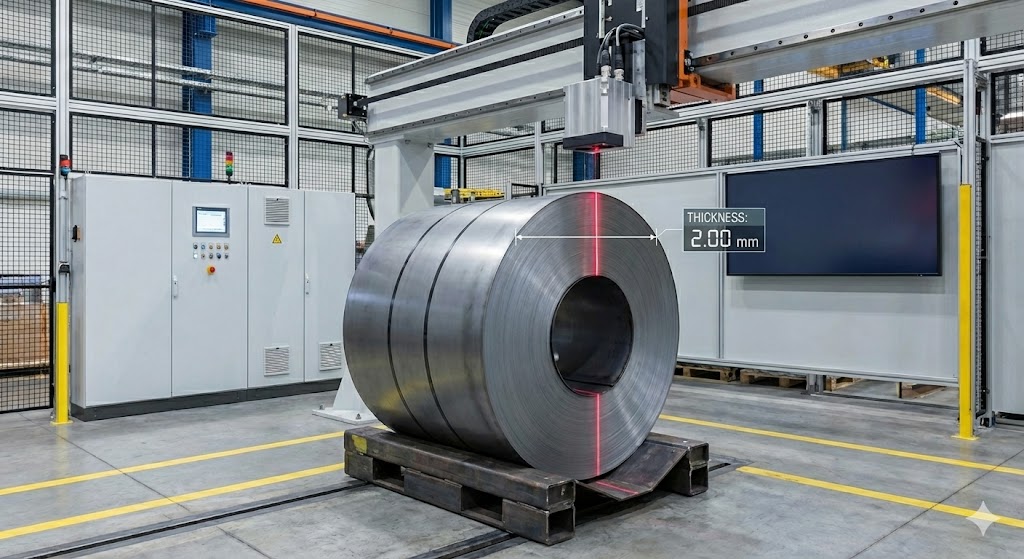
Despite their robustness, selecting the right laser backscatter sensor requires careful consideration of factors like range, resolution, response time, and environmental resilience. Sensors with longer wavelengths may penetrate fog or smoke better, whereas those with higher power outputs suit long-range applications but must adhere to safety standards to prevent eye damage. Regular calibration and maintenance are essential to sustain accuracy, as contamination on lenses or misalignment can degrade signal quality. Innovations in this field continue to emerge, such as the integration of fiber optics for remote sensing or the use of multi-wavelength lasers for enhanced material discrimination.

In summary, laser backscatter sensors represent a cornerstone of industrial automation, driving efficiency and precision across sectors. Their ability to deliver non-invasive, real-time data makes them indispensable for tasks ranging from defect detection to environmental analysis. As industries evolve toward smarter, more connected systems, these sensors are poised to play an even greater role, with ongoing research focusing on miniaturization, cost reduction, and improved sensitivity. By leveraging this technology, engineers can achieve higher productivity and safety standards, ultimately contributing to sustainable industrial practices.
