In the rapidly evolving landscape of industrial automation and precision engineering, micro laser distance sensors have emerged as a cornerstone technology. These compact, high-precision devices utilize laser triangulation or time-of-flight principles to deliver non-contact measurement with exceptional accuracy, often reaching micron-level resolution. Their miniature form factor allows for integration into tight spaces on robotic arms, assembly lines, and quality control stations where traditional sensors cannot operate.
The core operational principle typically involves emitting a focused laser beam onto a target surface. The reflected light is captured by a sensitive receiver, such as a Position Sensitive Detector (PSD) or a CMOS/CCD array. By calculating the angle of the reflected beam or the time delay for the light to return, the sensor's internal processor computes the exact distance. This method is immune to the wear and tear associated with physical contact probes and is largely unaffected by the target material's color or ambient light when properly configured, though highly reflective or transparent surfaces may require specific sensor models or filters.
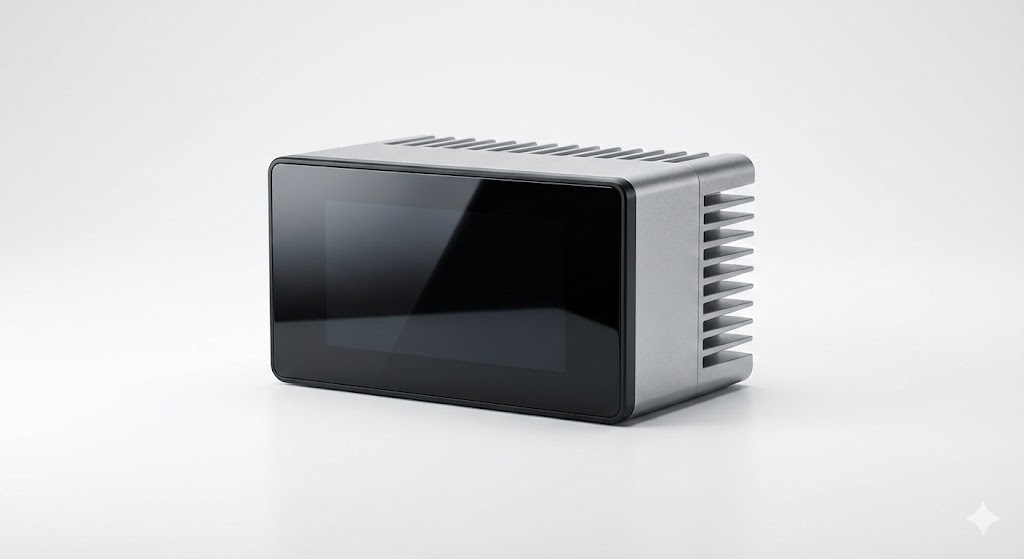
Key advantages of micro laser distance sensors are their speed and reliability. They can perform thousands of measurements per second, enabling real-time feedback for dynamic processes like wafer alignment in semiconductor fabrication, thread inspection in textile manufacturing, or gap control in automotive body-in-white assembly. Their digital interfaces, including IO-Link, Ethernet/IP, and analog outputs, facilitate seamless communication with PLCs and industrial control systems, forming a critical link in the Industrial Internet of Things (IIoT) ecosystem.

Selecting the appropriate sensor requires careful consideration of several parameters. The measuring range, which for micro sensors often spans from a few millimeters up to several hundred millimeters, must match the application. Resolution and linearity define the precision, while the response time dictates suitability for high-speed lines. Environmental factors are paramount; industrial-grade sensors feature robust housings (often IP67 rated) to withstand dust, coolant mists, and mechanical vibration. Temperature stability is ensured through advanced compensation algorithms, maintaining accuracy even in fluctuating thermal conditions found in metalworking or plastic molding environments.

Applications are diverse and growing. In electronics manufacturing, these sensors verify component placement height on PCBs. In logistics, they measure parcel dimensions for automated sorting. In pharmaceuticals, they control fill levels in vials with hygienic designs. The trend towards miniaturization continues, with newer models incorporating integrated intelligence for edge computing, such as in-sensor data averaging, tolerance window checking, and predictive maintenance alerts based on internal diagnostics.
Despite their robustness, optimal performance depends on correct installation and calibration. Mounting stability is critical to prevent measurement drift. Regular maintenance, primarily keeping the optical lens clean from contaminants, ensures long-term accuracy. As Industry 4.0 drives demand for smarter, more connected factories, micro laser distance sensors will undoubtedly evolve further, offering even greater precision, faster data rates, and deeper system integration, solidifying their role as indispensable tools for quality assurance and process optimization in modern manufacturing.