Proximity position sensors are fundamental components in modern industrial automation, providing non-contact detection of objects within a specific range without physical touch. Their operation relies on various physical principles, primarily electromagnetic, capacitive, and inductive technologies, each suited for different materials and environmental conditions.
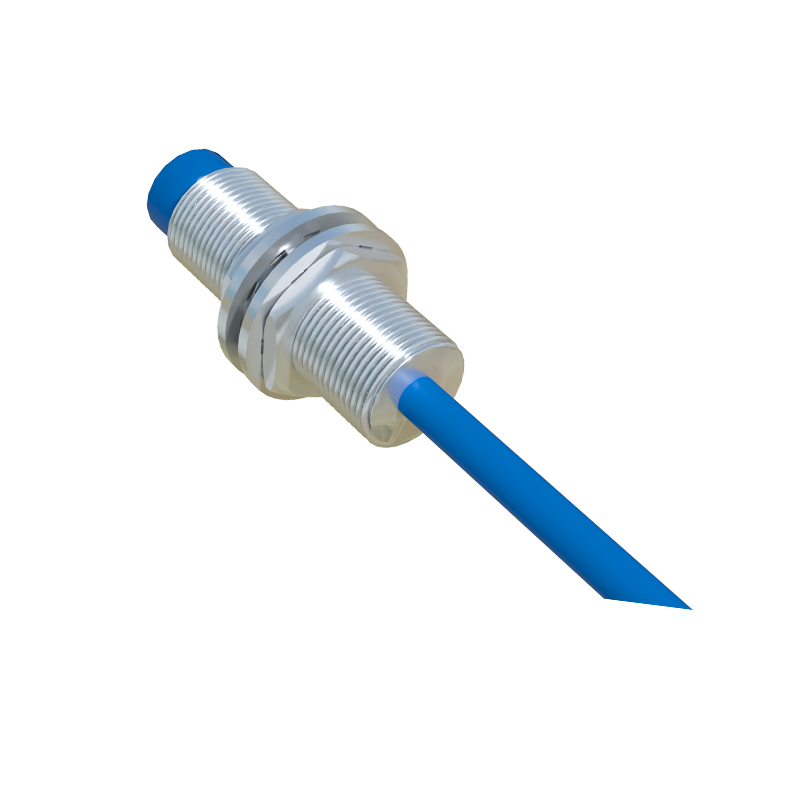
The most common type is the inductive proximity sensor. It generates an electromagnetic field using a coil wound around a ferrite core connected to an oscillator. When a metallic object enters this active field, eddy currents are induced on the object's surface. These currents absorb energy from the oscillator, causing a reduction in its oscillation amplitude. An evaluation circuit within the sensor monitors this amplitude change. Once the amplitude drop reaches a predetermined threshold, the sensor's output state switches, signaling the presence of the target. This principle makes inductive sensors ideal for detecting ferrous and non-ferrous metals, with sensing ranges typically from a few millimeters to about 60 millimeters. They are highly reliable, resistant to environmental contaminants like dust and oil, and have no moving parts, ensuring long operational life.
Capacitive proximity sensors operate on a different principle. They generate an electrostatic field between two electrodes, often the sensor face and a ground plane. The sensor and the ground connection form a capacitor. When any object, metallic or non-metallic (such as plastic, wood, glass, or liquids), enters this field, it alters the dielectric constant and thus the capacitance of the system. An internal circuit detects this capacitance change. When the change exceeds a set level, the output switches. This allows capacitive sensors to detect a vast array of materials, including through non-metallic container walls, making them perfect for level detection of powders or liquids. Their sensing range is generally shorter than inductive sensors and can be influenced by environmental factors like humidity.
A third major category is the magnetic proximity sensor, often used with a permanent magnet as the target. These sensors, like reed switches or Hall-effect sensors, detect the presence of a magnetic field. Reed switches contain two ferromagnetic reeds sealed in a glass tube. When a magnet approaches, the reeds magnetize and attract each other, closing the contact. Hall-effect sensors produce a voltage difference (Hall voltage) when a magnetic field is applied perpendicular to current flow in a semiconductor. This voltage is processed to trigger an output. Magnetic sensors are crucial for detecting position in harsh environments and are commonly used in cylinder position sensing.
Ultrasonic sensors represent another proximity sensing technology, using sound waves beyond human hearing. They emit ultrasonic pulses and measure the time for the echo to return from a target. While often used for distance measurement, they function as proximity sensors when a simple presence/absence detection within a window is required. They can detect almost any material, but their performance can be affected by temperature, air turbulence, and the target's sound-absorbing properties.
The selection of a proximity sensor depends on multiple factors: target material, required sensing distance, environmental conditions (temperature, presence of chemicals or washdown), electrical output type (PNP/NPN, NO/NC), and mounting requirements. Key performance specifications include nominal sensing distance (Sn), which is the rated operating distance under standardized conditions, and the hysteresis value, which prevents output chatter when a target is at the edge of the sensing field.
In application, these sensors are ubiquitous. Inductive sensors monitor machine tool positions, count metal parts on conveyors, and provide end-of-travel limits. Capacitive sensors control fluid levels in tanks, detect filled packages on production lines, and sense non-metallic materials. Magnetic sensors are the standard for pneumatic cylinder position feedback. The non-contact nature of all proximity sensors eliminates mechanical wear, ensures high switching speeds for fast-moving objects, and provides consistent, repeatable detection critical for precision automation, robotics, and safety interlocking systems.
Understanding the underlying physical principles is essential for engineers to specify, install, and troubleshoot these devices effectively, ensuring robust and efficient automated system performance.