Laser powder sensors represent a critical advancement in industrial automation and process control, leveraging optical principles to detect and measure particulate matter in various environments. At their core, these sensors operate based on light scattering or attenuation techniques, providing real-time monitoring capabilities essential for industries such as pharmaceuticals, food processing, and additive manufacturing.
The fundamental principle involves emitting a focused laser beam into a measurement zone where powder particles are present. When the laser light interacts with these particles, several phenomena occur, primarily Mie scattering for particles larger than the wavelength of light and Rayleigh scattering for smaller particles. The scattered light is then collected by a photodetector, which converts the optical signals into electrical data. This data is processed to determine particle concentration, size distribution, and even flow velocity in some advanced systems.
One common configuration is the forward-scattering sensor, where the detector is positioned at a small angle relative to the laser source. This setup is highly sensitive to fine powders and is widely used in cleanroom environments to monitor contamination levels. Alternatively, back-scattering sensors place the detector opposite the emitter, making them suitable for dense powder streams, such as in pneumatic conveying systems. The choice of configuration depends on factors like particle size, concentration, and the required measurement accuracy.
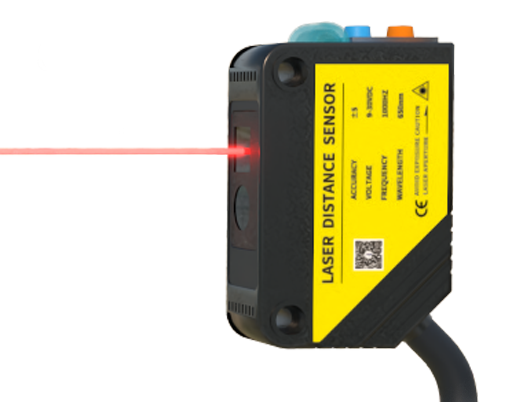
Key components of a laser powder sensor include the laser diode, typically operating in the visible or near-infrared spectrum for optimal particle interaction; optical lenses to focus the beam; a photodiode or avalanche photodetector for signal capture; and a microprocessor for data analysis. Modern sensors often incorporate algorithms to filter out noise from ambient light or vibrations, ensuring reliable performance in harsh industrial settings.
Applications are diverse. In additive manufacturing, laser powder sensors monitor the uniformity of metal or polymer powder layers, preventing defects in 3D-printed parts. In pharmaceutical production, they ensure consistent powder blending for drug formulations, adhering to strict regulatory standards. Food industry uses include controlling powder flow in packaging lines to maintain product quality and reduce waste.
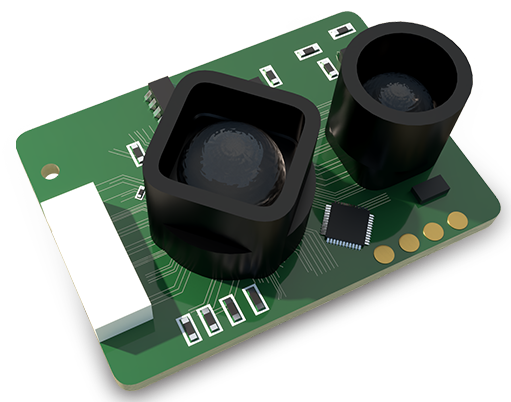
Advantages of laser powder sensors over traditional methods, such as mechanical or capacitive sensors, include non-contact measurement, which avoids contamination or particle disturbance; high-speed response for dynamic processes; and the ability to provide detailed particle characteristics. However, challenges persist, such as calibration requirements for different powder types and potential interference from humidity or ambient light.
Future trends point toward miniaturization and integration with IoT platforms, enabling predictive maintenance and smart factory solutions. Research is also focusing on multi-wavelength lasers to enhance accuracy across varied particle compositions. As industries strive for greater efficiency and quality control, laser powder sensors will continue to evolve, driven by innovations in optics and data analytics.
In summary, laser powder sensors are indispensable tools in modern industry, offering precise, real-time insights into particulate processes. Their working principles, rooted in light-particle interactions, enable applications that improve safety, productivity, and product consistency across sectors.