In the realm of industrial automation and precision metrology, the evolution of displacement sensing technology has been pivotal. Among the most advanced tools available today are blue laser displacement sensors, which offer significant advantages over traditional red laser and other optical measurement systems. This article delves into the principles, benefits, and key applications of these sophisticated devices, providing a comprehensive overview for engineering professionals.
The fundamental operating principle of a blue laser displacement sensor is based on the triangulation method. A focused blue laser beam, typically with a wavelength of 405 nm (nanometers), is projected onto the target surface. The reflected light is then captured by a high-resolution CMOS or CCD receiver at a specific angle. By precisely calculating the position of the laser spot on the receiver, the sensor determines the distance to the target with exceptional accuracy. The shorter wavelength of blue light is a critical differentiator. Compared to the common 650 nm red laser, blue light has a smaller diffraction limit. This allows the laser spot to be focused to a much finer point, resulting in higher spatial resolution and the ability to measure on challenging surfaces such as dark, glossy, or transparent materials that often scatter or absorb red light inefficiently.
The performance specifications of blue laser sensors are impressive. They typically achieve sub-micron resolution, with high-speed models capable of sampling rates exceeding 50 kHz. This combination of high speed and ultra-fine resolution makes them indispensable for dynamic measurement tasks. Key performance metrics include linearity, repeatability, and spot size. The focused blue laser spot can be as small as 10 µm, enabling measurements on tiny components like wire bonds, micro-electromechanical systems (MEMS), and precision-machined edges that would be impossible for sensors with larger spot sizes.

The advantages of implementing blue laser displacement sensors are manifold. First and foremost is their superior performance on low-reflectivity and specular surfaces. Dark materials like rubber, carbon fiber, and black plastics absorb most red light, leading to poor signal strength for red laser sensors. Blue light, with its higher photon energy, is reflected more effectively from these surfaces, ensuring a stable and reliable measurement signal. Secondly, the fine spot size minimizes the edge effect, allowing for accurate profile scanning and thickness measurement of sharp steps or intricate geometries. Furthermore, their high speed supports in-line 100% inspection in manufacturing processes, enhancing quality control and throughput.
In practical industrial applications, blue laser sensors are deployed across diverse sectors. In the electronics industry, they are used for coplanarity inspection of IC leads, solder paste height measurement, and wafer warpage analysis. Automotive manufacturers utilize them for precise gap and flush measurement between body panels, tire tread depth analysis, and engine component profiling. In precision machining and metalworking, they monitor tool wear, measure surface roughness, and verify part dimensions against CAD models. Additionally, they play a crucial role in the research and development of new materials, including composites and advanced polymers.
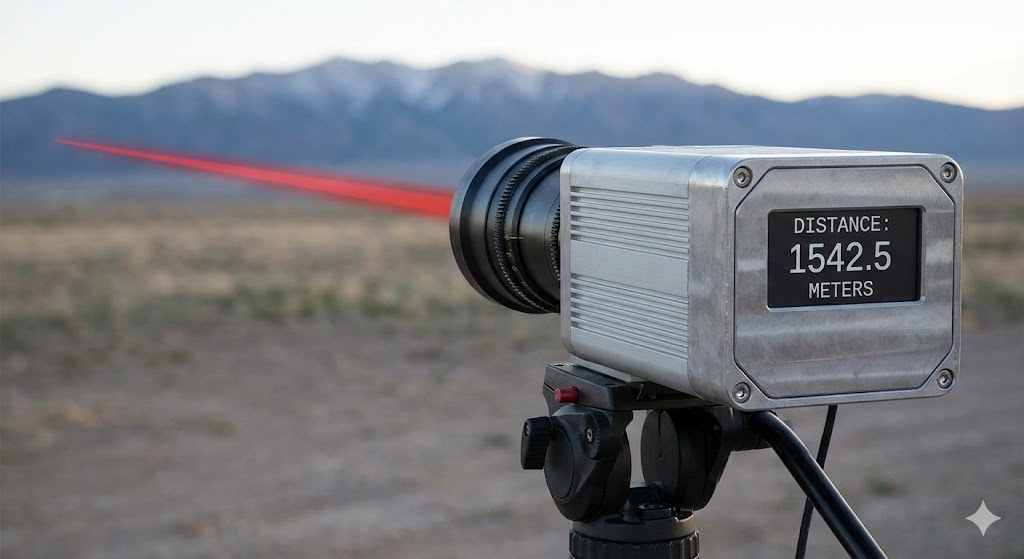
When selecting a blue laser displacement sensor, engineers must consider several factors. The required measurement range, resolution, and sampling speed must align with the application. Environmental conditions such as ambient light, temperature fluctuations, and potential contamination must be accounted for, often necessitating sensors with robust housings (IP67 ratings are common) and integrated cooling systems for high-duty cycles. Compatibility with industrial networks (EtherCAT, PROFINET, EtherNet/IP) and software for data analysis and system integration is also essential for modern smart factories.

Looking ahead, the integration of blue laser displacement sensors with artificial intelligence and machine vision systems represents the next frontier. This synergy will enable not just measurement, but also real-time defect classification and predictive process adjustment, pushing the boundaries of autonomous manufacturing. In conclusion, blue laser displacement sensors are not merely an incremental improvement but a transformative technology. Their unique capabilities in handling difficult-to-measure surfaces with unparalleled precision and speed make them a cornerstone technology for advancing quality, efficiency, and innovation in high-tech manufacturing environments. Their adoption is a strategic investment for any operation demanding the highest levels of metrological confidence.