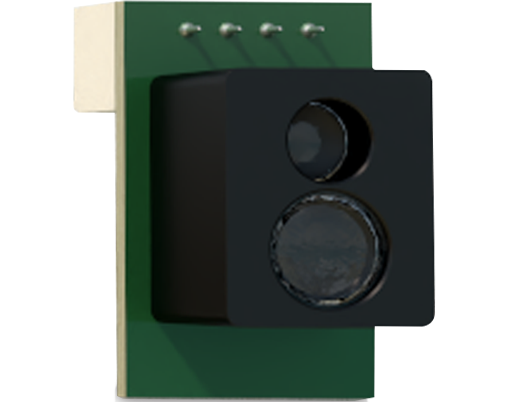
In the realm of industrial automation, robotics, and consumer electronics, the demand for precise, reliable, and space-efficient measurement solutions is ever-growing. Small laser sensors have emerged as a critical technology meeting these demands, offering high accuracy in remarkably compact packages. Unlike their larger predecessors, these miniature devices integrate advanced optics, sophisticated electronics, and robust software into units often no larger than a matchbox, enabling integration into applications where space is at a premium.
The core technology behind these sensors is typically based on laser triangulation or time-of-flight (ToF) principles. Triangulation sensors project a laser point onto a target surface. The reflected light is captured by a receiver lens at a known angle, and the position of the light spot on a CMOS or CCD array shifts depending on the target's distance. A processor calculates this shift to determine precise distance or displacement. This method excels in short to medium-range applications requiring micron-level resolution, such as inspecting component thickness, monitoring vibration, or guiding robotic arms for precise pick-and-place operations.
Time-of-flight sensors, on the other hand, measure the time it takes for a laser pulse to travel to a target and back. By knowing the speed of light, the sensor calculates the distance. Modern advancements have miniaturized ToF technology, allowing it to fit into small sensors suitable for longer-range applications, object detection in logistics, or basic level monitoring. While typically offering slightly lower resolution than triangulation over short distances, ToF sensors are excellent for faster measurements over larger areas.
The advantages of small laser sensors are multifaceted. Their primary benefit is, unsurprisingly, their size. This miniaturization allows for direct mounting on moving parts like robotic end-effectors or inside confined machinery, providing real-time feedback without bulky external systems. Despite their small stature, they maintain high performance, with repeatability and linearity specifications that rival larger units. Modern designs also emphasize robustness, featuring housings rated for IP67 or higher to withstand dust, moisture, and vibration common in industrial environments. Energy efficiency is another key factor, as many models operate on low-voltage DC power, making them ideal for battery-powered or portable devices.
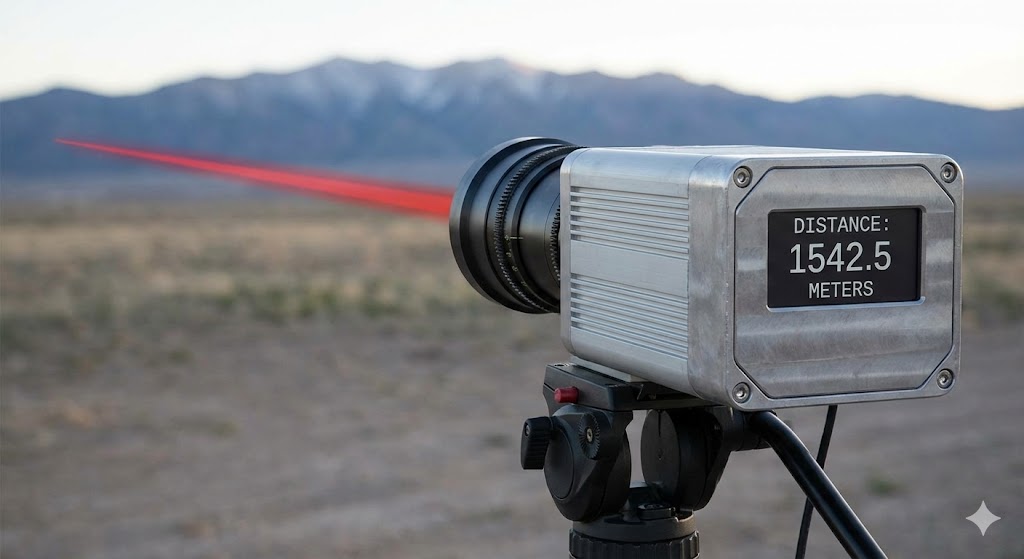
Applications for these compact powerhouses are vast and expanding. In factory automation, they are indispensable for quality control, measuring dimensions, detecting presence, or ensuring correct part alignment on high-speed assembly lines. Collaborative robots (cobots) rely heavily on small laser sensors for safe navigation and precise task execution alongside human workers. The consumer electronics sector utilizes them for features like facial recognition, autofocus assistance in smartphone cameras, and gesture control in virtual reality systems. Furthermore, they are finding roles in emerging fields like micro-drones for obstacle avoidance and in medical devices for non-contact monitoring.
Selecting the right small laser sensor requires careful consideration of several parameters. Key specifications include measuring range, spot size, resolution, repeatability, and response time. The required measurement range dictates the sensor type; triangulation is preferred for precise, close-range work, while ToF may be better for longer distances. The laser's spot size is crucial for measuring small features or uneven surfaces. Environmental factors are critical; one must consider the target material's color, reflectivity, and surface texture (e.g., shiny, matte, transparent), as these can affect the laser's return signal. Many sensors now come with intelligent functions like background suppression, teach-in capabilities for easy setup, and various output options (analog, digital, IO-Link) for seamless integration into control systems.
Looking ahead, the trend for small laser sensors points toward even greater integration, intelligence, and connectivity. We are seeing sensors with built-in processors capable of performing edge computing, such as direct data analysis or decision-making, reducing the load on central controllers. The integration of multi-pixel arrays is enabling small sensors to provide not just a single point of data but profile or even 3D contour information. Enhanced connectivity through Industrial Internet of Things (IIoT) protocols will allow these sensors to communicate their status, health, and measurement data directly to cloud platforms for predictive maintenance and process optimization.
In conclusion, small laser sensors represent a significant technological convergence, packing powerful measurement capabilities into minimal space. They are no longer niche components but fundamental enablers of precision, efficiency, and innovation across countless industries. As technology continues to advance, these compact devices will undoubtedly become even more capable, intelligent, and ubiquitous, driving further automation and enabling new applications that we are only beginning to imagine. Their role in shaping a more precise and automated future is both assured and essential.