Laser sensors have become indispensable tools across various industrial sectors, offering non-contact, high-precision measurement capabilities. A critical parameter defining their performance and suitability for specific environments is their operational temperature range. This range refers to the ambient temperature conditions under which a laser sensor can function within its specified accuracy and reliability limits. Exceeding these limits can lead to measurement drift, component degradation, or complete sensor failure.
Typically, the temperature range for standard industrial laser sensors spans from approximately -10°C to 50°C (14°F to 122°F). This range accommodates the conditions found in many controlled factory environments. However, specialized sensors are engineered for extreme applications. For instance, sensors designed for cold storage or outdoor use in Arctic climates can operate down to -40°C (-40°F) or lower. Conversely, sensors deployed near furnaces, foundries, or in direct desert sunlight require high-temperature variants, with some models rated for continuous operation at 70°C (158°F) or even up to 85°C (185°F) for short durations.
The core challenge lies in the internal components. The laser diode itself is sensitive to temperature fluctuations, which can alter its wavelength and output power. Photodetectors and signal-processing electronics also exhibit temperature-dependent behavior. Manufacturers employ several strategies to mitigate these effects. Key among these is thermal compensation through sophisticated algorithms that adjust readings based on an internal temperature sensor's data. Additionally, robust housing materials, internal heating or cooling elements (in high-end models), and careful selection of component grades with wider temperature tolerances are standard practices.
Selecting a laser sensor with an appropriate temperature range is paramount for system integrity. Engineers must consider not just the nominal ambient temperature but also factors like self-heating of the sensor during operation, proximity to heat sources, solar loading for outdoor units, and potential thermal cycling that can cause mechanical stress. For example, a sensor in an automotive paint shop must withstand the ambient heat from curing ovens, while one on an autonomous vehicle must operate reliably from a freezing winter morning to a scorching summer afternoon.
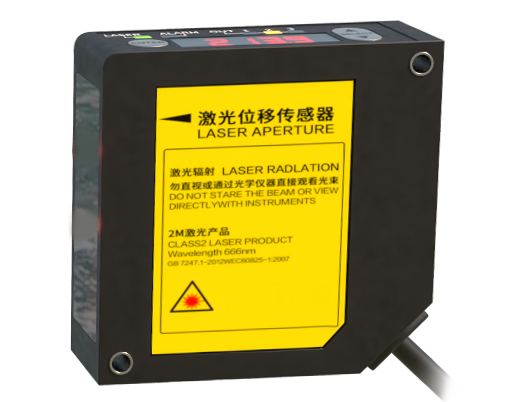
Installation practices significantly influence a sensor's ability to maintain performance within its rated range. Ensuring adequate airflow around the sensor, using protective shrouds to shield from radiant heat or direct sunlight, and avoiding mounting on surfaces that themselves become very hot or cold are crucial steps. In extreme cases, auxiliary equipment like air purgers or thermoelectric coolers may be necessary to create a suitable microclimate for the sensor.
Regular calibration and maintenance are also temperature-aware activities. Calibration should ideally be performed at a temperature close to the typical operating point. Understanding the sensor's temperature coefficient—often specified as a change in measurement error per degree Celsius—allows users to calculate potential deviations under non-standard conditions.
In conclusion, the operational temperature range is not a mere footnote in a laser sensor's datasheet but a fundamental characteristic that dictates its application horizon. From clean rooms to steel mills, matching the sensor's thermal capabilities to the environmental demands ensures long-term accuracy, reliability, and return on investment. As industrial processes push into more extreme conditions, sensor technology continues to evolve, with ongoing research focused on expanding these thermal boundaries while maintaining precision and cost-effectiveness.