In the realm of industrial automation and control systems, proximity sensors are indispensable components for non-contact detection of metallic objects. Among the various technologies available, electromagnetic induction proximity sensors stand out for their robustness, reliability, and versatility. This article delves into the operating principles, key characteristics, diverse applications, and critical selection criteria for these essential devices.
The fundamental principle behind an electromagnetic induction proximity sensor is based on Faraday's Law of electromagnetic induction. At its core, the sensor contains an oscillator circuit that generates a high-frequency electromagnetic field from a coil wound around a ferrite core. This field radiates from the active face of the sensor. When a conductive metal target enters this oscillating field, eddy currents are induced on the surface of the target. These eddy currents draw energy from the sensor's oscillator, resulting in a measurable energy loss or a change in the oscillation amplitude. An evaluation circuit within the sensor detects this change and triggers a switching output, typically a solid-state transistor (PNP or NPN) or a relay contact, signaling the presence of the target.
A key distinction of inductive sensors is their target material specificity. They are primarily designed to detect ferrous metals (like iron and steel) and non-ferrous metals (such as aluminum, copper, and brass). However, the sensing distance, or nominal range (Sn), varies significantly with the target material. For a standard mild steel target, the sensor achieves its rated sensing distance. For non-ferrous metals like aluminum or copper, the effective sensing distance is reduced, often to 30-40% of the rated value, due to differences in electrical conductivity and magnetic permeability. This material dependency is a crucial factor in application design.
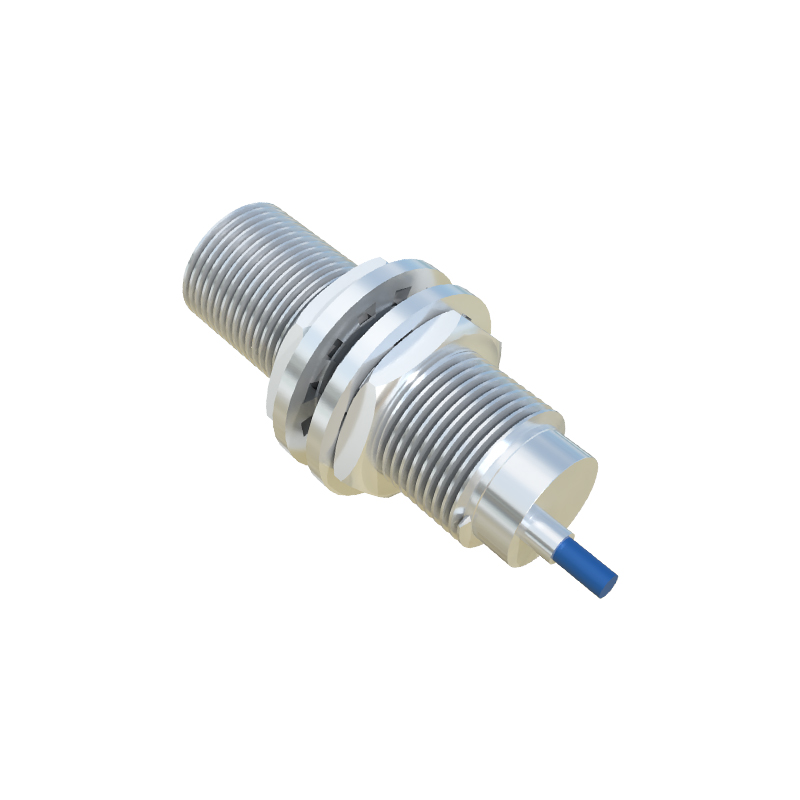
The advantages of electromagnetic induction proximity sensors are numerous. They offer completely wear-free operation as there is no physical contact with the target, leading to exceptionally long service life. They are highly resistant to environmental contaminants like dust, oil, coolant, and non-metallic debris, making them ideal for harsh industrial environments. Their switching frequency is high, allowing for detection of rapidly moving objects on production lines. Furthermore, they are available in a vast array of form factors: cylindrical (threaded barrel) styles in various diameters (e.g., M8, M12, M18, M30), rectangular or block styles, and even specialized designs for specific mounting challenges.
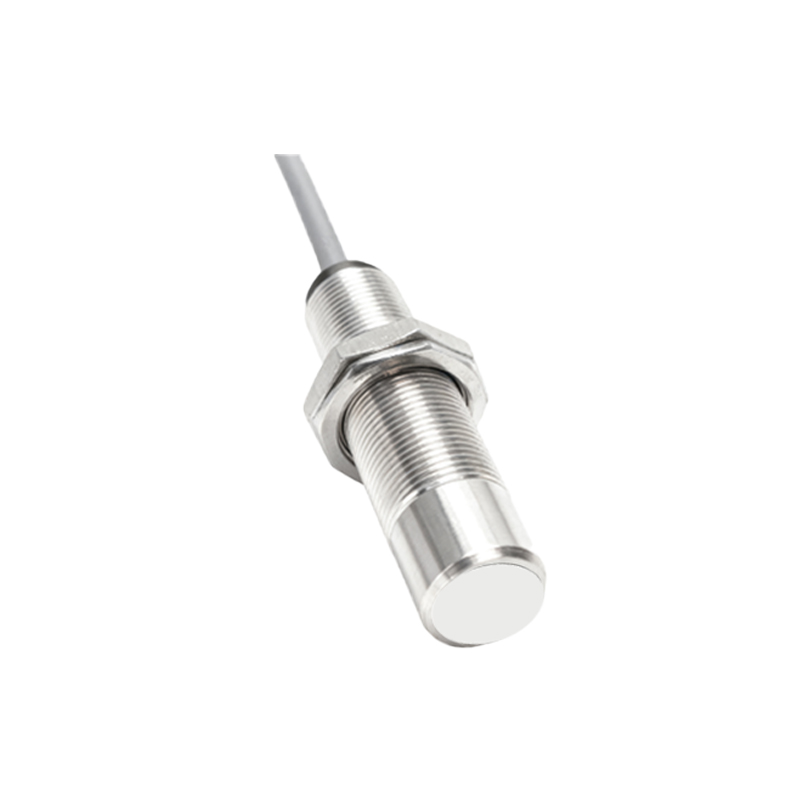
Applications for these sensors are ubiquitous across manufacturing. Common uses include position sensing (e.g., detecting the presence of a cylinder rod in hydraulic or pneumatic systems), end-of-travel limit detection on machine tools, part counting on conveyor belts, verifying the presence of metal parts before a machining operation, and monitoring rotational speed via detection of gear teeth or keyways. In automated assembly, they ensure components are correctly positioned before a robotic arm engages.
Selecting the right inductive proximity sensor requires careful consideration of several parameters. First, define the required sensing distance and the target material. Always refer to the manufacturer's data for reduction factors. Second, choose the housing style and size based on available mounting space. Third, select the electrical output type (e.g., PNP normally open, NPN normally closed) to match the input requirements of your controller (PLC). Fourth, consider the supply voltage (commonly 10-30V DC or 20-250V AC). Fifth, evaluate the environmental rating; an IP67 or IP68 ingress protection rating is standard for wash-down or outdoor conditions. Lastly, for specific applications, features like weld-field immunity (for use near resistance welding equipment) or all-stainless-steel housings for corrosive environments may be necessary.
In conclusion, electromagnetic induction proximity sensors are a mature, proven, and critical technology for industrial sensing. Their simple yet effective operating principle, combined with rugged construction and flexible design options, ensures their continued dominance in applications requiring reliable, non-contact detection of metallic objects. A thorough understanding of their characteristics and a methodical selection process are key to leveraging their full potential in optimizing automation system performance, safety, and efficiency.