In the rapidly evolving landscape of industrial automation, machine vision, and smart systems, laser identification sensors have become indispensable components. These sophisticated devices, which utilize laser technology for precise detection, measurement, and identification of objects, are critical for applications ranging from quality control on assembly lines to logistics sorting and autonomous vehicle navigation. The market is populated by numerous players, each offering distinct technologies, reliability, and service portfolios. This article provides a detailed, unbiased ranking of leading laser identification sensor companies based on their technological innovation, market presence, product portfolio breadth, and industry reputation.
The undisputed leader in this specialized field is often considered Keyence Corporation. This Japanese multinational has set the industry standard with its extensive range of high-precision laser sensors. Keyence's strengths lie in its exceptional product reliability, user-friendly interface, and robust global support network. Their sensors are renowned for ultra-high accuracy in measurement and detection tasks, making them a preferred choice in semiconductor manufacturing, electronics assembly, and precision engineering. The company's continuous investment in R&D ensures it stays at the forefront of laser triangulation, confocal, and other advanced sensing technologies.
Following closely is SICK AG, a German sensor giant with a formidable reputation for industrial durability and innovation. SICK's laser sensors are engineered to perform in the harshest environments, featuring high ingress protection ratings and resistance to vibration, dust, and temperature extremes. Their portfolio is incredibly diverse, covering everything from simple background suppression sensors for object detection to complex LiDAR sensors for navigation and area monitoring. SICK's deep integration with Industry 4.0 and IoT platforms provides added value for companies building connected, data-driven operations.
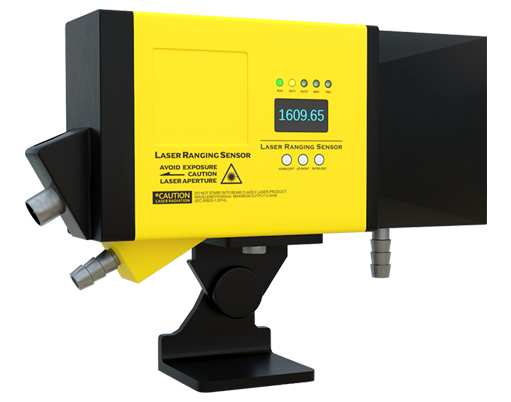
Omron Corporation, another Japanese powerhouse, secures a top position through its holistic automation solutions. Omron's laser identification sensors are integral parts of its larger "i-Automation" philosophy, which emphasizes intelligence, integration, and interaction. Their sensors are praised for excellent stability and advanced functionalities like precise edge detection and color recognition. Omron provides strong application support, helping clients integrate laser sensing into complex control systems for packaging, automotive, and pharmaceutical industries.
Banner Engineering, a prominent U.S.-based manufacturer, is highly regarded for its robust and cost-effective sensor solutions. Banner has made significant strides in laser sensor technology, offering a wide array of products including miniature sensors for tight spaces and long-range sensors for logistics. Their focus on delivering clear value, straightforward setup, and durability has earned them a loyal customer base in material handling, packaging, and automotive sectors across North America and beyond.
Pepperl+Fuchs, a German specialist in intrinsic safety and sensor technology, holds a critical position, particularly in hazardous environments. Their laser sensors are often designed with a focus on explosion-proof certifications, making them essential for oil and gas, chemical, and pharmaceutical applications where safety is paramount. Beyond safety, they offer high-performance sensors for precise positioning and measurement tasks, known for their build quality and long-term accuracy.
Emerging and specialized players also make significant contributions. Companies like Panasonic Industry Europe, with its reliable and compact laser sensors, and Baumer, known for its high-quality photoelectric and laser sensors, are strong contenders in specific market segments. Furthermore, the rise of autonomous systems has propelled LiDAR specialists like Velodyne Lidar (now part of Velodyne Lidar, Inc.) and Ouster into the broader laser identification conversation, though their focus is more on long-range, multi-point scanning for mapping and navigation.
Choosing the right supplier depends heavily on specific application requirements. Factors such as required sensing range, accuracy, response speed, environmental conditions (dust, moisture, temperature), communication protocols (IO-Link, Ethernet/IP), and budget all play a decisive role. While Keyence and SICK often compete for the high-end, demanding applications, Banner and Omron provide excellent alternatives for a wide range of standard industrial tasks. For hazardous areas, Pepperl+Fuchs is frequently the go-to expert.
The future of laser identification sensors is tied to trends like miniaturization, increased intelligence with onboard processing, and enhanced connectivity for predictive maintenance. The companies leading today's ranking are those actively investing in these areas, ensuring their sensors are not just tools for detection but smart components of a larger digital ecosystem. Ultimately, this ranking serves as a guidepost; thorough evaluation of technical specifications and real-world testing remains the best practice for selecting the optimal laser identification sensor partner for any industrial or technological challenge.