GXF proximity sensors represent a critical category of non-contact detection devices widely utilized in modern industrial automation and control systems. These sensors operate on the principle of electromagnetic induction or capacitive sensing, enabling them to detect the presence or absence of metallic or non-metallic objects without physical contact. The "GXF" designation typically refers to a specific series or model family known for robust construction, high reliability, and precise performance in challenging environments.
A primary advantage of GXF proximity sensors is their ability to function in harsh conditions where dust, moisture, or temperature fluctuations are present. Engineered with durable housings often made from materials like nickel-plated brass or stainless steel, these sensors offer excellent resistance to corrosion, mechanical stress, and electrical interference. This durability ensures consistent operation in applications ranging from automotive assembly lines and packaging machinery to material handling systems and robotic cells.
The operational mechanism of inductive GXF sensors involves generating an electromagnetic field from an oscillator circuit. When a metallic object enters this field, eddy currents are induced, causing a change in the oscillator's amplitude. This change is detected by the sensor's threshold circuit, which subsequently triggers an output signal. Capacitive variants, on the other hand, can detect both metallic and non-metallic materials by sensing changes in capacitance when an object alters the electrostatic field. Key specifications include sensing distance, which varies by model and target material, response frequency, output type (e.g., NPN, PNP, analog, or IO-Link), and supply voltage compatibility.
Installation and alignment are crucial for optimal performance. Proper mounting, free from interference by adjacent metal structures, ensures accurate detection. Many GXF sensors feature built-in LED indicators for status monitoring, simplifying setup and troubleshooting. Additionally, advanced models incorporate diagnostic functions and short-circuit protection, enhancing system safety and reducing downtime.
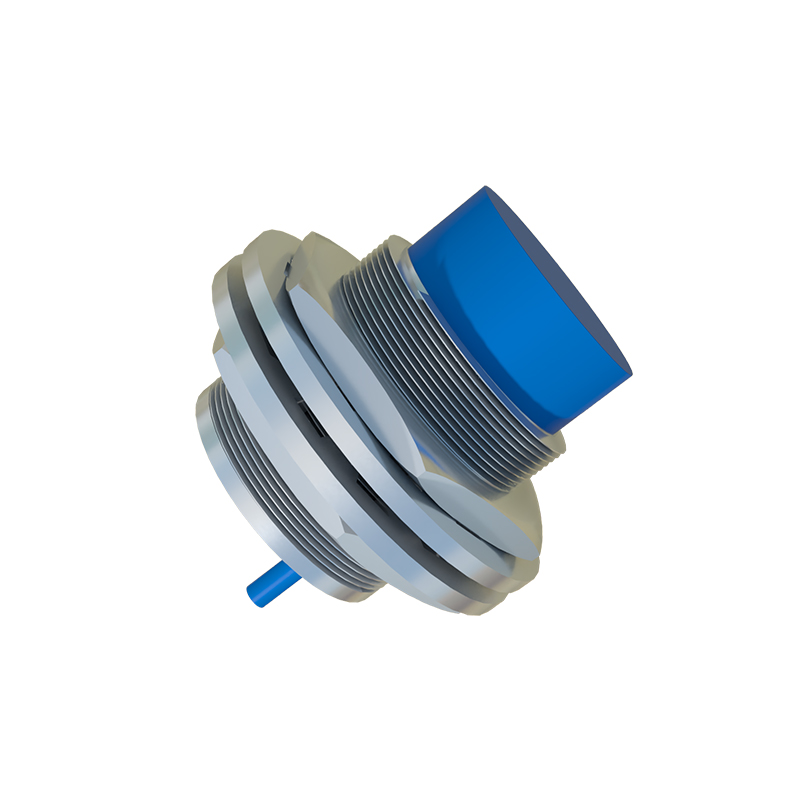
In practice, GXF proximity sensors contribute significantly to process efficiency and quality control. For instance, in conveyor systems, they detect product position for sorting or counting. In machine tools, they monitor component presence to prevent operational errors. Their non-contact nature eliminates wear and tear, leading to lower maintenance costs compared to mechanical switches.
When selecting a GXF sensor, engineers must consider factors such as the target material's properties, required sensing range, environmental conditions, and electrical interface compatibility. Regular maintenance, though minimal, involves checking for physical damage, cleaning sensing faces, and verifying electrical connections to ensure long-term reliability.
As Industry 4.0 evolves, GXF sensors are increasingly integrated with smart factory networks, providing real-time data for predictive maintenance and process optimization. Their role in enabling automated, efficient, and safe industrial operations underscores their importance in contemporary engineering landscapes.