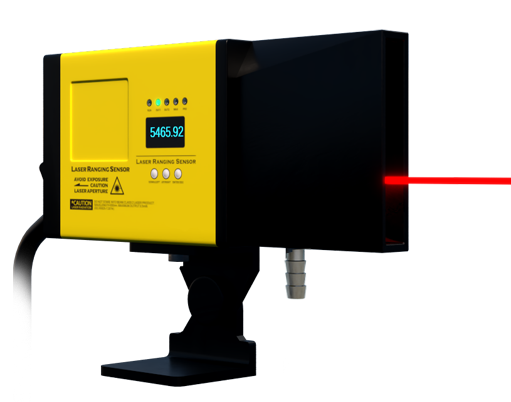
In the rapidly evolving landscape of home appliances, laser sensors have emerged as a pivotal technology, particularly in modern refrigeration systems. These sensors, often based on time-of-flight (ToF) or triangulation principles, enable refrigerators to achieve unprecedented levels of efficiency, food preservation, and user convenience. Unlike traditional thermostats or infrared sensors, laser sensors provide highly accurate, non-contact measurements of object presence, distance, and even surface conditions within the refrigerator compartment.
The core principle involves emitting a focused laser beam toward a target—such as food items, shelves, or the interior walls. The reflected light is captured by a detector, and the system calculates parameters like distance or presence based on the light's properties. In refrigerators, this technology is primarily deployed for several critical functions. First, inventory management: by scanning shelves periodically, laser sensors can identify when items are removed or added, helping to maintain a digital log of contents. This data can be integrated with smart home systems to suggest recipes or generate shopping lists. Second, temperature mapping: lasers can detect cold spots or warm zones by measuring surface temperatures indirectly through thermal reflectance, allowing dynamic adjustment of cooling distribution via variable-speed compressors and fans. Third, door operation: sensors monitor door position and movement, ensuring seals are intact and alerting users if the door is left ajar, thereby preventing energy waste.
From an engineering perspective, integrating laser sensors into refrigerators involves addressing challenges such as power consumption, condensation interference, and cost. Modern designs use low-power, solid-state lasers (e.g., VCSELs) that minimize energy draw—a crucial factor for always-on appliances. Additionally, protective coatings and signal-processing algorithms filter noise from frost or moisture, ensuring reliability in humid environments. The sensors are typically connected to a central microcontroller that processes data in real-time, enabling adaptive defrost cycles and optimizing compressor runtimes based on actual usage patterns rather than fixed schedules.

The benefits are substantial. Energy efficiency can improve by up to 20%, as cooling is precisely targeted where needed. Food waste reduction is another key advantage; by monitoring fill levels and expiration dates (via user input or barcode scans), the system can alert owners to consume items before spoilage. Moreover, laser sensors enhance user experience through features like hands-free operation—for example, activating interior lights or dispensing water when a hand is detected near the door.
Looking ahead, advancements in AI and machine learning are poised to further leverage laser sensor data. Predictive analytics could forecast cooling needs based on historical usage, while integration with IoT platforms may enable automated grocery ordering. However, widespread adoption hinges on cost reduction and consumer education about privacy, as these sensors collect detailed usage data.
In summary, laser sensors represent a transformative leap in refrigerator technology, moving beyond simple temperature control to create intelligent, responsive ecosystems. By enabling precise environmental monitoring and interactive capabilities, they set a new standard for performance and sustainability in household appliances. As research continues, we can expect even finer sensor resolutions and broader applications, ultimately redefining how we interact with everyday appliances.