Infrared proximity sensor chips represent a cornerstone technology in modern electronics, enabling touchless interaction, object detection, and automation across countless devices. At their core, these chips operate on a simple yet elegant principle: they emit an invisible beam of infrared (IR) light and measure the reflection to determine the presence, absence, or distance of an object. This process involves sophisticated on-chip integration of key components, primarily an IR emitter, typically an infrared light-emitting diode (IR LED), and an IR receiver, usually a photodiode or phototransistor. The chip's intelligence lies in its ability to process the faint signal received.
The fundamental operating principle is based on the concept of triangulation or intensity measurement. In the most common configuration, the IR LED emits a modulated pulse of infrared light, often at a wavelength around 850nm or 940nm, which is outside the visible spectrum to avoid interference. When an object enters the sensor's field of view, it reflects a portion of this emitted light back towards the sensor. The integrated photodiode detects this reflected signal. The sensor chip's internal circuitry, which includes a transimpedance amplifier and often an analog-to-digital converter (ADC), then processes this signal. The key metric is the intensity of the reflected light: a closer or more reflective object produces a stronger signal, while a distant or absorbent object produces a weaker one. Advanced chips use time-of-flight (ToF) principles, measuring the precise time delay between the emitted pulse and the received reflection to calculate distance with high accuracy, independent of the object's reflectivity.
The architecture of a modern IR proximity sensor chip is highly integrated. It houses the emitter driver, the sensitive receiver, signal conditioning circuits, and digital logic for communication (e.g., via I2C or UART interfaces). A critical component is the optical design, often managed with on-chip or package-level light guides and barriers. These features are essential for optical crosstalk mitigation—preventing the emitted light from leaking directly into the receiver without reflecting off an external object, which would cause a false detection. Manufacturers employ careful shielding, physical trenches, and optical isolation materials within the chip package to minimize this internal interference.

The performance of these chips is characterized by several key parameters. Detection range is a primary specification, varying from a few centimeters for smartphone screen blanking to several meters for industrial applications. Response time must be extremely fast for real-time interactions. Power consumption is crucial for battery-powered devices, leading to designs with ultra-low-power sleep modes and efficient pulsed operation. Furthermore, the chips must be robust against ambient infrared noise, such as sunlight or artificial lighting, which is achieved through optical filtering (to match the emitter's wavelength) and electrical modulation/demodulation techniques. The chip modulates the emitted IR light at a specific frequency and then filters the received signal to that same frequency, effectively ignoring constant or differently modulated ambient IR.
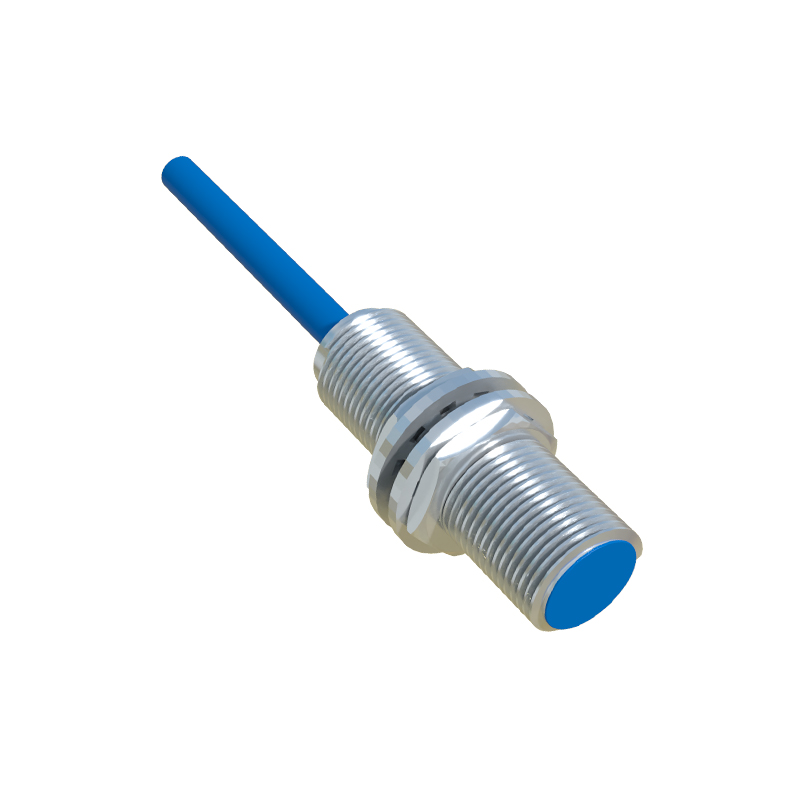
Applications for infrared proximity sensor chips are vast and growing. In consumer electronics, they are ubiquitous in smartphones to disable the touchscreen during calls, in smartwatches for wake-on-gesture, and in TVs and laptops for power-saving presence detection. In the automotive sector, they are used in cabin monitoring systems and touchless control panels. Industrial automation relies on them for object counting, jam detection in conveyor belts, and robotic navigation. Even in smart home devices, they enable touchless faucets, soap dispensers, and automatic trash can lids. The evolution of these chips continues towards miniaturization, lower power, higher accuracy, and the integration of additional sensing modalities like ambient light sensing (ALS) into single, multi-function packages.
In summary, the infrared proximity sensor chip is a marvel of integrated optoelectronics. By masterfully combining semiconductor physics, optical engineering, and analog/digital circuit design, it translates the simple act of infrared reflection into a reliable digital signal. Its principle, while conceptually straightforward, involves intricate engineering to achieve the performance, reliability, and miniaturization demanded by today's electronic devices, solidifying its role as an enabling technology for intuitive and automated human-machine interfaces.