Proximity switch sensors, particularly the widely adopted 12mm cylindrical form factor, represent a cornerstone of modern industrial automation. These non-contact sensing devices detect the presence or absence of metallic objects without physical touch, offering unparalleled reliability, speed, and longevity in harsh environments. This guide delves into the technical specifications, operating principles, selection criteria, and application best practices for 12mm proximity sensors.
At the core of a 12mm inductive proximity sensor is an oscillator circuit that generates a high-frequency electromagnetic field at its active face. When a ferrous or non-ferrous metal target enters this sensing field, eddy currents are induced on the target's surface. This causes a change in the oscillation amplitude, which is detected by a threshold circuit. The circuit then triggers a solid-state output switch—typically PNP (sourcing) or NPN (sinking)—to change state. The standardized 12mm diameter housing, often meeting IP67 or IP68 ingress protection ratings, makes these sensors robust against dust, coolants, and temporary immersion, suitable for machine tools, material handling, and packaging machinery.
Key technical parameters define a sensor's suitability. The sensing distance, or nominal range, for a standard 12mm unshielded (non-flush) inductive sensor is typically 4mm for steel targets. Shielded (flush-mountable) versions offer a reduced range, usually 2mm, but can be installed flush in metal without affecting operation. The operating frequency, or switching speed, can reach several kilohertz, enabling detection of small, fast-moving parts. Factors like hysteresis (the difference between the switch-on and switch-off points) ensure stable operation and prevent chatter. Temperature tolerance, short-circuit and overload protection, and output current capacity (commonly 200mA) are other critical specs.
Selecting the correct 12mm proximity sensor requires a detailed analysis of the application. First, identify the target material. Standard inductive sensors work best with ferrous metals like steel. For applications involving aluminum, brass, or copper, sensors with a factor-1 correction (designed for non-ferrous metals) are necessary. The required mounting style—flush or non-flush—depends on the surrounding environment. In confined spaces or where sensors are mounted adjacent to each other, shielded models prevent mutual interference. The output configuration must match the control system's input card: PNP outputs switch the positive voltage line, common in PLCs in Europe and Asia, while NPN outputs switch the ground line, prevalent in some regions and with certain controllers.
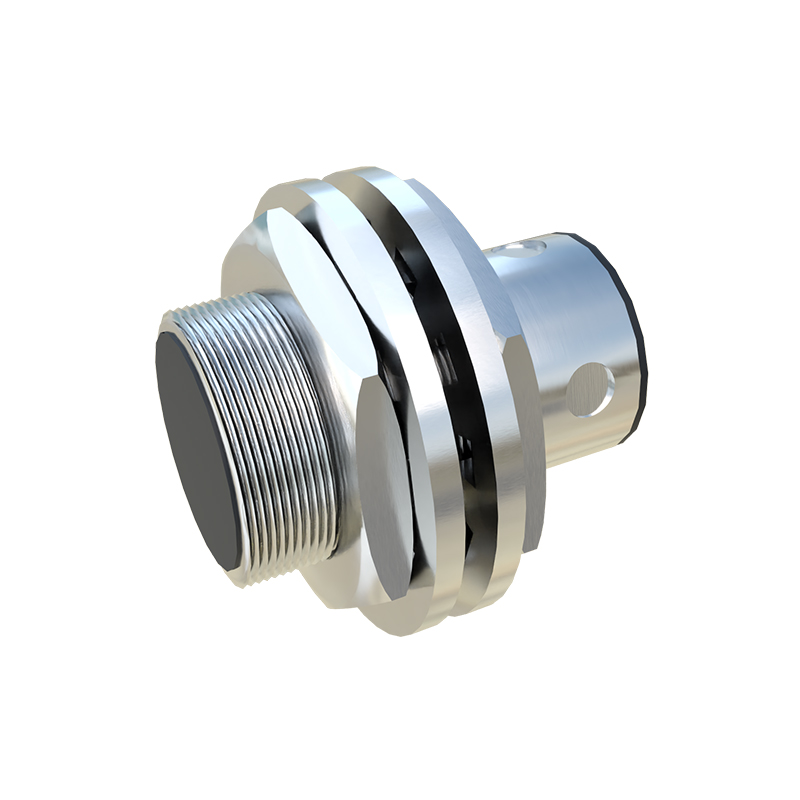
Installation and wiring are straightforward but demand attention to detail. Ensure the sensor is securely mounted, with the sensing face parallel to the target's approach path for maximum range. Maintain the specified nominal sensing distance, accounting for manufacturing tolerances and temperature effects. For DC sensors, correct polarity is paramount: brown wire to DC+, blue wire to DC-, and the black (or white) wire as the switched output. Always refer to the manufacturer's datasheet. A common mistake is ignoring the residual voltage drop across the sensor's output transistor when driving a load like a relay coil; this can lead to unreliable PLC input signals.
Beyond standard inductive types, 12mm housings are also available for capacitive sensors (detecting non-metallic materials like plastics or liquids) and magnetic sensors (reacting to permanent magnets). This versatility makes the 12mm size a universal interface for diverse sensing tasks. In practice, these sensors are workhorses in automated assembly lines for part verification, in robotic grippers for end-of-arm tooling feedback, and as limit switches in linear actuators. Their solid-state nature, with no moving parts to wear out, translates to minimal maintenance and mean time between failures (MTBF) measured in decades.
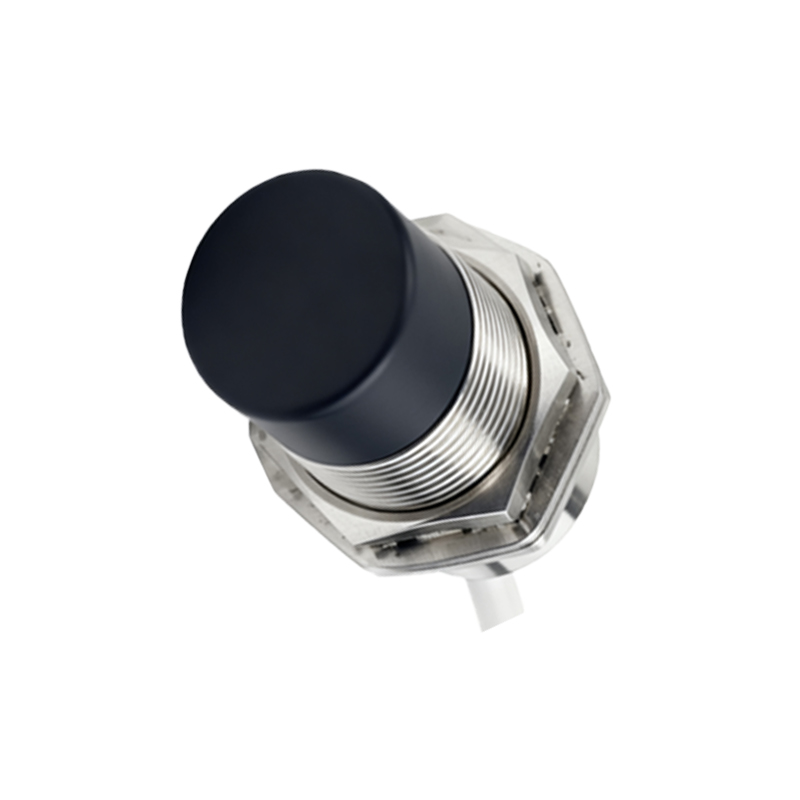
Troubleshooting typically involves checking the power supply, verifying the target's material and size (which must meet the sensor's minimum target specifications), and inspecting for accumulated metallic debris on the sensing face that can cause false triggering. Using an LED status indicator, standard on most models, provides immediate diagnostic feedback.
In conclusion, the 12mm proximity sensor is a precision component whose correct selection and application are critical for system reliability. By understanding its operating principles, meticulously matching specifications to the task, and following proper installation guidelines, engineers can leverage these sensors to build robust, efficient, and fail-safe automation systems. Their compact size, ruggedness, and performance continue to make them an indispensable solution for object detection in the industrial landscape.