Proximity sensors are a cornerstone of modern industrial automation and consumer electronics, enabling contactless detection of objects within a defined range. Their control principle is fundamentally based on the interaction of a sensor's emitted field or signal with a target object. Unlike mechanical limit switches, proximity sensors perform without physical contact, leading to higher reliability, longer operational life, and the ability to detect fragile or sensitive materials. The core control logic involves the generation of a sensing field, its disturbance by a target, and the subsequent conversion of this event into a clean, usable electrical output signal to control a circuit.
The most prevalent types are inductive, capacitive, and photoelectric proximity sensors, each operating on a distinct physical principle. Inductive proximity sensors are the workhorses of metal detection. Their control principle relies on electromagnetic induction. The sensor's oscillator circuit generates a high-frequency alternating electromagnetic field at its active face. When a metallic target enters this field, eddy currents are induced on the target's surface. These currents draw energy from the oscillator, causing a reduction in its oscillation amplitude. An integrated evaluation circuit monitors this amplitude change. Once the amplitude drop reaches a predefined threshold—corresponding to the sensor's nominal sensing distance—the circuit triggers a solid-state switch (typically NPN or PNP transistor) to change the output state. This digital ON/OFF signal is then used to control relays, PLC inputs, or other logic circuits, effectively telling the system: "metal object present."
Capacitive proximity sensors operate on the principle of capacitance change and can detect a wider variety of materials, including metals, plastics, wood, liquids, and granules. They function like an open capacitor. One plate is the sensor's active electrode, and the other is either the sensor's ground electrode or the grounded installation environment. The oscillator generates an electrostatic field. When any material with a dielectric constant different from air enters this field, it alters the capacitance of the system. This change increases the oscillator's amplitude (opposite to the inductive type). The subsequent evaluation circuit detects this increase and switches the output when the threshold is exceeded. This makes them ideal for level detection in tanks, material handling, and non-metallic object detection. Their sensitivity is often adjustable to compensate for different materials or to ignore unwanted backgrounds.
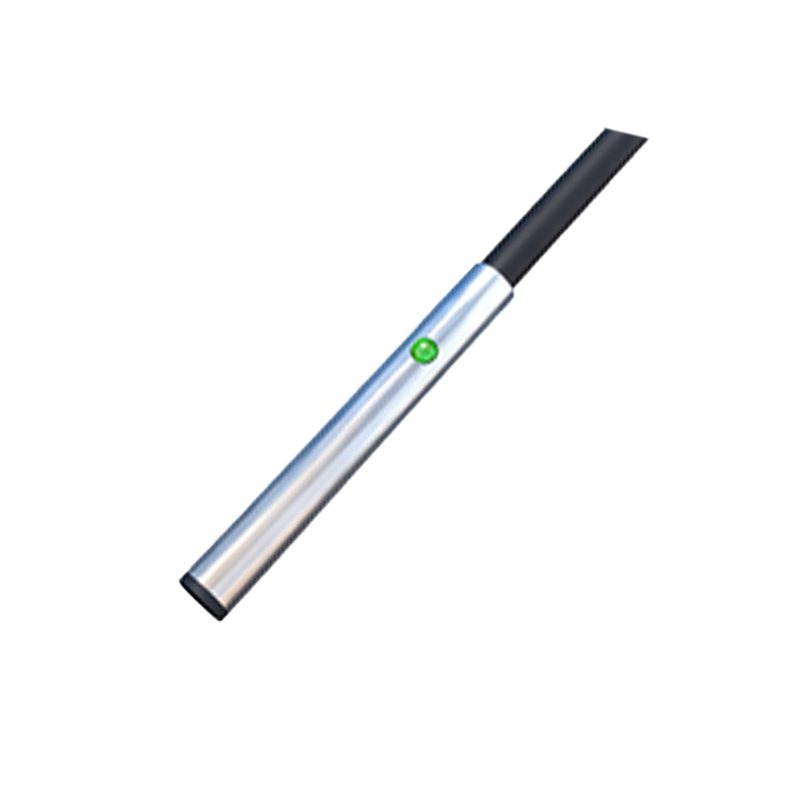
Photoelectric sensors, while often categorized separately, are key proximity devices. Their control is based on light beam modulation. An emitter sends out a focused beam of light (visible red, infrared, or laser). A target object interrupts or reflects this beam. In the through-beam (opposed) mode, the receiver detects the absence of light. In the retro-reflective mode, it detects the absence of reflection from a reflector. In the diffuse (proximity) mode, the receiver detects light reflected directly off the target itself. The received light intensity is converted to a current. The control circuit compares this current to a set threshold. If the condition (light ON or OFF) is met, the output switches. Advanced background suppression models use triangulation principles to only detect objects within a precise distance window, ignoring objects beyond it.
The output stage is a critical component of the control chain. Most modern proximity sensors provide a solid-state DC output. The switching logic is straightforward: presence of a valid target within the sensing range causes the output to either source current (PNP, "sourcing") or sink current (NPN, "sinking") to the load. This binary signal integrates seamlessly with programmable logic controllers (PLCs). Analog output variants provide a continuous voltage or current signal proportional to the distance to the target, enabling precise positioning feedback.
Key parameters governing control include the nominal sensing distance (Sn), defined for a standard target, and the hysteresis. Hysteresis is the difference between the switch-on point (as the target approaches) and the switch-off point (as it recedes). This built-in feature prevents output chatter when a target is positioned at the exact sensing boundary due to vibration or environmental factors, ensuring stable control signals. Response time, the speed at which the sensor reacts to a target's appearance or disappearance, determines how fast a process can run.
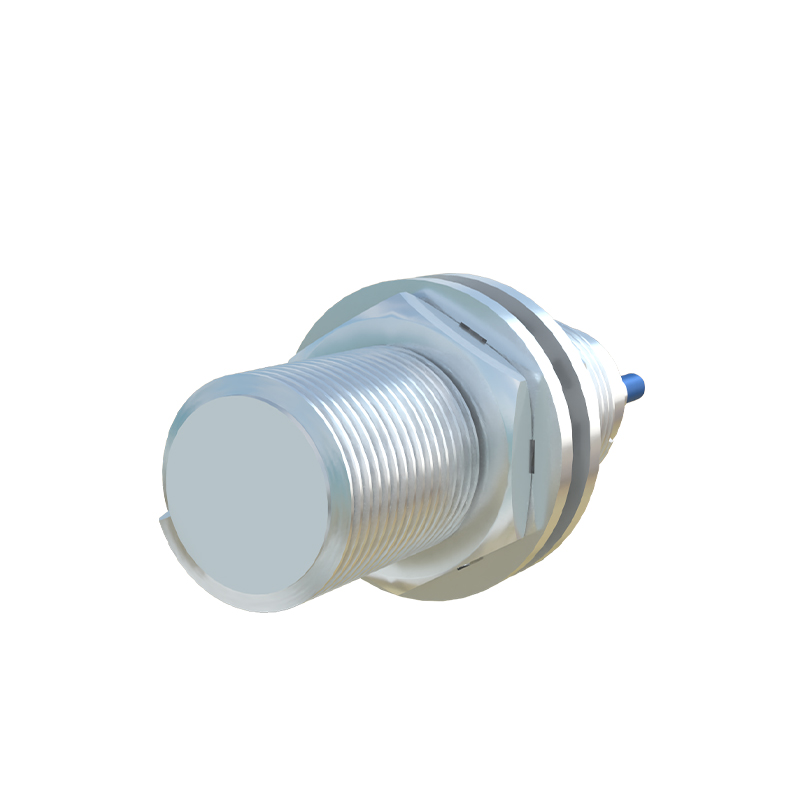
In application, the control principle translates into robust system commands. On an assembly line, an inductive sensor verifies a metal component is in place before a robotic weld. A capacitive sensor confirms a plastic bottle is filled to the correct level. Photoelectric sensors count packages on a conveyor. Their non-contact nature eliminates wear, and their sealed designs allow operation in harsh environments with dust, moisture, or oils. Understanding the underlying control principle—whether inductive, capacitive, or optical—is essential for selecting the right sensor to reliably trigger the correct action in any automated system, forming an invisible yet vital layer of control logic.