In the rapidly evolving landscape of industrial automation, the role of proximity sensors is foundational. These non-contact detection devices are the silent sentinels of modern manufacturing, robotics, and process control systems. The quest for reliability, precision, and durability in these components leads directly to the doors of high-quality proximity sensor supply factories. These specialized manufacturers are not merely component suppliers; they are engineering partners critical to the success of complex automation projects.
A premier proximity sensor factory distinguishes itself through a deep commitment to core engineering principles. It begins with robust design and material selection. High-grade stainless steel housings, particularly in models like cylindrical inductive sensors, provide essential resistance against physical impact, coolant ingress, and metallic swarf common in machining environments. For harsh chemical or washdown areas, factories employ specialized polymers and sealing technologies, often achieving IP67, IP68, or IP69K ratings. The internal electronics are equally critical. Advanced factories utilize application-specific integrated circuits (ASICs) and surface-mount technology (SMT) on automated lines to ensure consistent electrical characteristics, minimal temperature drift, and superior noise immunity. This level of construction directly translates to a reduced mean time between failures (MTBF) and lower total cost of ownership for the end-user.
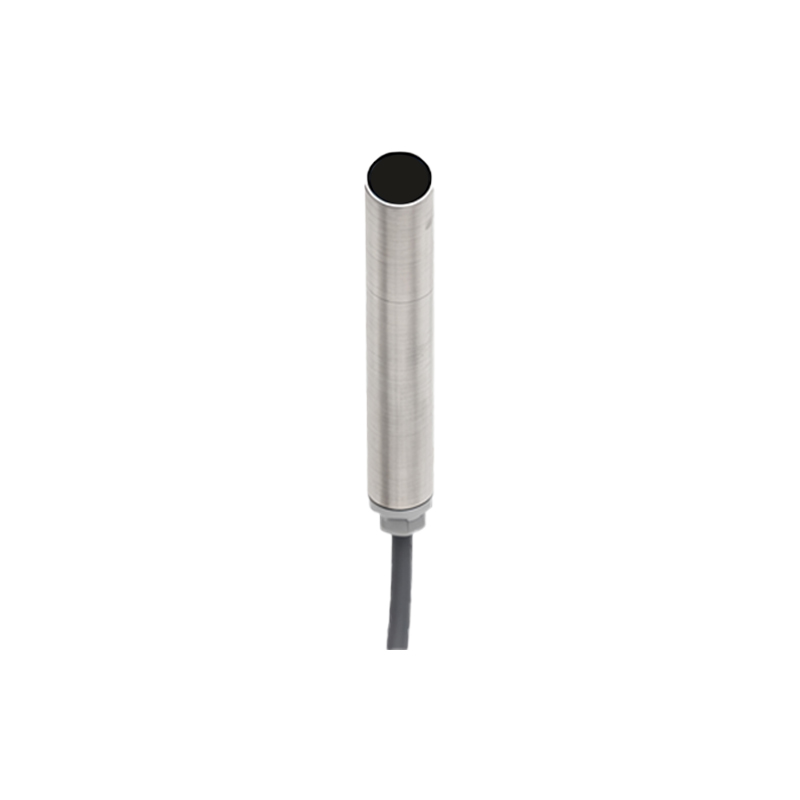
Technical versatility is another hallmark of a top-tier supplier. The market demands a spectrum of sensing technologies, each with its optimal application. Inductive sensors remain the workhorse for detecting all metals, with factors like sensing distance, frequency response, and embeddable or non-embeddable designs tailored to specific needs. Capacitive sensors, capable of detecting non-metallic materials like plastics, wood, and liquids, are indispensable in packaging, material level control, and food processing. Magnetic sensors (reed or Hall-effect) are preferred for cylinder position feedback and safety applications. Ultrasonic and photoelectric sensors, while sometimes categorized separately, share the proximity detection paradigm for longer ranges or unique target properties. A leading factory offers this comprehensive portfolio, supported by engineers who can guide selection based on target material, required sensing distance, environmental conditions, and output configuration (PNP/NPN, NO/NC, analog, IO-Link).
The integration of smart features and Industry 4.0 connectivity has become a non-negotiable expectation. Modern proximity sensors from advanced factories are intelligent devices. IO-Link communication has emerged as a standard, transforming a simple binary switch into a rich data source. Through IO-Link, sensors can transmit not just state information, but also diagnostic data like operating temperature, supply voltage stability, and signal strength. This enables predictive maintenance, where a control system can alert operators to deteriorating conditions before a failure causes downtime. Parameterization via IO-Link allows for remote setting of switching points or hysteresis, drastically simplifying changeovers in flexible production lines. Factories at the forefront embed these digital capabilities seamlessly, often in compact housings that match the form factors of their standard counterparts.
Quality assurance is the bedrock of a reputable supply factory. It transcends final inspection and is woven into the entire production process. This involves stringent incoming component checks, statistical process control (SPC) on assembly lines, and 100% functional testing under simulated operational stresses—thermal cycling, vibration, and electrical load. Many elite manufacturers adhere to international standards like ISO 9001 and employ methodologies such as Six Sigma to minimize variance. Traceability, from raw material to shipped sensor, is paramount for industries like automotive or aerospace. Furthermore, rigorous environmental testing in climatic chambers ensures performance across the specified temperature range, typically from -25°C to +70°C or beyond. This systemic approach to quality guarantees that every sensor leaving the facility meets its published specifications consistently.
Ultimately, the value of a high-caliber proximity sensor factory lies in its synergy of product excellence and technical partnership. They provide extensive documentation, detailed datasheets with clear characteristic curves, and 3D models for easy mechanical integration. Their global distribution and support network ensure availability and local technical assistance. In an era where machine uptime is directly linked to profitability, the choice of sensor supplier is a strategic decision. Partnering with a factory that masters the trifecta of robust engineering, technological breadth, and unwavering quality control is not just purchasing a component; it is investing in the reliability and intelligence of the entire automated system. These factories empower engineers to build smarter, more resilient, and more efficient industrial operations, solidifying their role as indispensable pillars of the automation ecosystem.