In the dynamic landscape of modern manufacturing, the pursuit of precision, speed, and reliability is relentless. Among the myriad of technologies driving this evolution, laser scanning sensors have emerged as a cornerstone in advanced welding applications. These sophisticated devices are fundamentally transforming welding processes, moving them from manual, skill-dependent operations to highly automated, data-driven systems. This article delves into the technical principles, key benefits, and practical implementations of laser scanning sensors within the welding industry.
At its core, a laser scanning sensor for welding is a non-contact measurement device. It typically projects a laser line or pattern onto the target workpiece. A high-resolution camera, precisely calibrated with the laser emitter, captures the deformation of this line. Using triangulation principles and advanced algorithms, the sensor generates a highly accurate 3D point cloud or profile of the surface. In welding, this capability is paramount. Before the arc is even struck, the sensor can scan the joint—be it a butt, fillet, lap, or V-groove—and precisely determine its geometry, including gap width, mismatch, and root face conditions. This real-time dimensional data is fed directly to the robot controller or welding power source.

The advantages this brings to welding automation are profound. First and foremost is enhanced precision and quality. Traditional robotic welding often relies on pre-programmed paths. Any deviation in part fit-up or positioning can lead to defects like lack of penetration, burn-through, or poor bead appearance. Laser scanning sensors enable adaptive welding. The robot can dynamically adjust its torch path, travel speed, and welding parameters (voltage, current, wire feed) in real-time to compensate for joint variations. This ensures consistent weld penetration and geometry, drastically reducing scrap and rework.
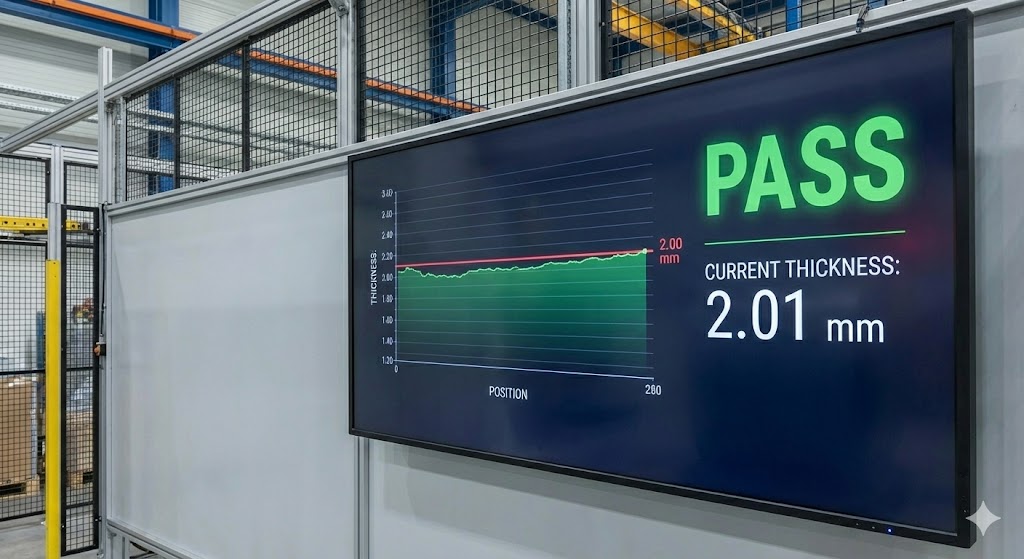
Secondly, significant efficiency gains are achieved. The need for costly and time-consuming precision jigging and fixturing is greatly reduced. Parts can be loaded with standard tolerances, and the sensor-guided robot will find and track the true joint position. This slashes setup times and increases production flexibility, facilitating high-mix, low-volume manufacturing. Furthermore, the sensor can perform post-weld inspection in the same cycle, measuring bead height and profile to verify quality without moving the part to a separate station.
Process reliability and safety are also substantially improved. By accurately locating the joint, the risk of missed welds or arc strikes in the wrong location is eliminated. The system can also detect the absence of a part, preventing a weld cycle from initiating unnecessarily. This protects tooling and enhances overall equipment effectiveness (OEE). For challenging applications like welding shiny or reflective materials, modern sensors employ specialized filters and lighting techniques to ensure robust performance.
Implementation of laser scanning sensors is prevalent across various industries. In automotive manufacturing, they are indispensable for body-in-white assembly, ensuring perfect seams for thousands of spot and arc welds on vehicle frames. Heavy equipment and shipbuilding sectors utilize them for long, complex multi-pass welds on thick plates, where joint preparation is rarely perfect. The aerospace industry leverages their precision for critical components where weld integrity is non-negotiable.
The integration journey involves careful selection of sensor specifications—such as measurement range, resolution, scan rate, and environmental protection (IP rating). Seamless communication via industrial networks (Ethernet/IP, PROFINET, etc.) with the robot and welder is crucial. Successful deployment also requires skilled personnel for programming, calibration, and maintenance.

Looking ahead, the convergence of laser scanning with artificial intelligence and machine learning promises even greater autonomy. Systems will not only adapt to geometry but also predict and correct for thermal distortion during welding, moving towards truly intelligent, closed-loop welding cells.
In conclusion, laser scanning sensors are far more than just optional accessories; they are enabling technologies for the next generation of welding automation. By providing the "eyes" for robotic welders, they deliver the accuracy, flexibility, and consistency required to meet the stringent demands of contemporary manufacturing, ensuring stronger products, optimized costs, and a formidable competitive edge.