Laser attitude sensing technology represents a significant advancement in the field of electrical engineering, particularly for applications requiring precise spatial orientation and motion tracking. These sensors utilize laser beams to detect and measure the attitude—comprising pitch, roll, and yaw—of objects in real-time. By emitting laser light toward a target and analyzing the reflected signals, laser attitude sensors can determine angular positions with high accuracy, often within micro-radian ranges. This capability is crucial in industries such as aerospace, robotics, and autonomous vehicles, where even minor deviations can lead to operational failures.
The core mechanism of a laser attitude sensor involves interferometry or triangulation principles. In interferometric systems, lasers create interference patterns that shift with movement, allowing for exact angle calculations. Triangulation-based sensors, on the other hand, use geometric relationships between the laser source, target, and detector to compute orientation. Both methods rely on advanced photodetectors and signal processing algorithms to convert optical data into digital outputs. Engineers often integrate these sensors with inertial measurement units (IMUs) or global positioning systems (GPS) to enhance reliability in dynamic environments, such as during flight maneuvers or robotic arm operations.
One key advantage of laser attitude sensors is their immunity to electromagnetic interference (EMI), a common issue in electrical systems where traditional magnetic or capacitive sensors may falter. Since lasers operate on light waves, they remain unaffected by nearby electrical noise, ensuring stable performance in industrial settings with high-power machinery. Additionally, these sensors offer non-contact measurement, reducing wear and tear compared to mechanical alternatives. This feature is especially beneficial in harsh conditions, like mining or marine applications, where physical sensors might degrade quickly.
In practice, laser attitude sensors are deployed in diverse scenarios. For instance, in aerospace engineering, they monitor aircraft wing alignment during flight, contributing to fuel efficiency and safety. In robotics, they enable precise control of robotic limbs for tasks like assembly or surgery. The automotive sector uses them in self-driving cars to assess vehicle tilt and prevent rollovers. Recent innovations include miniaturized sensors for drones and wearable devices, expanding their utility in consumer electronics. However, challenges persist, such as high costs for ultra-precise models and sensitivity to environmental factors like fog or dust, which can scatter laser beams.
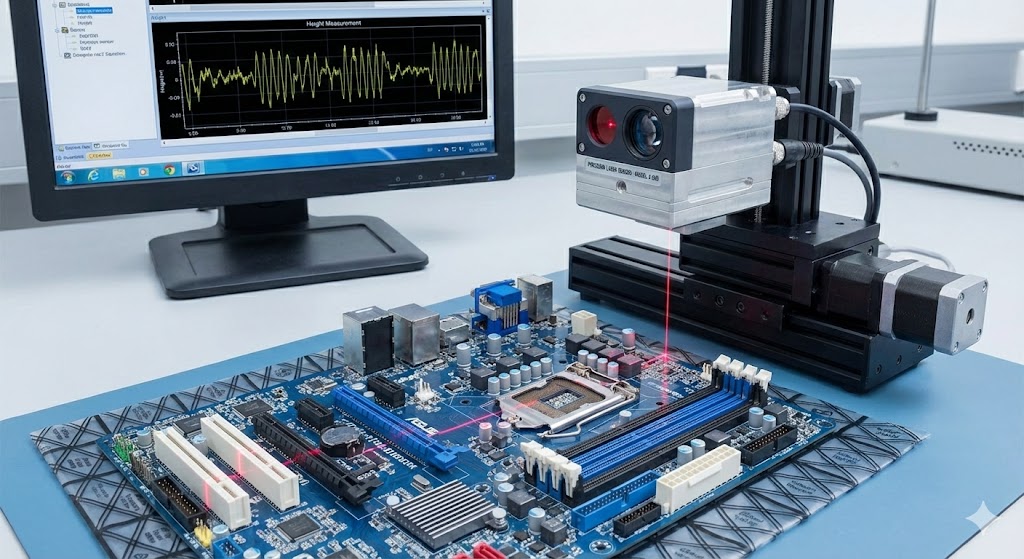
Future trends in laser attitude sensing focus on improving affordability and robustness. Research is underway to develop solid-state lasers with lower power consumption and enhanced signal processing using artificial intelligence (AI). These advancements aim to make the technology more accessible for small-scale applications, such as smart home systems or agricultural drones. As electrical engineering evolves toward greater automation, laser attitude sensors will likely become integral to next-generation smart infrastructure, offering unparalleled precision in orientation detection. Engineers must stay abreast of these developments to leverage their full potential in design and implementation projects.
Overall, laser attitude sensors exemplify the convergence of optics and electrical engineering, driving innovation across multiple domains. Their ability to provide accurate, real-time data supports safer and more efficient operations, underscoring their value in modern technological landscapes. By understanding their principles and applications, professionals can better integrate these tools into complex systems, paving the way for smarter, more responsive solutions in an increasingly automated world.
