Capacitive proximity sensor switches are versatile and essential components in modern industrial automation and consumer electronics. Unlike their inductive counterparts that detect only metals, capacitive sensors can detect a wide range of materials, including liquids, powders, plastics, and wood, by measuring changes in capacitance. This article delves into the operating principles, key characteristics, diverse applications, and critical selection criteria for these sophisticated devices.
The fundamental principle of a capacitive proximity sensor is based on the formation of an electrostatic field. The sensor's active surface, or sensing face, acts as one plate of a capacitor. The target object acts as the other plate, and the air gap between them serves as the dielectric. The sensor's internal oscillator generates an electrostatic field emanating from this sensing face. When a target object enters this field, it alters the dielectric constant and thus the capacitance of the system. This change in capacitance affects the oscillator's amplitude. A subsequent evaluation circuit monitors this amplitude shift. Once the change exceeds a predefined threshold (the sensing distance), it triggers a solid-state output switch, signaling the presence of the object.
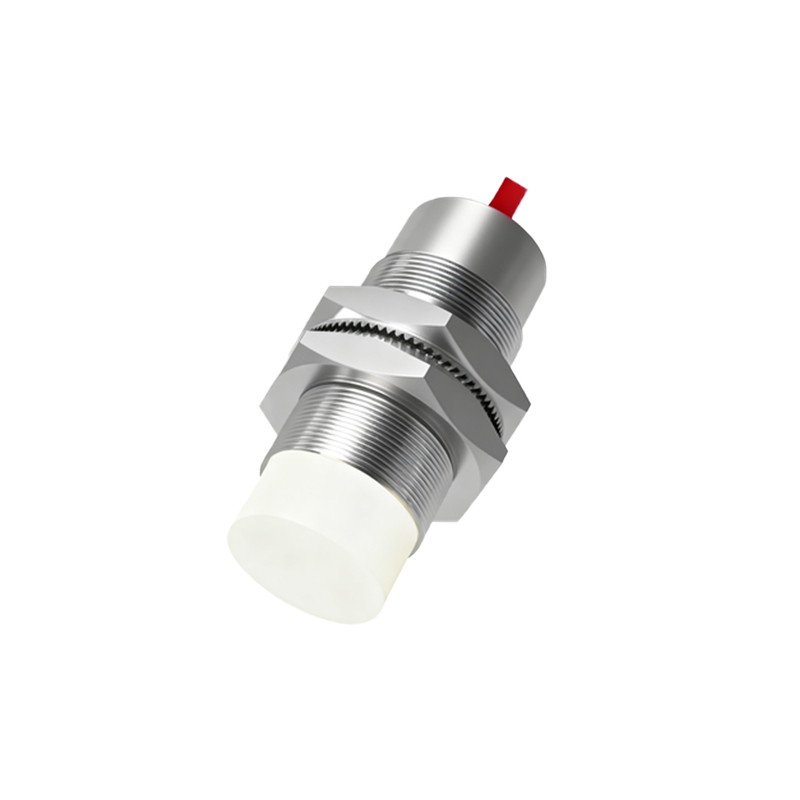
Several key specifications define a capacitive sensor's performance. The nominal sensing distance (Sn) is the rated operating distance under standardized conditions. It's crucial to note that this distance can vary with the target material's properties, such as its dielectric constant. The hysteresis is the difference between the switch-on and switch-off points, expressed as a percentage of the sensing distance. This feature prevents output chattering when a target is at the borderline of detection. Response frequency indicates how many switching cycles per second the sensor can handle, critical for high-speed applications. Output types are typically NPN (sinking) or PNP (sourcing) transistor configurations, with 3-wire or 4-wire designs, and sometimes analog (0-10V or 4-20mA) outputs for distance-proportional measurement. Many modern sensors feature a sensitivity adjustment potentiometer, allowing fine-tuning to ignore unwanted backgrounds (like container walls) or to detect specific materials.
The applications for capacitive sensors are remarkably broad. In packaging and material handling, they detect the presence of cardboard boxes, plastic bottles, or film layers on rollers. In the food and beverage industry, they are ideal for non-contact level detection of liquids, granules, or powders inside non-metallic tanks, whether through the container wall or from above. Woodworking and paper processing lines use them to monitor board or sheet presence. In assembly automation, they verify the presence of non-metallic components, such as plastic gears or rubber gaskets. Consumer electronics employ miniature capacitive sensors as touch-sensitive buttons or for liquid level detection in appliances.
Selecting the right capacitive proximity sensor requires careful consideration of several factors. First, identify the target material and its expected dielectric constant. Materials with high water content (like wood or human skin) are easier to detect than dry plastics. Second, determine the required sensing distance, always allowing for a safety factor and considering the influence of the material. The housing style is vital: cylindrical barrels (M8, M12, M18, M30 threads) are common, but rectangular and flat-pack styles suit space-constrained applications. The environmental rating (IP67, IP69K) is critical for washdown areas or dusty conditions. Electrical requirements include the operating voltage (typically 10-30V DC or 20-250V AC), output type (NPN/PNP), and whether a normally open (NO) or normally closed (NC) logic is needed. Finally, consider special features like short-circuit and overload protection, reverse polarity protection, and temperature stability for harsh operating environments.
Installation and setup are straightforward but demand attention. Ensure the sensor is mounted securely, and for flush-mounted cylindrical sensors, maintain the recommended clearance from surrounding metal to avoid false triggering. Use the sensitivity adjustment to calibrate the sensor: with the target absent, turn the potentiometer until the output just deactivates, then turn it back slightly. This ensures reliable detection without sensing the background. Always refer to the manufacturer's datasheet for specific wiring, mounting, and adjustment procedures.
In conclusion, capacitive proximity sensor switches offer a unique and flexible solution for object detection across countless industries. Their ability to sense non-metallic materials through non-metallic barriers makes them indispensable for modern, complex automation tasks. By understanding their operating principles and meticulously matching sensor specifications to the application requirements, engineers can ensure reliable, maintenance-free operation, enhancing both efficiency and system intelligence.