In the realm of industrial automation, precision is paramount. One of the most critical tasks involves the accurate detection and alignment of holes—whether for assembly, machining, or quality control. Traditional methods, such as mechanical probes or vision systems, often fall short in speed, adaptability, or accuracy under challenging conditions. Enter laser sensors, a transformative technology that has redefined hole-finding applications across manufacturing, aerospace, automotive, and electronics sectors.
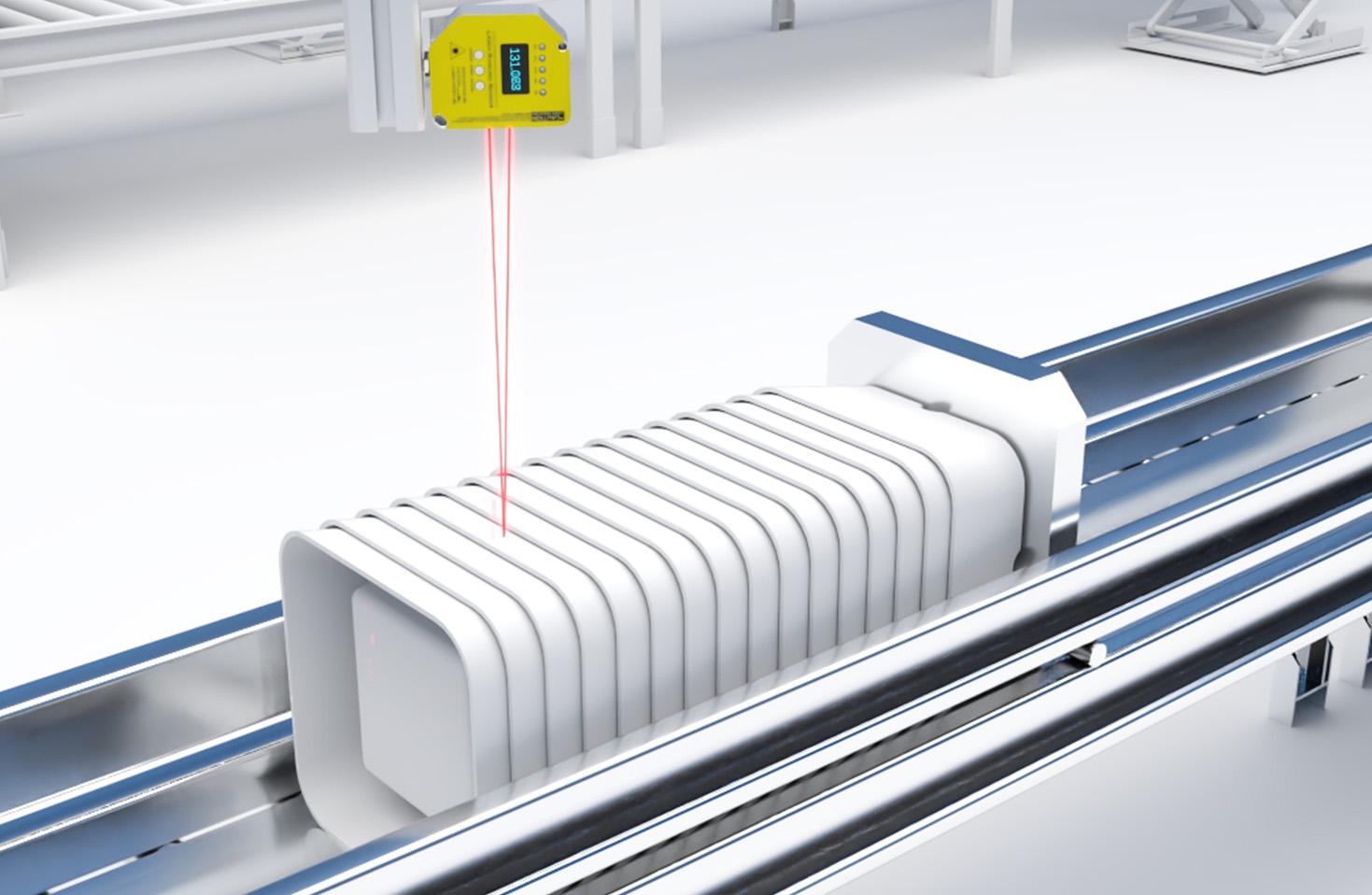
Laser sensors operate on the principle of triangulation or time-of-flight measurement. In triangulation-based sensors, a laser diode projects a focused beam onto the target surface. The reflected light is captured by a receiver at a known angle, allowing the sensor to calculate the distance to the surface with micron-level precision. For hole detection, this capability enables the sensor to scan a surface and identify discontinuities—such as holes, gaps, or edges—by detecting abrupt changes in distance or reflectivity. Time-of-flight sensors, which measure the round-trip time of laser pulses, are ideal for larger distances and can swiftly map contours to locate apertures.
The advantages of using laser sensors for hole finding are multifaceted. First, their non-contact nature eliminates wear and tear, ensuring long-term reliability and reducing maintenance costs. Unlike mechanical probes that may deform or damage delicate materials, laser sensors provide gentle, repeatable measurements. Second, laser sensors excel in high-speed applications. They can perform thousands of measurements per second, making them suitable for dynamic production lines where throughput is critical. Third, they are highly adaptable to diverse environments. With robust designs resistant to dust, vibration, and ambient light interference, laser sensors maintain accuracy in harsh industrial settings where optical vision systems might struggle.

A typical application involves robotic drilling or fastening systems. Here, a laser sensor is mounted on a robotic arm or a fixed gantry. As the system approaches a workpiece, the sensor scans the surface to locate pre-defined holes or patterns. By generating a precise 3D profile, it guides the robot to align tools accurately, minimizing errors and reducing scrap rates. In automotive manufacturing, for instance, laser sensors ensure that chassis holes align perfectly for bolt insertion, enhancing structural integrity. In electronics, they verify the placement of micro-vias on circuit boards, where even minor misalignments can lead to failures.
Integration with control systems is seamless, thanks to standardized interfaces like IO-Link, Ethernet/IP, or Profinet. Laser sensors output real-time data—such as position, diameter, and depth—to PLCs or industrial PCs, enabling closed-loop control. Advanced models feature embedded algorithms that can distinguish between holes, slots, and other features, reducing the need for external processing. Moreover, software tools allow for easy configuration and calibration, empowering engineers to set tolerances, define regions of interest, and implement multi-sensor networks for complex tasks.
Despite their prowess, challenges persist. Highly reflective or transparent materials can scatter laser beams, leading to measurement noise. However, innovations like adjustable laser power, polarized filters, and multi-channel sensors mitigate these issues. Additionally, the initial investment in laser sensing technology may be higher than conventional methods, but the return on investment is quickly realized through improved quality, reduced downtime, and enhanced automation flexibility.
Looking ahead, the convergence of laser sensors with artificial intelligence and machine learning promises even greater advancements. Smart sensors capable of self-diagnosis and adaptive learning will further optimize hole-detection processes, predicting anomalies and adjusting parameters in real time. As industries embrace Industry 4.0, the role of laser sensors in enabling agile, precise, and interconnected manufacturing will only expand.
In summary, laser sensors have become indispensable for hole detection in modern industrial automation. By offering unparalleled accuracy, speed, and robustness, they address the limitations of older technologies and drive efficiency across countless applications. For engineers seeking to elevate their automation systems, investing in laser sensing solutions is not just an upgrade—it's a strategic imperative for staying competitive in a precision-driven world.
