In the realm of industrial automation and control systems, inductive proximity sensors stand as a cornerstone technology for non-contact detection of metallic objects. Among the various designs, the ring inductor type—often referred to as a ring-type or annular inductive proximity sensor—offers unique advantages for specific applications. This article delves into the operational principles, key features, and practical considerations of ring inductive proximity sensors, providing insights for engineers and technicians in the electrical and automation fields.
At its core, an inductive proximity sensor operates on the principle of electromagnetic induction. It typically consists of a coil wound around a ferrite core, an oscillator, a signal evaluator, and an output stage. When powered, the oscillator generates a high-frequency alternating magnetic field that emanates from the active face of the sensor. When a metallic target enters this field, eddy currents are induced on the target's surface. These eddy currents draw energy from the oscillator, causing a reduction in its amplitude. The sensor's evaluation circuit detects this amplitude drop and triggers a change in the output state (e.g., switching a solid-state output ON or OFF).
The ring inductor variant distinguishes itself by its physical configuration. Instead of a standard cylindrical or rectangular housing with a front-facing sensing area, the ring-type sensor features a toroidal or annular shape with a central aperture. The coil is wound around this ring, creating a doughnut-shaped magnetic field. The target—typically a metallic object like a bolt head, nut, or washer—passes through the center hole to be detected. This design is inherently self-shielding; the magnetic field is largely concentrated within the ring's interior, minimizing interference from surrounding metals and enabling precise, through-hole sensing.
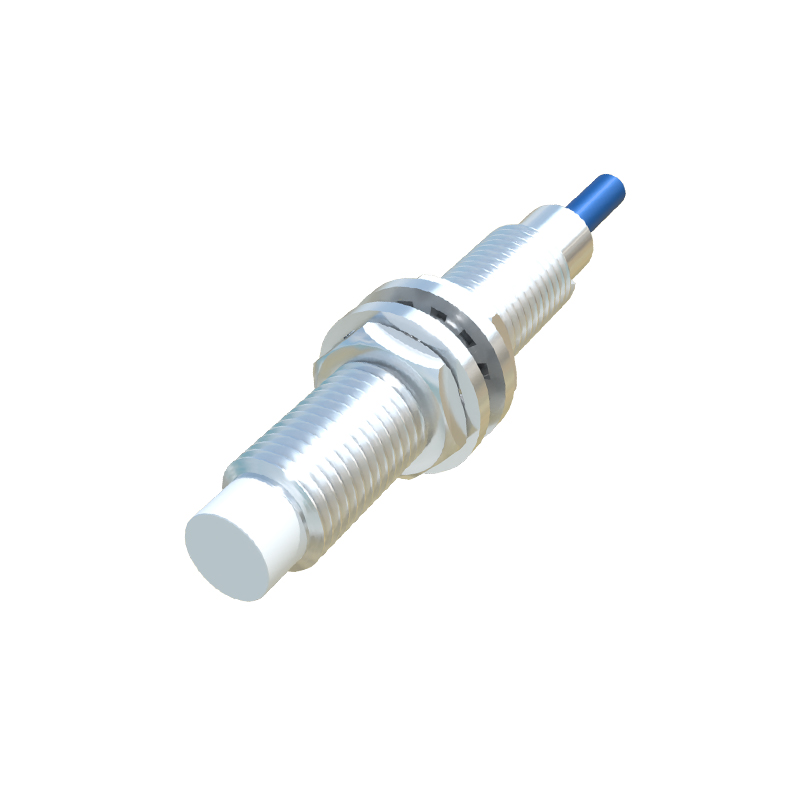
Key advantages of ring inductive proximity sensors include their suitability for detecting small metallic parts in automated assembly, packaging, and sorting lines. They are excellent for verifying the presence of fasteners, checking if a nut is properly seated on a bolt, or counting metallic items on a conveyor passing through the ring. Their through-hole design allows for easy integration into fixtures or machine frames. Furthermore, because the sensing occurs as the target passes through the ring, rather than approaching it from the front, these sensors often offer very high switching frequencies, making them ideal for high-speed applications.
When selecting a ring inductive proximity sensor, several technical parameters require careful consideration. The inner diameter of the ring is critical, as it must accommodate the target object and any necessary clearance. The sensing distance is typically defined relative to the ring's center and is generally quite short and precise. Switching frequency denotes how many detection cycles per second the sensor can handle, a vital spec for high-speed counting. Output type (e.g., PNP, NPN, analog, or IO-Link) must match the control system's input requirements. Environmental factors like temperature range, ingress protection (IP rating), and resistance to chemicals or welding spatter are also crucial for reliable operation in harsh industrial settings.
Installation and alignment are straightforward but important. The sensor should be mounted securely to prevent vibration from affecting performance. For accurate detection, the target should pass as centrally as possible through the aperture. While these sensors are shielded, it is still good practice to maintain a minimum distance from large masses of metal in the immediate vicinity to prevent any potential influence on the magnetic field. Regular maintenance involves checking for physical damage, buildup of metallic debris around or inside the ring, and verifying electrical connections.
In comparison to other sensor types like photoelectric or capacitive sensors, ring inductive sensors provide a robust, wear-free solution specifically for metallic targets. They are unaffected by dust, dirt, oil, or non-metallic materials that might obstruct optical sensors. Their primary limitation is material specificity; they only detect metals, with ferrous materials like steel typically providing a longer sensing range than non-ferrous metals like aluminum or copper.
In conclusion, the ring inductor-type inductive proximity sensor is a specialized and powerful tool in an engineer's arsenal. Its unique through-hole, self-shielding design delivers reliable, high-speed detection of small metallic components in space-constrained or demanding industrial environments. A thorough understanding of its operating principles and specifications ensures optimal selection and integration, contributing to enhanced efficiency, quality control, and machine safety in automated systems.