In the realm of industrial automation and control systems, proximity sensors play a pivotal role in detecting the presence or absence of objects without physical contact. Among the various configurations available, the 2-wire proximity sensor stands out for its simplicity and widespread adoption. This article delves into the fundamental principles, operational characteristics, key advantages, and typical applications of 2-wire AC/DC proximity sensors, providing a comprehensive overview for engineers and technicians.
At its core, a 2-wire proximity sensor is a solid-state electronic device designed to detect metallic or, in some variants, non-metallic targets. Unlike its 3-wire or 4-wire counterparts, it requires only two wires for connection: one for power supply and the other as the load return path. This design integrates the sensor and the switching element directly into the power circuit. In operation, a small leakage current, often termed the "off-state current" or "residual current," flows through the sensor even when it is in the open (non-actuated) state. This current is typically low enough to prevent the activation of the connected load, such as a PLC input or a relay coil. When a target enters the sensor's detection range, the internal oscillator circuit is damped or altered, triggering the output switching element (usually a solid-state switch like a TRIAC for AC or a transistor for DC). This action allows a significantly higher load current to flow, effectively closing the circuit and signaling the target's presence.
The primary advantage of the 2-wire system is its remarkable wiring simplicity. It can be connected in series with the load, much like a traditional mechanical switch, which simplifies installation, reduces wiring costs, and minimizes potential connection errors. This makes it an ideal replacement for mechanical limit switches in many applications. Furthermore, the absence of a separate output wire often translates to a more compact sensor housing. However, engineers must carefully consider the off-state leakage current. This current must be lower than the "minimum holding current" of the connected load to ensure it does not remain inadvertently activated. Conversely, the sensor's "on-state voltage drop" must be accounted for, as it reduces the voltage available to the load. Proper sizing of the load and compatibility checks with programmable logic controller (PLC) input modules are crucial for reliable operation.
2-wire proximity sensors are predominantly used in AC circuits, though DC versions are also available. They are ubiquitous in various industries for tasks such as part detection on conveyor lines, position sensing of machine tool slides, end-of-travel limit detection, and counting objects. Their robust, often fully encapsulated construction makes them suitable for harsh environments with exposure to dust, moisture, oils, and vibrations. When selecting a 2-wire sensor, key specifications to evaluate include the sensing distance (rated and effective), supply voltage range, output current capacity, leakage current, voltage drop, switching frequency, housing material (e.g., nickel-plated brass or stainless steel), and environmental protection ratings (IP67 or IP69K).
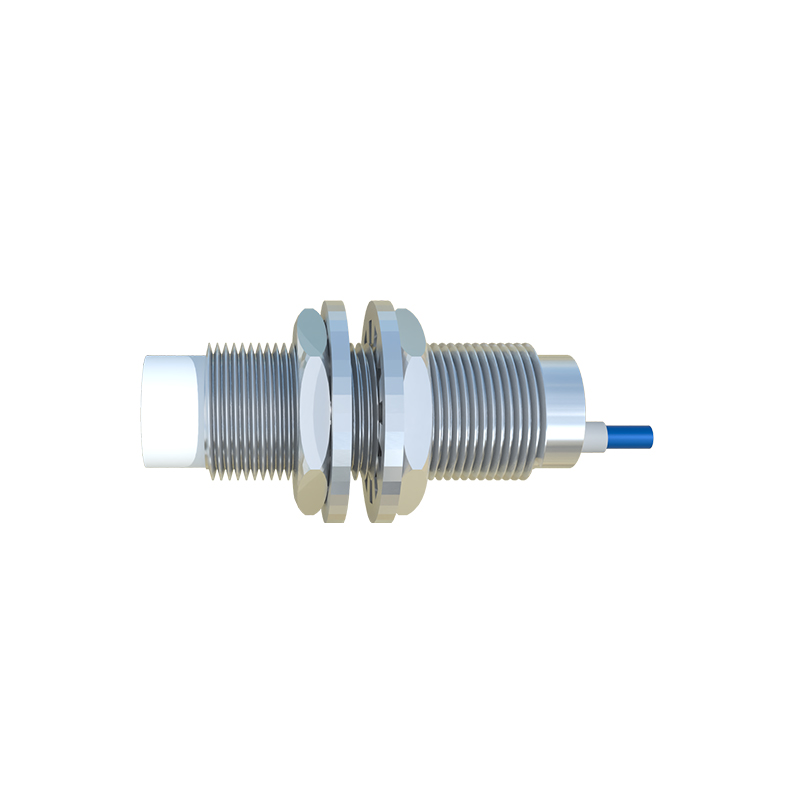
In summary, the 2-wire proximity sensor offers a streamlined and cost-effective solution for non-contact detection. Its direct integration into the power line reduces complexity but demands attention to electrical characteristics like leakage current and voltage drop. For applications where wiring simplicity and space savings are paramount, and where the connected load's electrical parameters are well-matched, the 2-wire configuration remains an exceptionally reliable and efficient choice, forming the backbone of countless automated sensing tasks in modern manufacturing and process control.