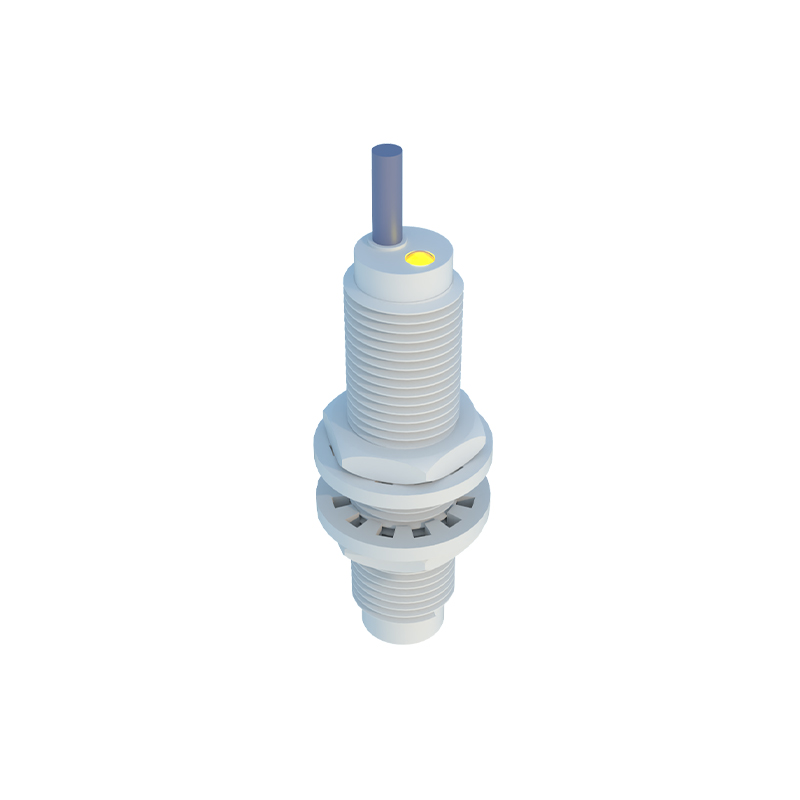
Proximity sensor coils are fundamental components in non-contact sensing technology, widely utilized across industrial automation, robotics, and safety systems. These sensors operate based on electromagnetic principles, enabling them to detect the presence or absence of metallic objects without physical contact. The core of a typical inductive proximity sensor consists of a coil wound around a ferrite core, an oscillator circuit, a signal conditioner, and an output switch. When an alternating current passes through the coil, it generates an oscillating electromagnetic field around the sensor's active face.
In the absence of a target object, the oscillator sustains a constant amplitude of oscillation. However, when a conductive metal object enters the sensor's detection range, eddy currents are induced on the surface of the object due to the electromagnetic field. These eddy currents draw energy from the oscillator, resulting in a reduction in the oscillation amplitude. The sensor's detection circuit monitors this change and triggers the output switch when the amplitude drops below a predetermined threshold. The output can be in the form of a digital signal (e.g., NPN or PNP transistor switching) or an analog signal proportional to the distance, depending on the sensor type.
The performance of a proximity sensor coil is influenced by several factors, including the coil's inductance, the frequency of the oscillator, and the material properties of the target. Ferrous metals, such as iron and steel, typically allow for longer detection distances compared to non-ferrous metals like aluminum or copper, due to their higher magnetic permeability. Additionally, the coil's design—such as the number of turns, wire gauge, and core geometry—affects the sensor's sensitivity, response time, and temperature stability. Modern sensors often incorporate temperature compensation circuits to minimize drift in varying environmental conditions.
Applications of proximity sensor coils are diverse, ranging from position sensing in conveyor systems and machine tools to part counting in assembly lines. They are valued for their durability, high switching frequency, and resistance to contaminants like dust, oil, and moisture. When selecting a proximity sensor, engineers must consider parameters such as sensing distance, repeat accuracy, housing material (e.g., stainless steel or plastic), and electrical specifications to ensure compatibility with the control system. Regular maintenance, including checking for coil damage or misalignment, helps sustain optimal performance and longevity in demanding industrial environments.