In the realm of industrial automation and precision measurement, digital laser sensors have become indispensable tools. These devices leverage laser technology to provide non-contact, high-accuracy detection and measurement of various parameters such as distance, displacement, position, and presence. Unlike their analog counterparts, digital laser sensors output discrete signals or digital data, facilitating seamless integration with modern control systems like PLCs (Programmable Logic Controllers) and industrial computers. This article explores the primary types of digital laser sensors, their operating principles, and typical applications across different industries.
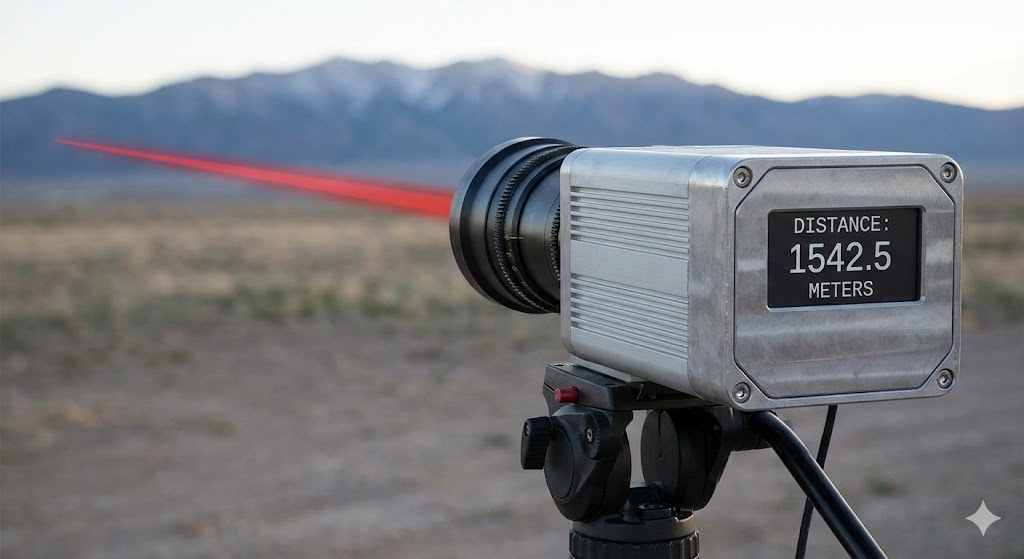
One fundamental category is the Digital Laser Distance Sensor. These sensors measure the distance to a target by employing time-of-flight (ToF), triangulation, or phase-shift methods. Time-of-flight sensors calculate distance based on the time it takes for a laser pulse to travel to the target and back. They are ideal for long-range measurements, often up to several hundred meters, and are commonly used in applications like vehicle detection, level monitoring in silos, and large-scale surveying. Triangulation-based sensors, on the other hand, use a laser spot projected onto the target; the reflected light is captured by a receiver at a known angle, and distance is computed via trigonometric principles. These offer exceptional accuracy at shorter ranges (typically up to a few meters) and are prevalent in precision manufacturing for tasks such as thickness gauging, wafer inspection, and component profiling. Phase-shift sensors analyze the phase difference between the emitted and reflected continuous-wave laser beam, providing a balance of range and resolution suitable for medium-distance applications.
Another critical type is the Digital Laser Displacement Sensor. While closely related to distance sensors, displacement sensors are specifically designed to measure the change in position or small movements of an object relative to a reference point. They excel in applications requiring micron-level resolution. Common technologies include confocal and spectral interferometry. Confocal sensors use a focused laser point and a pinhole aperture to achieve high axial resolution, making them perfect for measuring surface topography, thin-film thickness, or detecting minute vibrations. They are extensively used in semiconductor fabrication, precision optics, and electronics assembly. Digital output allows these sensors to transmit precise displacement data directly to quality control systems, enabling real-time feedback and adjustment.
Digital Laser Micrometer Sensors represent a specialized subset for dimensional measurement. These sensors often consist of a laser emitter and a linear array receiver (like a CCD or CMOS sensor). The object to be measured passes through the laser beam, casting a shadow on the receiver. The sensor's digital processor calculates dimensions such as diameter, width, or thickness based on the shadow's size. Their high speed and accuracy make them ideal for in-line inspection of wires, cables, bearings, and molded plastic parts. The digital interface supports statistical process control (SPC) data output, trend analysis, and direct communication with sorting or rejection mechanisms.
For presence detection and positioning, Digital Laser Photoelectric Sensors are widely deployed. These include through-beam, retro-reflective, and diffuse-reflective models. In a digital through-beam sensor, the emitter and receiver are separate units; an object is detected when it interrupts the laser beam. This type offers the longest sensing range and highest reliability for detecting small or fast-moving objects on production lines. Retro-reflective sensors use a single unit with a built-in reflector, detecting objects that break the beam to the reflector. Diffuse-reflective (or proximity) sensors detect objects based on the reflection of the laser light from the target itself, with sensing distance dependent on the target's color and surface texture. The digital output of these sensors—typically a simple ON/OFF signal—is robust against electrical noise and easily interfaces with counters, timers, and PLCs for tasks like object counting, jam detection, and precise positioning in packaging and material handling.
Emerging and advanced types include Digital Laser Profile Sensors and 3D Laser Scanners. Profile sensors project a laser line onto a target, and a camera captures the deformation of this line to generate a 2D cross-sectional profile. This is crucial for inspecting complex shapes, weld seams, or checking for gaps and flushness in automotive assembly. 3D laser scanners often use rotating mirrors or moving sensor heads to capture extensive point cloud data, creating detailed 3D models for reverse engineering, robot guidance, and volumetric measurement. The digitization of this rich data is key for integration with CAD/CAM systems and Industry 4.0 platforms.

The selection of a digital laser sensor depends on factors such as required measurement range, resolution, speed, target surface properties, environmental conditions (dust, vibration, ambient light), and the specific communication protocol needed (e.g., IO-Link, Ethernet/IP, Profinet, RS-485). Their advantages are manifold: immunity to EMI/RFI, minimal maintenance due to non-contact operation, high repeatability, and the ability to handle demanding applications where mechanical contact is impossible or undesirable.
In conclusion, the diversity of digital laser sensor types—from distance and displacement sensors to micrometers, photoelectric switches, and advanced profiling systems—empowers engineers to solve a vast array of measurement and control challenges. As industrial processes demand greater precision, speed, and connectivity, these sensors will continue to evolve, incorporating smarter onboard processing and enhanced communication capabilities to drive the next wave of automation efficiency.
