In the rapidly evolving landscape of mobile technology, laser receiving sensors have emerged as a critical component, enabling advanced functionalities that enhance user experience and device performance. These sensors, often integrated with laser emitters in systems like LiDAR (Light Detection and Ranging) or time-of-flight (ToF) modules, play a pivotal role in modern smartphones, facilitating features such as autofocus, augmented reality (AR), 3D mapping, and gesture recognition. This article delves into the technology behind mobile phone laser receiving sensors, their operational principles, key applications, and future trends, providing a comprehensive overview for industry professionals and enthusiasts alike.
At its core, a laser receiving sensor in a mobile device is designed to detect laser light reflected from objects in the environment. Typically, these sensors operate in conjunction with a laser diode that emits infrared (IR) or visible laser pulses. The receiving sensor, usually a photodiode or an array of photodetectors, captures the reflected light and converts it into electrical signals. By measuring the time it takes for the laser pulse to travel to an object and back (time-of-flight principle), the sensor can calculate precise distances with high accuracy, often within millimeters. This capability is fundamental to applications requiring depth perception, such as portrait mode photography, where background blur is artificially created based on distance data.
The technology behind these sensors has advanced significantly in recent years. Early implementations focused primarily on improving autofocus speed in smartphone cameras. By using laser-assisted autofocus, devices could quickly gauge distance to subjects, reducing focus lag and enhancing image clarity, especially in low-light conditions. However, with the advent of more sophisticated systems like LiDAR scanners—popularized in high-end smartphones—laser receiving sensors have expanded their role. LiDAR systems employ multiple laser beams and advanced receiving sensors to create detailed 3D maps of surroundings. This not only improves photography but also enables immersive AR experiences, allowing virtual objects to interact realistically with physical environments. For instance, in gaming or interior design apps, users can place virtual furniture in their rooms with accurate scaling and occlusion, thanks to precise depth sensing provided by laser receivers.
Key components of a mobile laser receiving sensor include the photodetector array, signal processing circuitry, and protective filters. The photodetector array is often made from materials like silicon or indium gallium arsenide (InGaAs), chosen for their sensitivity to specific laser wavelengths. Signal processing units amplify and digitize the received signals, filtering out noise from ambient light—a common challenge in mobile environments. To mitigate interference, optical bandpass filters are used to allow only the laser's wavelength to pass through, ensuring reliable performance even in bright sunlight. Additionally, advancements in miniaturization have allowed manufacturers to integrate these sensors into slim smartphone designs without compromising functionality.

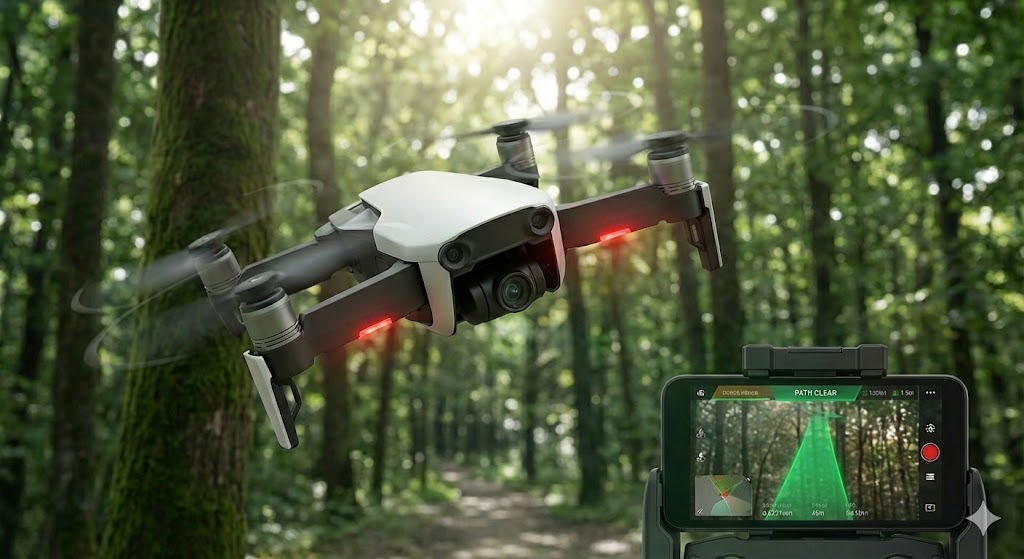
Applications of laser receiving sensors in mobile phones are diverse and growing. Beyond autofocus and AR, they are crucial for security features like facial recognition, where depth information helps distinguish between a real face and a photograph. In accessibility tools, these sensors can assist users with visual impairments by detecting obstacles and providing haptic or auditory feedback. Moreover, in robotics and drone technology integrated with mobile platforms, laser sensors aid in navigation and obstacle avoidance. As 5G networks and edge computing evolve, real-time data from laser sensors can be processed faster, enabling new use cases in smart cities, healthcare monitoring, and interactive retail.
Despite their advantages, challenges remain. Power consumption is a concern, as continuous laser emission and sensing can drain battery life. Manufacturers address this through pulsed operation and low-power modes, optimizing efficiency. Cost is another factor, with high-end sensors increasing device prices, though economies of scale are gradually reducing expenses. Privacy issues also arise, as depth-sensing capabilities could potentially be misused for surveillance, prompting ongoing discussions on ethical guidelines and data protection regulations in the industry.
Looking ahead, the future of mobile phone laser receiving sensors is promising. Innovations in quantum dot technology and metasurfaces may lead to more sensitive and compact sensors. Integration with artificial intelligence (AI) could enable predictive analytics, such as anticipating user movements for enhanced gesture control. Furthermore, as the Internet of Things (IoT) expands, these sensors might facilitate seamless device interactions, from smart homes to autonomous vehicles. Industry trends suggest a shift toward multi-functional sensors that combine laser reception with other sensing modalities, like radar or ultrasound, for robust environmental perception.
In conclusion, mobile phone laser receiving sensors are indispensable in today's tech-driven world, underpinning a wide range of functionalities that redefine how we interact with our devices. From enabling crisp photos to powering futuristic AR applications, their impact is profound. As research and development continue, we can expect these sensors to become even more integral to mobile innovation, driving progress in connectivity, automation, and user-centric design. For engineers and developers, staying abreast of these advancements is key to leveraging their full potential in next-generation mobile solutions.