In industrial environments where extreme temperatures are a constant challenge, selecting the right high-temperature proximity sensor is critical for operational reliability, safety, and efficiency. These specialized sensors are engineered to detect the presence or absence of objects in harsh conditions, such as near furnaces, foundries, welding lines, or in automotive manufacturing processes, without physical contact. Their ability to maintain accuracy and stability under thermal stress prevents downtime and costly maintenance. This guide explores leading global brands that have established a reputation for excellence in high-temperature proximity sensing technology, detailing their core technologies and typical application scenarios.
One of the foremost names in industrial automation sensing is Sick AG. The German manufacturer offers a robust portfolio of inductive and photoelectric proximity sensors designed for high-temperature resilience. Their IM series of inductive sensors, for instance, can reliably operate in ambient temperatures up to 100°C and even withstand higher peak temperatures near the sensing face. Sick employs advanced housing materials and encapsulation techniques to protect internal electronics from thermal expansion and electromagnetic interference, making them ideal for metal processing and heavy machinery.
Pepperl+Fuchs, another German powerhouse, is synonymous with intrinsic safety and durability in challenging environments. Their Factor 1 series sensors are renowned for their compact design and exceptional temperature tolerance. Utilizing high-grade stainless steel housings and specialized PPS sensing faces, these sensors can operate continuously in temperatures up to 120°C. Pepperl+Fuchs integrates sophisticated ASIC (Application-Specific Integrated Circuit) technology to ensure stable switching points despite temperature fluctuations, which is crucial in food packaging (near ovens) and ceramic kiln applications.
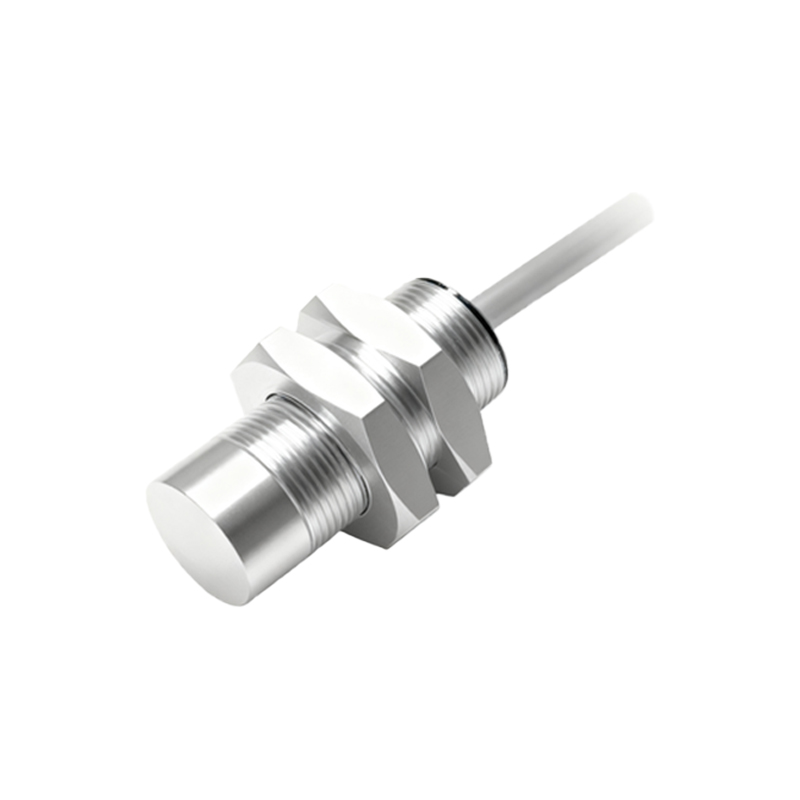
From the United States, Balluff GmbH stands out with its innovative approach to high-temperature sensing. Balluff's BHT series of inductive sensors are explicitly engineered for extreme heat, with capabilities to function in ambient temperatures reaching 150°C. The key lies in their proprietary coil design and the use of high-temperature-resistant ceramics and epoxy resins. This design minimizes thermal drift—a common issue where the sensing distance changes with temperature. These sensors are frequently deployed in die-casting machines, glass manufacturing, and tire curing presses.
Omron Corporation, a Japanese leader in automation, provides highly reliable solutions through its E2E and E2A series. Omron focuses on achieving a wide operating temperature range, typically from -40°C to +200°C for certain models, by employing a unique coil winding method and a fully resin-molded construction. This construction eliminates air gaps that could lead to failure under thermal cycling. Their sensors are prevalent in semiconductor fabrication equipment and automotive engine assembly lines, where precision is non-negotiable.
ifm electronic gmbh is celebrated for its user-friendly and robust sensor solutions. Their IQ series temperature-resistant sensors feature IO-Link communication, enabling real-time monitoring of temperature conditions and sensor health. Built with V4A stainless steel and high-temperature PBT housing, they offer reliable performance up to 115°C ambient temperature. ifm's strength is in predictive maintenance; the sensors can alert systems before a potential heat-related failure occurs, which is invaluable in plastic injection molding and steel mill applications.
Turck GmbH offers a versatile range of high-temperature proximity sensors, including inductive, capacitive, and ultrasonic types. Their BI series with epoxy-free, glass-fused hermetic seals allows operation in ambient temperatures up to 180°C. Turck's sensors are designed to resist not only heat but also aggressive chemicals and mechanical shock, making them suitable for the most punishing environments like chemical plants and offshore drilling platforms.
When selecting a high-temperature proximity sensor, engineers must evaluate several brand-specific and technical factors beyond just the maximum temperature rating. Key considerations include the sensing distance (which may reduce at elevated temperatures), the type of output (PNP/NPN, analog, IO-Link), housing material (stainless steel, nickel-plated brass, PPS plastic), and required certifications (ATEX, IECEx for hazardous areas). The installation environment—whether it involves rapid temperature cycles, continuous extreme heat, or exposure to splash/coolants—will ultimately guide the choice among these top-tier brands.
In conclusion, brands like Sick, Pepperl+Fuchs, Balluff, Omron, ifm, and Turck lead the market by continuously innovating in materials science and electronic design. Their high-temperature proximity sensors form the backbone of modern industrial automation, ensuring processes run smoothly where heat is a fundamental element of production. Investing in a sensor from these reputable manufacturers guarantees not just a component, but a solution engineered for resilience, precision, and long-term operational continuity.