In the rapidly evolving landscape of electrical engineering, the integration of advanced sensing technologies has become a cornerstone for innovation and efficiency. Among these, laser sensors stand out as a transformative tool, offering unparalleled precision, reliability, and versatility. This article delves into the core principles, applications, and future prospects of built-in laser sensors, highlighting their critical role in modern industrial and commercial systems.
Laser sensors operate on the principle of emitting a focused beam of light and measuring the time it takes for the reflection to return, known as time-of-flight (ToF), or by analyzing changes in light intensity or phase. This allows for non-contact measurement of distance, displacement, thickness, and even surface characteristics with micron-level accuracy. Unlike traditional mechanical or ultrasonic sensors, laser sensors are immune to electromagnetic interference, making them ideal for high-noise environments common in electrical installations, such as power plants, manufacturing floors, and automated warehouses.

One of the key advantages of built-in laser sensors is their seamless integration into existing electrical systems. Engineers can embed these sensors directly into machinery, control panels, or robotic arms, enabling real-time monitoring and feedback without bulky external components. For instance, in smart grid applications, laser sensors are used to detect sagging power lines or monitor transformer temperatures, preventing outages and enhancing safety. In industrial automation, they facilitate precise alignment in assembly lines, quality control in semiconductor fabrication, and obstacle detection for autonomous guided vehicles (AGVs).
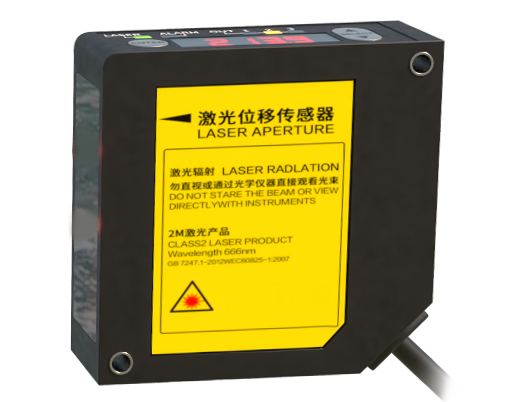
The durability and low maintenance requirements of laser sensors further contribute to their appeal. With no moving parts, they are less prone to wear and tear, ensuring long-term operational stability. Additionally, advancements in solid-state laser technology have led to compact, energy-efficient designs that reduce overall system costs. Modern laser sensors also feature enhanced connectivity options, such as IoT compatibility, allowing for data aggregation and analysis through cloud-based platforms. This enables predictive maintenance, where potential failures are identified before they occur, minimizing downtime and optimizing resource allocation.
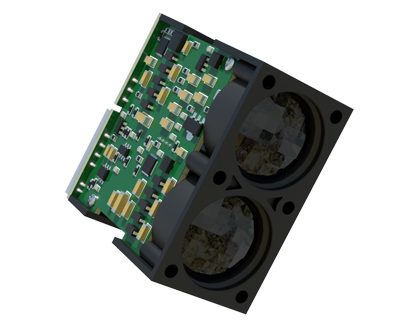
Looking ahead, the convergence of laser sensing with artificial intelligence (AI) and machine learning promises even greater breakthroughs. AI algorithms can process vast amounts of sensor data to identify patterns, anomalies, or optimization opportunities in real-time. For example, in renewable energy systems like solar farms, laser sensors combined with AI can track panel orientation for maximum sunlight exposure, boosting efficiency. Similarly, in building management, they can monitor occupancy and adjust lighting or HVAC systems dynamically, promoting energy conservation.
Despite their benefits, implementing laser sensors requires careful consideration of factors like environmental conditions (e.g., dust, humidity) and calibration needs. Engineers must select sensors with appropriate wavelengths and power levels to avoid interference or safety hazards, adhering to international standards such as IEC 60825 for laser product safety. Training personnel on proper installation and usage is also crucial to harness their full potential.
In conclusion, built-in laser sensors represent a paradigm shift in electrical engineering, driving advancements in automation, safety, and sustainability. As technology continues to mature, their adoption is poised to expand across sectors, from aerospace to healthcare, underscoring their indispensable value in shaping a smarter, more connected world. By embracing these innovations, engineers can unlock new levels of precision and efficiency, paving the way for future technological frontiers.