In the rapidly evolving landscape of industrial automation and smart systems, proximity sensors designed for human detection have become indispensable components. These sophisticated devices, often referred to as close-range human proximity sensors, are engineered to detect the presence or absence of a person within a defined sensing field without any physical contact. Their primary function is to enhance safety, enable automation, and improve user interaction across a myriad of applications. This article delves into the core technologies, operational principles, and critical applications of these sensors within an industrial and commercial context.
The fundamental principle behind human proximity sensing involves the emission of a field or beam and the analysis of changes within that field. The most prevalent technologies include capacitive, inductive, and photoelectric sensors, though for human detection, capacitive and advanced photoelectric (often infrared-based) methods are paramount. Capacitive proximity sensors operate by generating an electrostatic field. When a human body, which has inherent capacitive properties, enters this field, it alters the capacitance, triggering the sensor. This technology is highly effective for non-metallic target detection and is commonly used in touch-sensitive interfaces and safety guards. Infrared (IR) sensors, on the other hand, typically consist of an IR LED emitter and a photodiode receiver. They detect humans by measuring the reflection of an infrared light beam (in diffuse sensors) or by sensing the interruption of a beam (in through-beam sensors). More advanced versions use passive infrared (PIR) to detect body heat (infrared radiation) and are ubiquitous in automatic lighting and security systems.
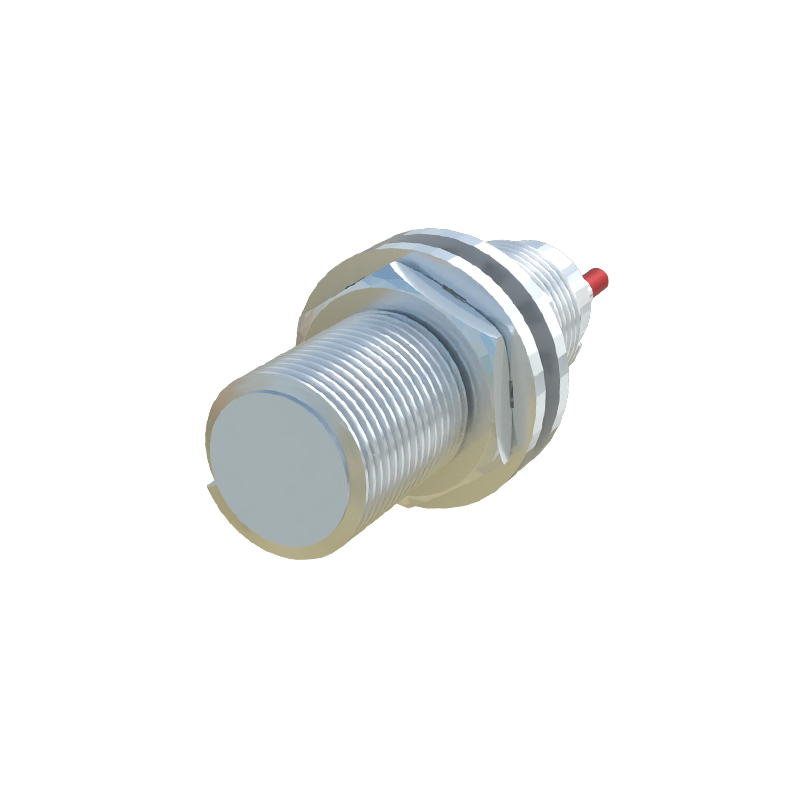
Ultrasonic sensors represent another crucial technology. They calculate distance by emitting high-frequency sound waves and measuring the time taken for an echo to return. The presence of a person alters the echo pattern, enabling reliable detection even in challenging environmental conditions like dust or vapor, where optical methods might falter. Recently, sensor fusion, combining data from multiple technologies like IR and ultrasonic, has gained traction to increase accuracy and reliability, reducing false triggers.
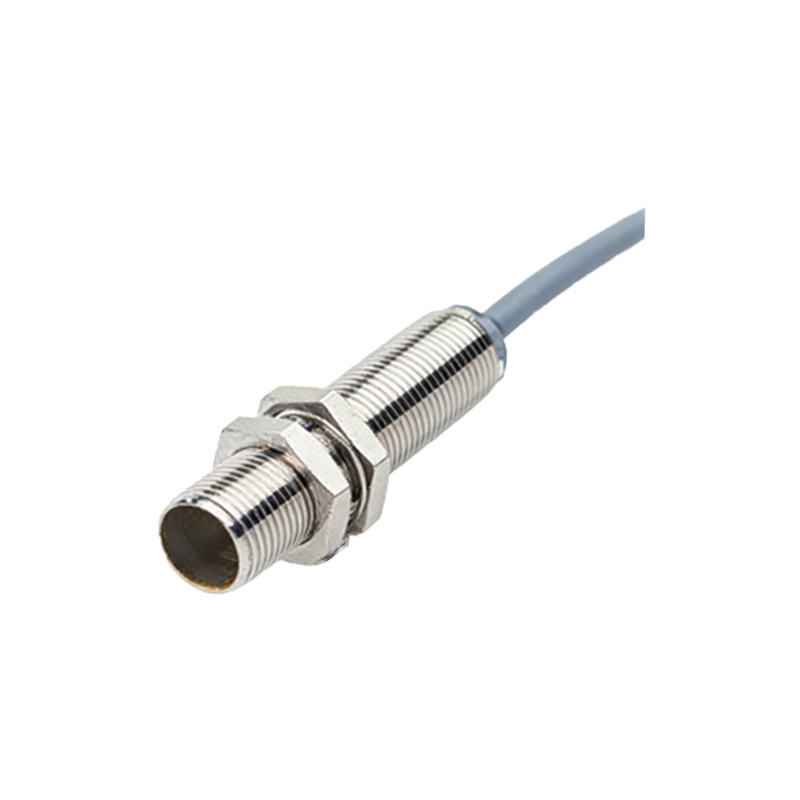
The selection of an appropriate human proximity sensor hinges on several key parameters. Sensing range is primary; for close-range applications, this typically varies from a few millimeters up to several meters. Response time is critical in safety-critical applications where milliseconds matter. Environmental robustness—encompassing resistance to temperature fluctuations, humidity, dust, and electromagnetic interference—is non-negotiable for industrial deployments. Furthermore, modern sensors offer programmable features such as adjustable sensitivity, time delays, and output configurations (e.g., NPN/PNP, analog, or IO-Link digital outputs), providing immense flexibility for system integrators.
The applications of these sensors are vast and transformative. In industrial safety, they form the backbone of presence detection systems for hazardous machinery, ensuring equipment only operates when no personnel are within a danger zone, thereby preventing accidents. On the factory floor, they enable human-robot collaboration (HRC), allowing robots to slow down or stop when a worker approaches too closely, fostering a safer shared workspace. In the realm of building automation, they drive energy efficiency by controlling lighting, HVAC, and escalators based on human occupancy, significantly reducing operational costs. Consumer electronics and automotive interiors leverage capacitive touch and proximity sensing for intuitive user interfaces, turning devices on or off as a user approaches. Retail and public spaces utilize them for automatic doors, sanitizer dispensers, and interactive displays, enhancing hygiene and user experience.
Despite their advantages, challenges persist. Differentiating between a human and an inanimate object of similar size, ensuring consistent performance across diverse clothing materials, and mitigating interference from ambient light or acoustic noise are ongoing engineering pursuits. The future points towards smarter, more integrated sensors. The advent of AI-enabled vision sensors and 3D time-of-flight (ToF) cameras, while sometimes falling into a different category, complements traditional proximity sensing by providing richer spatial data. Furthermore, the integration of proximity sensors into the Internet of Things (IoT) ecosystem allows for predictive maintenance, data analytics, and centralized monitoring of vast facilities.
In conclusion, close-range human proximity sensors are far more than simple switches. They are intelligent nodes that bridge the physical and digital worlds, safeguarding personnel, optimizing processes, and creating seamless interactions. As technology advances towards Industry 4.0 and smarter cities, the role of these reliable, versatile sensors will only expand, demanding continuous innovation from engineers to meet the complex needs of modern automated environments.