In the realm of industrial automation and machine safety, proximity sensors are indispensable components. Their primary function is to detect the presence or absence of an object without physical contact. A critical performance parameter for any engineer specifying or applying these sensors is the detectable distance, often termed as the nominal sensing distance (Sn). This distance is not a single, fixed value but a complex characteristic influenced by a multitude of factors. A deep understanding of these factors is essential for reliable system design and optimal sensor performance.
The nominal sensing distance (Sn) is defined by international standards (such as IEC 60947-5-2) as the theoretical distance at which a standard target, typically a square steel plate of defined thickness (e.g., 1mm thick Fe 360 steel), is detected under specified conditions. It serves as a baseline for comparison. However, in real-world applications, the effective operating distance (Sr) is what truly matters. This is the distance at which the sensor reliably switches in the actual installation, and it is always less than or equal to Sn.
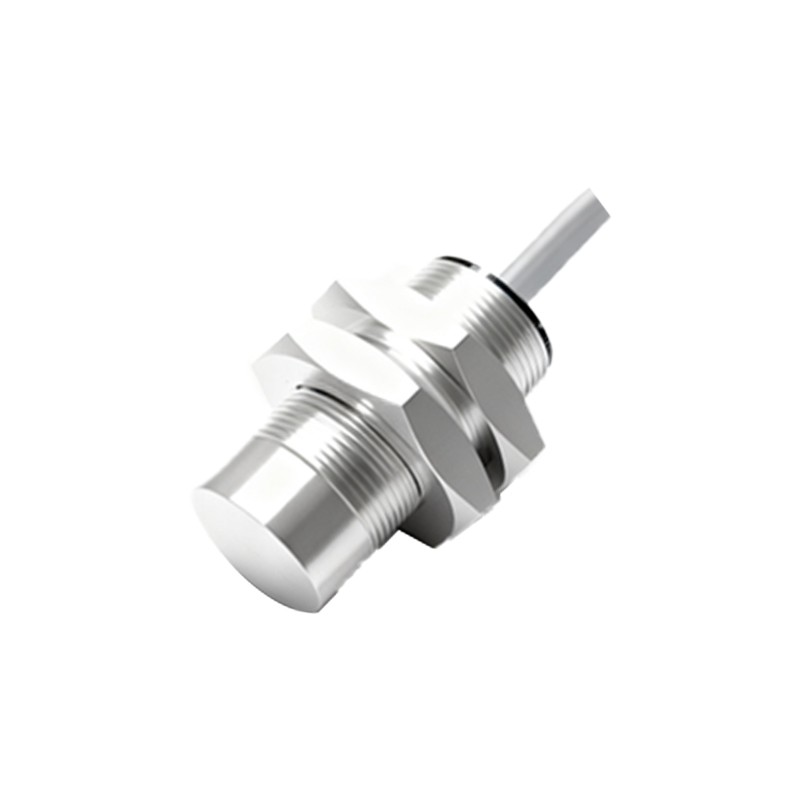
Several key factors directly influence the effective detectable distance:
1. Target Material: This is arguably the most significant factor. Inductive proximity sensors are designed for metallic targets. Ferrous metals (like iron, steel) are detected at the full nominal distance. Non-ferrous metals (aluminum, copper, brass) have a reduced sensing range, often 30-60% of Sn, due to their lower permeability and different eddy current generation. Capacitive sensors, used for non-metallic materials, also see variations based on the target's dielectric constant (e.g., water has a high constant and is easily detected, while plastics have a lower constant).
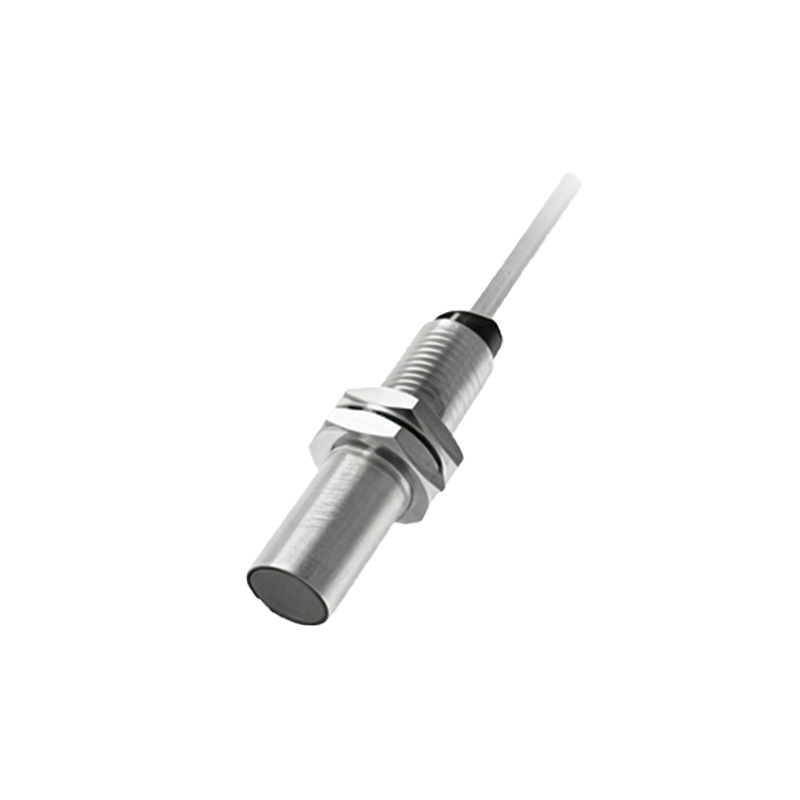
2. Target Size and Shape: The standard target defined for Sn is a specific size. If the actual target is smaller than this reference, the sensing distance decreases. A target must generally be equal to or larger than the sensor's active face diameter to achieve the nominal range. The shape also plays a role; rounded or pointed objects present less surface area to the sensor's field, reducing the effective distance.
3. Sensor Mounting and Environment: Proximity sensors generate an electromagnetic or electrostatic field. Flush-mountable sensors are shielded, allowing them to be installed embedded in metal without affecting their field. Non-flush (unshielded) sensors have a longer range but require a clear zone around them, as adjacent metal can dampen the field and reduce Sn. Environmental factors like extreme temperatures can affect electronic components and oscillation circuits, potentially altering sensitivity. The presence of dust, oil, or coolant can also impact capacitive sensors and, to a lesser extent, inductive types.
4. Supply Voltage and Temperature Drift: While modern sensors are largely stabilized, significant variations in supply voltage can affect the oscillation amplitude in inductive sensors. More importantly, all sensors exhibit some degree of temperature drift. The sensing distance can vary with ambient temperature changes, a specification usually detailed in the datasheet as a percentage of Sn over a temperature range.
5. Sensor Technology and Frequency: Different technologies have inherent distance capabilities. Ultrasonic sensors offer the longest ranges (several meters), followed by photoelectric sensors. Inductive and capacitive sensors are typically used for shorter ranges (a few millimeters to 60mm). Furthermore, when multiple inductive sensors are mounted closely, mutual interference can occur if they operate at the same frequency, leading to reduced sensing distances or false triggering. Using sensors with alternating frequencies or implementing time-division multiplexing can mitigate this.
For robust design, engineers must apply a safety margin. A common rule of thumb is to derate the nominal sensing distance. For instance, one might design the mechanical setup so the target approaches within 70-80% of the sensor's published Sn to ensure reliable operation despite material variations, temperature changes, and part tolerances. Always consult the manufacturer's datasheet, which provides correction factors for different target materials and detailed installation guidelines.
In conclusion, the detectable distance of a proximity sensor is a dynamic specification. Moving beyond the simple Sn value and comprehending the interplay of target properties, installation constraints, and environmental conditions is what separates a functional application from a robust, failsafe one. Proper selection, derating, and testing under actual operating conditions are the final, crucial steps in leveraging the full potential of these versatile devices.