In the realm of industrial automation and control systems, proximity sensors stand as fundamental components for non-contact object detection. Among the various technologies employed, inductive proximity sensors represent a dominant and highly reliable category. This article delves into the operational principles, key characteristics, diverse applications, and critical selection criteria for these essential devices.
At its core, an inductive proximity sensor is designed to detect the presence or absence of metallic objects without physical contact. The fundamental principle relies on electromagnetic induction. The sensor's active face contains a coil that is part of an oscillator circuit, generating a high-frequency electromagnetic field. When a conductive metal target enters this field, eddy currents are induced on the surface of the target. These eddy currents draw energy from the oscillator, causing a change in its amplitude. An evaluation circuit within the sensor monitors this amplitude change. Once the amplitude drop reaches a predetermined threshold, the sensor's output state switches, signaling the detection of an object.
This operating principle grants inductive sensors several defining characteristics. First and foremost is their non-contact nature, which eliminates mechanical wear and tear, ensuring a long operational life even in high-cycle applications. They are exceptionally robust, typically housed in solid metal or polymer casings rated for high ingress protection (IP67, IP69K), making them resistant to dust, moisture, oils, and coolants common in industrial environments like machining centers, assembly lines, and material handling systems. Their response time is extremely fast, often in the microsecond range, allowing for detection at high speeds. Furthermore, they are largely immune to environmental factors such as ambient light, dirt (unless it is metallic), and acoustic noise.
A critical specification for any proximity sensor is its nominal sensing distance (Sn). This is the theoretical detection range for a standard target, typically defined as a square of mild steel (Fe360) with a side length equal to the sensor's diameter or three times the Sn, whichever is greater. It is vital to note that the actual sensing distance can be affected by factors such as the target material's properties. For instance, the sensing range for stainless steel is often reduced to about 60-80% of Sn, while for copper or aluminum it can be as low as 30-50%. Target shape, size, and approach angle also influence performance. Engineers must consult reduction factor tables provided by manufacturers for accurate design.
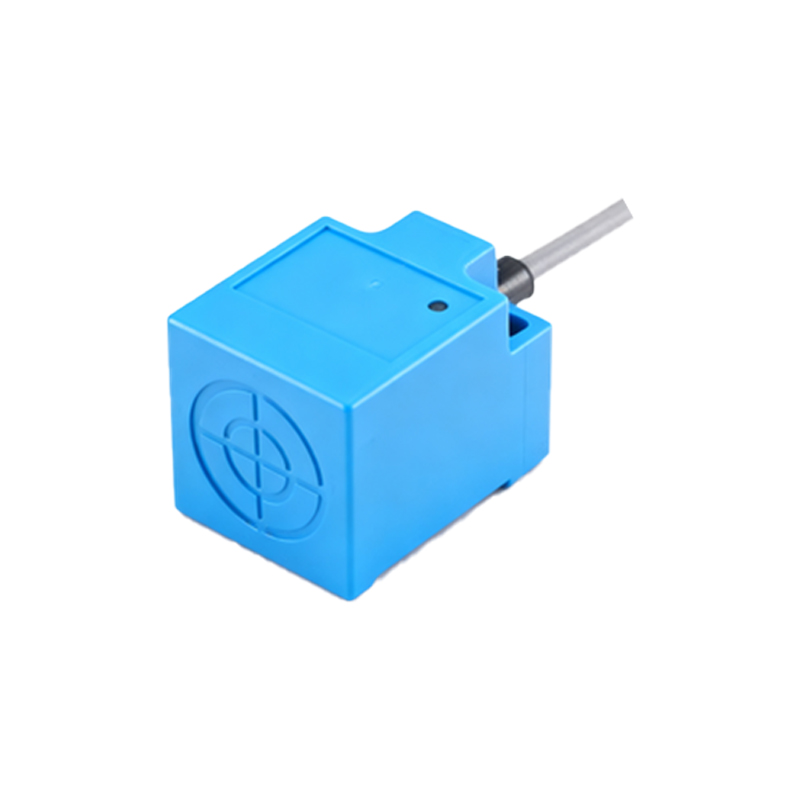
Inductive sensors come in various output configurations to interface with control systems. The two primary types are DC 3-wire sensors, which offer NPN (sinking) or PNP (sourcing) transistor outputs, and AC/DC 2-wire sensors that wire similarly to a mechanical switch. Analog output versions (0-10V, 4-20mA) provide a continuous signal proportional to the distance to the target, enabling tasks like position monitoring or wear detection. IO-Link enabled sensors represent the next evolutionary step, offering digital bidirectional communication for parameter configuration, advanced diagnostics, and process data exchange, aligning with Industry 4.0 initiatives.
The applications for inductive proximity sensors are vast and varied. Common uses include:
Position Verification: Confirming the presence of a part in a fixture, the end position of a cylinder, or the closed state of a guard door.
Counting: Tallying objects on a conveyor belt, such as bottles, cans, or machined components.
Speed Monitoring: Measuring rotational speed by detecting gear teeth or bolts on a rotating shaft.
End-of-Travel Detection: Limiting the movement of automated guided vehicles (AGVs) or linear actuators.
Material Handling: Controlling sorting gates, monitoring bin levels (for metallic parts), and verifying pallet presence.
When selecting an inductive sensor for an application, engineers must consider a comprehensive checklist:
1. Target Material: Is it ferrous (iron, steel) or non-ferrous (aluminum, brass, copper)? This determines the effective sensing range.
2. Required Sensing Distance: Choose a sensor with a nominal range (Sn) that provides a safe operating margin, typically 70-80% of Sn to account for temperature drift and supply voltage variations.
3. Installation Environment: Consider temperature extremes, potential for chemical exposure, and mechanical shock/vibration. Select the appropriate housing material (stainless steel, nickel-plated brass, PBT plastic) and IP rating.
4. Electrical Requirements: Match the supply voltage (10-30V DC, 20-250V AC) and output type (PNP/NPN, NO/NC) to the PLC or controller input card.
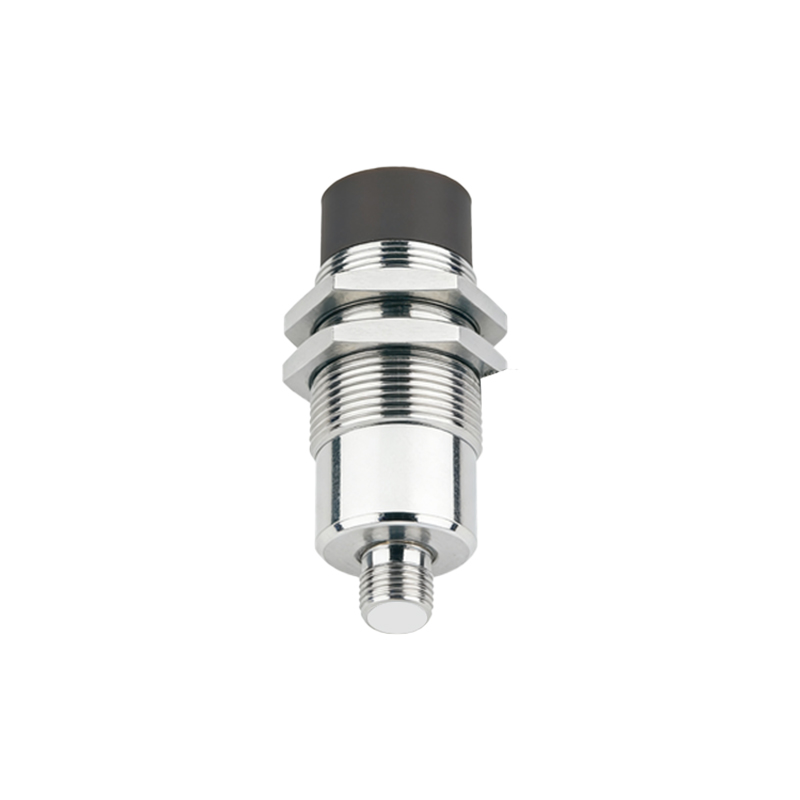
5. Physical Size and Form Factor: Cylindrical (M8, M12, M18, M30) or rectangular housings must fit the available mounting space.
6.