Proximity sensors are fundamental components in modern automation, robotics, and countless industrial applications. Their primary function is to detect the presence or absence of an object within a specified range without physical contact. While there are various types—inductive, capacitive, ultrasonic, and photoelectric—each operates on distinct principles, they all share a common output: an electrical signal. This article delves into the specifics of proximity sensor output voltage, explaining its characteristics, variations, and practical implications for system design and integration.
At its core, the output voltage of a proximity sensor is the electrical representation of its detection state. It is the interface language between the sensor and the control system, typically a Programmable Logic Controller (PLC), microcontroller, or data acquisition device. The voltage level changes in response to the sensor detecting a target object. There are two primary output configurations: Digital (or Switching) and Analog.
Digital Output Voltage
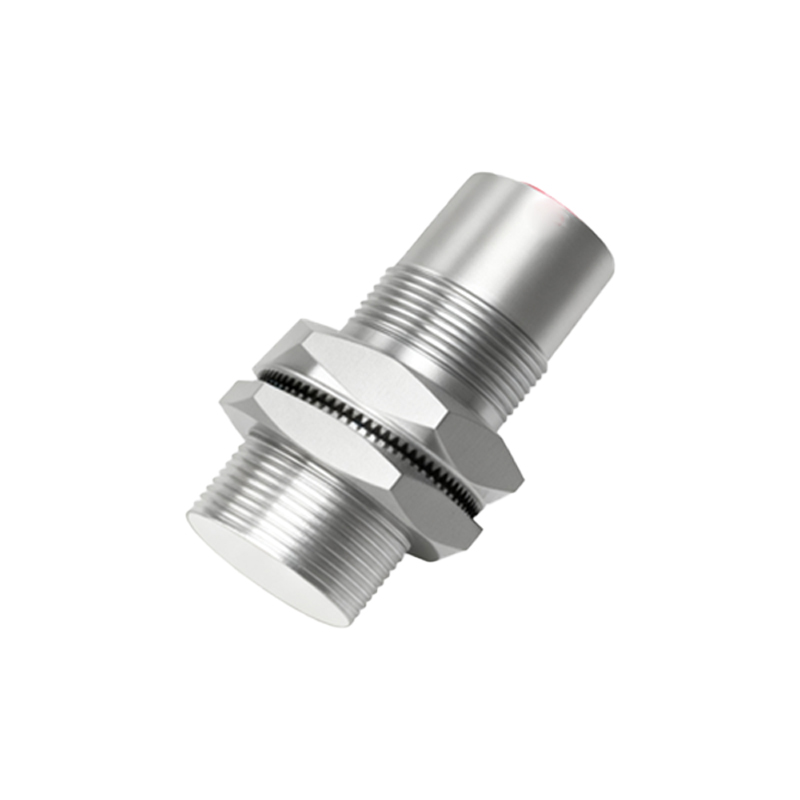
The vast majority of proximity sensors used in industrial settings provide a digital (on/off) output. This is a clean, high-speed switching signal indicating simply that an object is "present" or "not present" within the sensing range.
Voltage Levels: For DC-powered sensors, common output voltages include 5V DC, 12V DC, and 24V DC, aligning with standard control system voltages. The "on" state (object detected) typically presents the full supply voltage (e.g., 24V) at the output terminal. The "off" state (no object) presents a voltage very close to 0V.
Sourcing vs. Sinking (PNP vs. NPN): This is a critical distinction. A PNP (sourcing) sensor switches the positive voltage to the load. An NPN (sinking) sensor switches the ground path. The output voltage is present, but the current flow direction is opposite. Misunderstanding this can lead to incorrect wiring and system failure.
Load Compatibility: The sensor's datasheet specifies its maximum output current. Exceeding this by connecting a load with too low resistance can damage the sensor's internal switching transistor. A typical load is the input module of a PLC, which has high impedance, drawing minimal current.
Analog Output Voltage
Analog output sensors provide a continuous voltage signal that is proportional to the distance between the sensor and the target. This allows for precise position monitoring, not just detection.
Output Ranges: Standard analog output voltage ranges are 0-10V DC or 0-5V DC. For example, a 0-10V sensor might output 0V when the target is at its maximum sensing distance and 10V when the target is at the minimum detectable distance (or vice-versa, depending on configuration).
Linearity and Resolution: The relationship between distance and output voltage is ideally linear, but manufacturers specify tolerances. Resolution refers to the smallest change in distance the sensor can reliably reflect as a voltage change.
Noise Immunity: Analog signals are susceptible to electrical noise in industrial environments, which can distort the voltage reading. Proper shielding, twisted-pair cables, and filtering in the receiving device are essential.
Key Factors Influencing Output Voltage
Several practical factors can affect the measured output voltage in a real-world application:
1. Supply Voltage Variation: The sensor's output is directly dependent on a stable supply voltage. A drop in supply voltage will cause a corresponding drop in the digital output's high-state voltage or skew the analog output range.
2. Load Impedance: As mentioned, connecting a heavy load (low impedance) can cause the output voltage to "sag" below its expected level due to internal resistance.
3. Temperature: Extreme ambient temperatures can affect the electronic components inside the sensor, potentially causing drift in the output voltage level, especially critical for analog sensors.
4. Electrical Noise: Inductive noise from motors, solenoids, or power lines can induce voltage spikes on output lines. This is less problematic for digital switches with clear thresholds but is a major concern for analog signals.
Troubleshooting Output Voltage Issues
When a proximity sensor system malfunctions, measuring the output voltage is a primary diagnostic step.
Digital Sensor Stays Off: Use a multimeter. If the target is present but the output voltage remains near 0V, check the supply voltage, wiring, and ensure the load is not short-circuited. The sensor itself may be faulty.
Digital Sensor Stays On: If the output voltage is always high (at supply level) regardless of target position, the sensor may be damaged, or there could be an internal wiring short.
Analog Sensor Inaccuracy: Measure the output voltage at known distances and compare it to the sensor's datas