In the rapidly evolving landscape of wearable technology, smart bands have emerged as ubiquitous companions for health monitoring, fitness tracking, and seamless connectivity. At the heart of their user-centric functionality lies a critical, yet often overlooked component: the low-power proximity sensor. This sophisticated semiconductor device is fundamental to enabling intuitive interactions and extending battery life, two paramount concerns for modern wearable design. Unlike generic sensors, those engineered specifically for wrist-worn devices must operate under stringent constraints of size, power consumption, and environmental adaptability.
The primary role of a proximity sensor in a smart band is to detect the presence or absence of the wearer's wrist. This simple binary detection triggers a cascade of intelligent system behaviors. The most common user experience enhancement is automatic display wake-up and sleep. When the user raises their wrist to view the band, the sensor detects the close proximity and activates the display instantly. Conversely, when the band is lowered or covered, the sensor signals the main processor to dim or turn off the display, conserving precious battery power. This eliminates the need for manual button presses or taps, creating a fluid and responsive interface. Beyond screen control, proximity sensing is integral to advanced features like preventing accidental touch inputs during exercise or sleep, and enabling gesture-based controls where a hand wave near the device can dismiss alerts or scroll through information.
The engineering challenge centers on achieving high sensitivity and reliability while consuming minimal electrical power. Traditional infrared (IR) or ultrasonic sensors often draw too much current for continuous operation in a device with a compact battery. Modern solutions predominantly employ optimized infrared LED and photodiode pairs, coupled with highly efficient analog front-ends and digital signal processors (DSPs). Key technological advancements include:
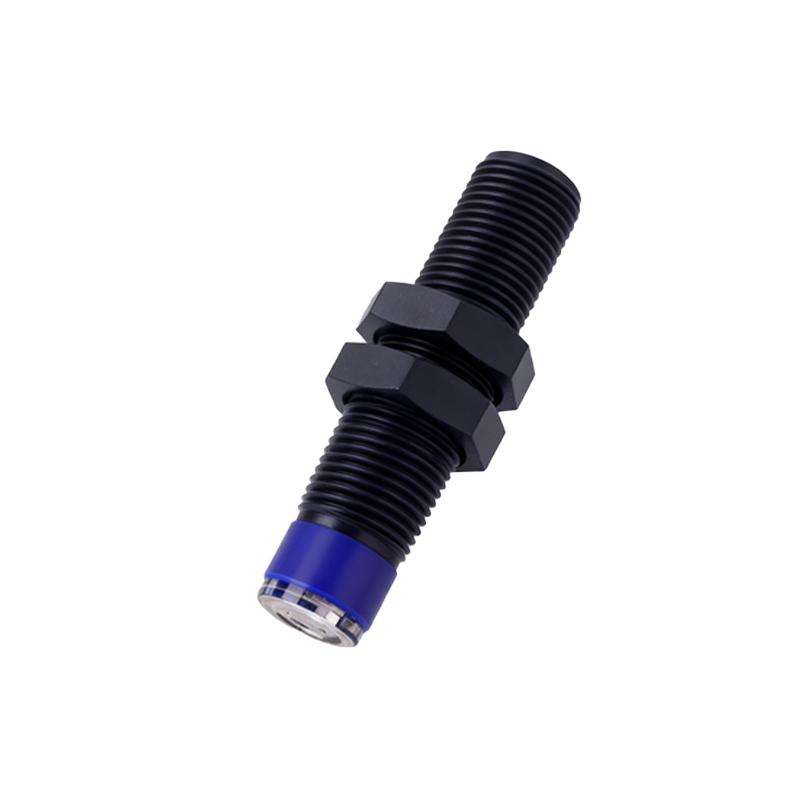
Pulsed Operation: Instead of emitting a constant IR beam, the sensor operates in ultra-short, low-duty-cycle pulses. The DSP then analyzes the reflected signal, effectively distinguishing between the wrist's reflection and ambient light noise.
Advanced Algorithms: Embedded algorithms perform ambient light subtraction and digital filtering. This allows the sensor to function accurately in diverse lighting conditions, from bright sunlight to complete darkness, without false triggers.
Integrated Design: Leading semiconductor manufacturers now offer fully integrated proximity sensor modules. These combine the emitter, detector, analog circuitry, and digital logic in a single, miniature surface-mount package, often measuring less than 2mm x 2mm. This level of integration simplifies PCB design, reduces component count, and enhances overall system reliability.
Ultra-Low Quiescent Current: State-of-the-art sensors boast quiescent currents in the microampere range during sleep or idle states, drawing virtually no power when not actively sensing.
The impact on system power budget is profound. By intelligently managing the highest-power component—the display—and allowing the main application processor to enter deep sleep modes more frequently, a well-implemented low-power proximity sensor can contribute to a 20-30% reduction in overall system energy consumption. This directly translates to longer intervals between charges, a major competitive advantage and a key user satisfaction metric. For always-on health monitoring features like heart rate tracking or SpO2 measurement, this power efficiency is non-negotiable.
Furthermore, the design extends beyond simple presence detection. Some advanced sensors incorporate multi-segment photodiodes capable of crude gesture recognition. Others are being co-packaged with ambient light sensors (ALS) to form combo sensors that automatically adjust screen brightness based on both proximity and environmental light levels, further optimizing power and usability.
Looking ahead, the evolution of low-power proximity sensing is intertwined with the development of next-generation smart bands. As devices incorporate more health sensors and always-on connectivity (e.g., 5G IoT), the power management role of the proximity sensor will become even more critical. Future iterations may leverage even more advanced materials and sensing principles, such as quantum dot-based detectors or energy-harvesting techniques, to push the boundaries of zero-power sensing.
In conclusion, the low-power proximity sensor is a quintessential example of how a focused, optimized semiconductor component can dramatically enhance the performance and user experience of a complex electronic system. For smart band designers, selecting the right sensor is not merely a component choice; it is a strategic decision that balances interaction design, industrial design, and ultimate product longevity in the hands—or rather, on the wrist—of the user. Its silent, efficient operation is a cornerstone of the seamless and intelligent wearable experience we have come to expect.