Spot laser sensors are critical components in modern industrial automation, offering precise measurement and detection capabilities. Proper installation is essential to ensure optimal performance, accuracy, and longevity. This guide outlines key steps and considerations for installing spot laser sensors in industrial environments, adhering to industry standards and best practices.
First, conduct a thorough site assessment before installation. Identify the target object, environmental conditions, and mounting location. Ensure the sensor’s operating range aligns with the application requirements, considering factors like distance, reflectivity, and ambient light. Avoid areas with excessive vibration, dust, or temperature fluctuations, as these can affect sensor accuracy. If necessary, use protective enclosures or cooling systems to mitigate harsh conditions.
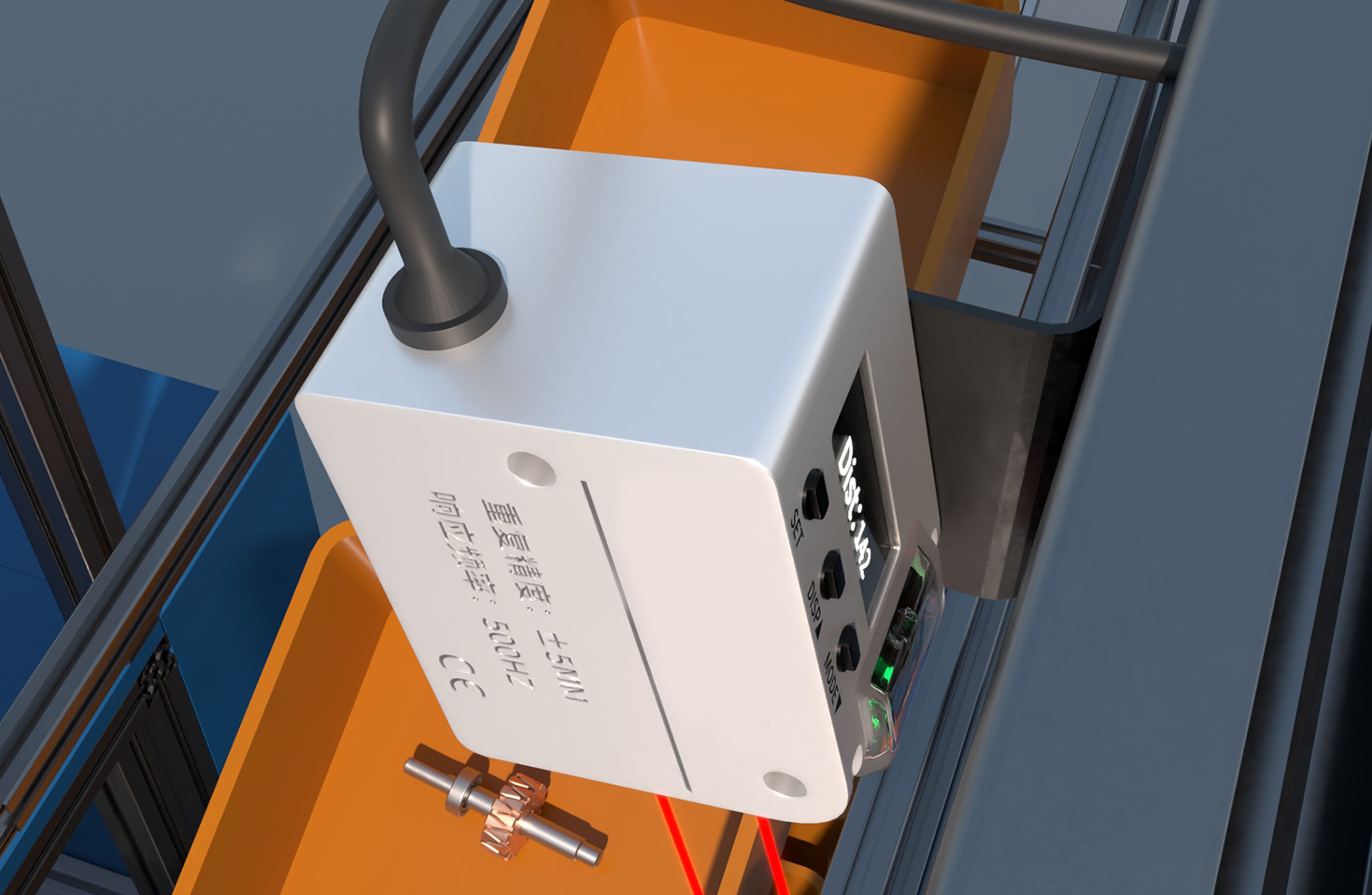
Next, select an appropriate mounting fixture. The sensor should be securely fastened using brackets or clamps that minimize movement. Align the laser beam perpendicular to the target surface to prevent angular errors. For reflective surfaces, adjust the sensor angle to avoid glare or interference. Use a spirit level or alignment tool to verify positioning, and tighten all bolts to specified torque values to prevent loosening over time.

Electrical connections must follow safety protocols. Power down the system before wiring to avoid short circuits or damage. Connect the sensor to a stable power supply matching its voltage rating (e.g., 12-24V DC). Implement proper grounding to reduce electromagnetic interference (EMI). For output signals (e.g., analog, digital, or IO-Link), use shielded cables and route them away from high-voltage lines to prevent noise. Test connections with a multimeter to ensure continuity and correct polarity.
Calibration is crucial post-installation. Configure the sensor settings via software or onboard controls, such as setting measurement thresholds, response time, and output modes. Perform a zero-point calibration on a reference surface to establish baseline accuracy. For dynamic applications, run test cycles with the target object to validate consistency. Document calibration parameters for future maintenance.
Regular maintenance ensures sustained performance. Schedule periodic inspections to clean the lens with a soft, lint-free cloth, removing dust or debris that could scatter the laser beam. Check mounting stability and cable integrity, replacing worn components promptly. Monitor sensor outputs for drift or anomalies, and recalibrate as needed. Keep a log of maintenance activities to track sensor health and predict failures.
In summary, successful spot laser sensor installation hinges on careful planning, precise mounting, safe wiring, thorough calibration, and ongoing maintenance. By following these guidelines, engineers can enhance system reliability, reduce downtime, and achieve precise measurements in diverse industrial setups, from manufacturing lines to robotic assemblies.